I changed jobs last summer, which meant going on summer holiday was not really an option. Not that it bothered me too much, I rarely go away in summer anyway, as everything is crowded, more expensive and overbooked. As the previous year’s adventure in Canada had been a wonderful experience and a huge success, I wanted to cycle again, preferably alone, and I really wanted to tour some region in Spain where I hadn’t been yet and the choice fell on Andalucía. Mid-october is the perfect time to visit, as any other time the temperatures are not very cycling-(or anything else)-friendly. It was perfect. I had sun and 25 degrees the whole week. Shorts, short sleeves, no base layer. The tan lines need to be kept well defined.

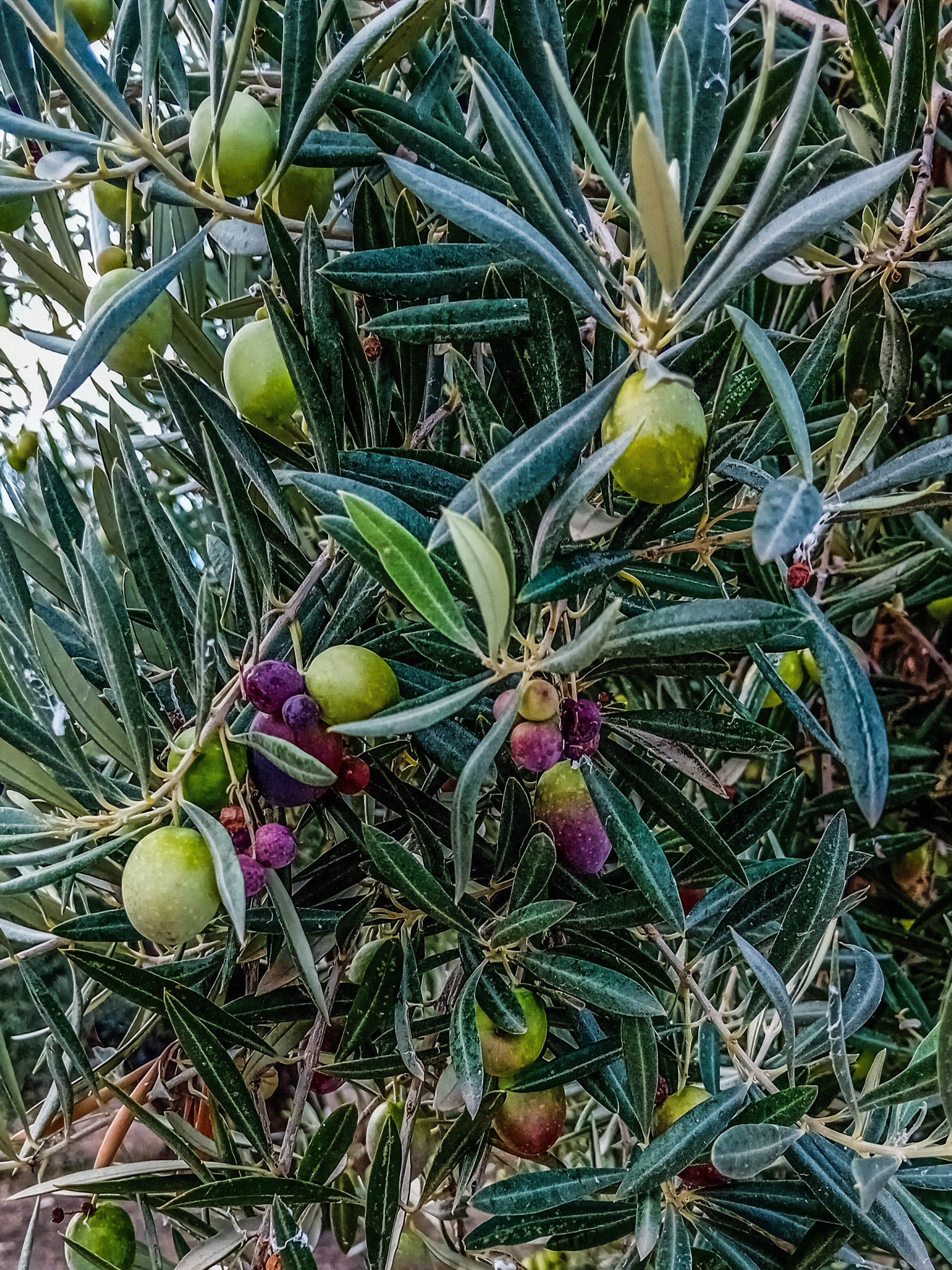
Andalucía is Spain’s most populated and second largest region, the most culturally and possibly geographically diverse. It is the autonomous community with most national and natural parks on the Spanish mainland. The cities, architecture and cuisine are shaped by centuries of coexistence and struggles between Moorish, Christian and Jewish cultures. Between 30 and 40 % of world’s (and 80% of Spanish) olive oil production comes from Andalucía. Most of the obvious things many people associate with Spain, like flamenco, bullfighting and opulent processions are deeply rooted in the local culture, but there is more to Andalucía than just the folklore: over 3000 years of documented history, for example, but about that some other time. This article is already long enough as it is. Jerez wine (you may know it as sherry) – currently my favourite aperitive – comes from here. Not paella, that’s from Valencia. The Andalucians also speak the richest vocabulary in the whole country (even though most times they don’t bother pronouncing the entire word).
I had visited other places in Andalucia: Cádiz, Córdoba, Sevilla, Granada, Tarifa, I cycled around Málaga, but the north of the region remained completely unknown to me (and to be fair, to 95% of the Spaniards). To tell the whole truth, I was limited in my choice of holiday destination to wherever I can take my bike on public transport without losing my mind in the process. Because, you see, RENFE (the national rail operator) claims people can travel with their bikes on all services. Technically true. Practically impossible. If you want to travel on a long distance train (regardless if it’s high speed or not), you need to pack the bike in a special container, take the pedals off, turn the handlebar by 90 degrees, and if your intention is to bikepack and come back from a different station, then what the hell do you do with the bike case in the meanwhile. The only trains where you can travel with the bike hassle free (ish) are mid-distance (media distancia) services, which run to every corner of the country, but stop every ten minutes. On the plus side you can take the bike as it is, if you manage to secure one of the three available spots that every service is limited to. Let me tell you, adding the bike ticket (0-3€ depending on the distance) is the real treasure hunt, because only higher forms of intelligence or people with exceptional intuition can successfully navigate the RENFE website, clearly designed and maintained by a sociopath on acid. And the most entertaining thing is that when you finally give up fighting with the website and head over to the station to buy your ticket from a breathing person, they struggle as much as you to obtain what you asked them for.
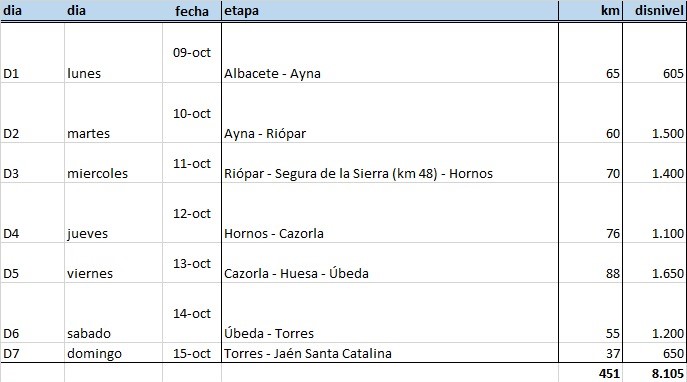
Finally, about the ride. I knew I wanted to visit Úbeda, Baeza and Jaén, and needed to figure out how to get there. I could get to Albacete (which was roughly in the intended direction) on an MD service, and then take another MD from Jaén back to Madrid. I saw that the distance between the two cities was roughly 260km on the shortest road, and there was a mountain range and a natural park in between, and I thought: done, let’s do this.
- Planning: same way as ever: search for places of interest that I want to see or visit, look for the smallest possible paved road that connects the locations (even – or especially – if it means a longer journey), decide where to spend the night, book the hotels.
- Software: Google maps/streetview and Strava for the planning. I don’t carry a Garmin or any other tracker other than my mobile phone. It was useless anyway because Strava stopped cooperating on the third day. I will post the planned rides below, so feel free to download them to your navigation device.
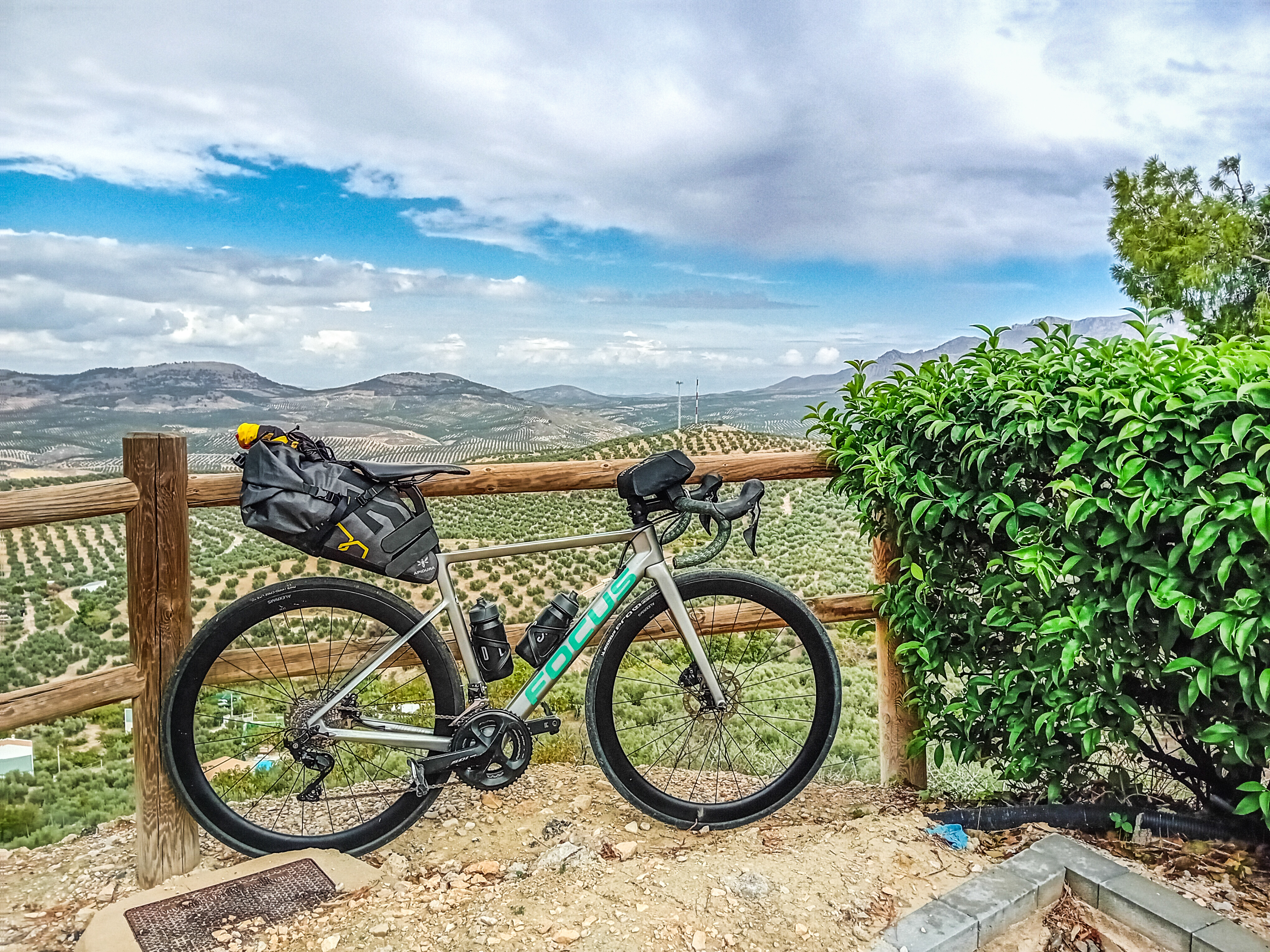
- Packing: Apidura 17 litre saddle bag. The initial intention was to carry a 14l handlebar bag and 14l saddle bag, but my bikes’s geometry was not intended for bikepacking, and the handlebar bag rubs the front wheel. So I had to repack, reduce the stuff to the absolute essentials and make everything fit into 17l. Warm weather is a huge advantage, I didn’t have to carry warm layers, just a light raincoat/wind breaker. I packed an extra pair of bib shots and two jerseys (cause cycling 7 days in the same kit would become slightly disgusting by day 3), a pair of shorts and long sleeves for the evening, pair of lightweight trainers, some inner tubes, the usual tools, some Torq nutrition bars for emergencies. I kept the total weight under 4 kg. I didn’t bring my proper camera, so all photos are made with my mobile. (Note: I do not receive any retribution neither from Torq nor Apidura, my recommendation is based solely on experience.)
- Consult the picture above for the breakdown of the stages. As you can see, I kept the daily distance short – for several reasons:
- It’s a holiday, not a race. My rides are fuelled by sandwiches and tortillas, not by EPO. Also I don’t have a physio to massage my butt at the end of each day. Sadly.
- I carried extra weight and cycled 7 days in a row, no need to completely destroy myself on day 2
- I wanted to allow for sightseeing, lunches and coffee breaks, possibly a swim and of course potential mechanicals along the way


Day 1: Albacete to Ayna
GPS here.
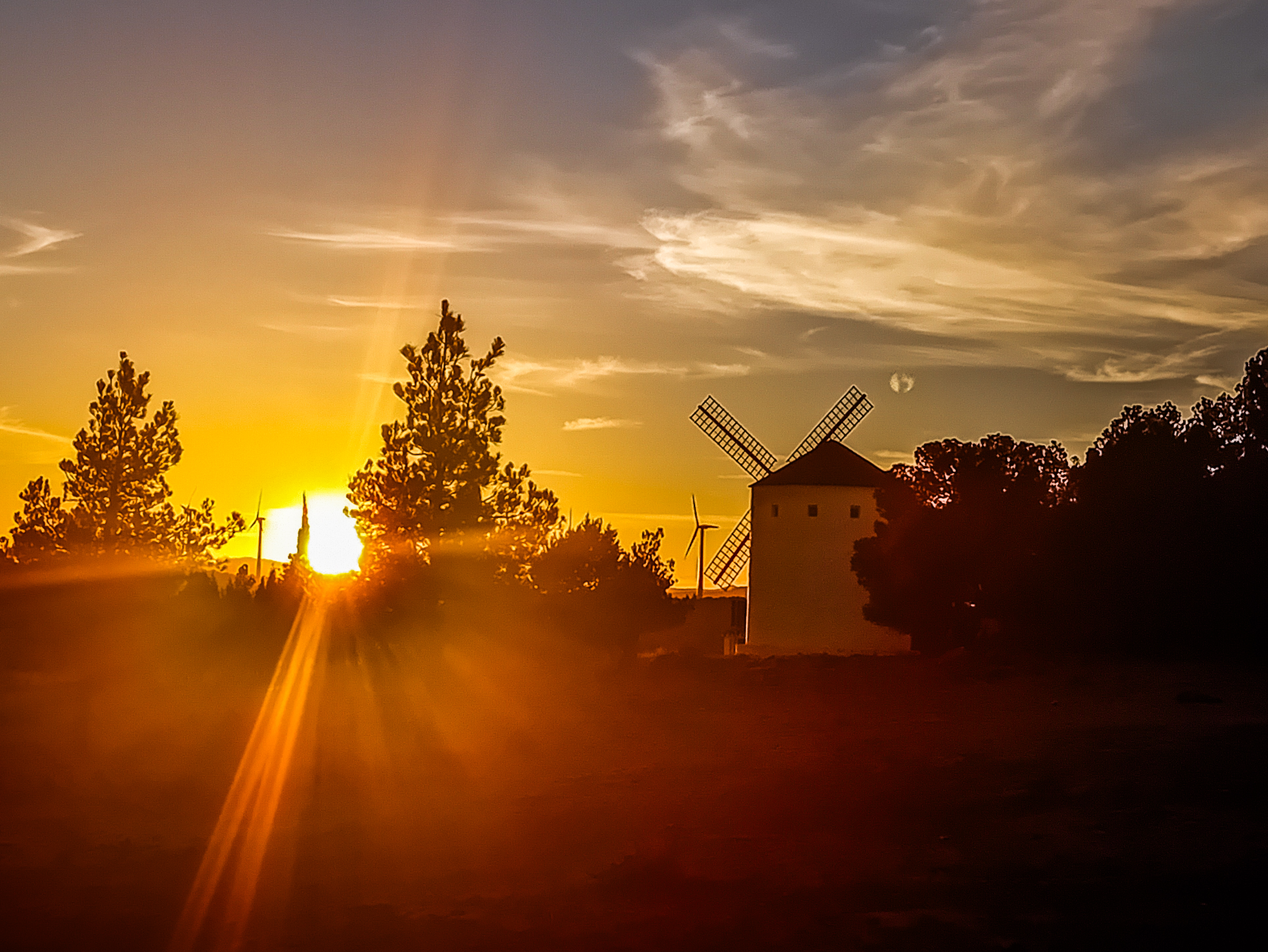
A popular saying in Spain sentences the following: Albacete, caga y vete. Literally “take a dump and leave”, possibly because it’s a point of passage between the capital and the coast, with nothing of major interest to see, where people would stop to attend to calls of nature and continue their journey to the beach. I did just that (meaning, didn’t waste any time in town, I don’t recall any defecation, in case you need to know). I had a more pressing matter to resolve: I could not get on the morning train, because it was fully booked for some unexplainable reason and my train would only arrive to Albacete at 17.30, which in mid-October meant roughly 2.5 hours of daylight left, and 65 km ahead. I knew I would cycle the last hour in darkness, no matter how hard I’d push myself. I had more lights than a Christmas tree, so cycling at night wasn’t an issue. The first day was basically transfer across the great Castilian plains towards more exciting landscape. The first two thirds of the ride are uneventful, except for the amount of wind turbines. It’s a boring, straight, flat (well, false-flat) road that seems to have no end. At least I didn’t have headwind (they put all those windmills there for a reason). I planned the last third on a nicer, quieter, hillier road, before dropping to Ayna, but decided against it once the night fell and took a shortcut, because the traffic was light anyway, and last thing I wanted on the first day was a close encounter with a wild boar.
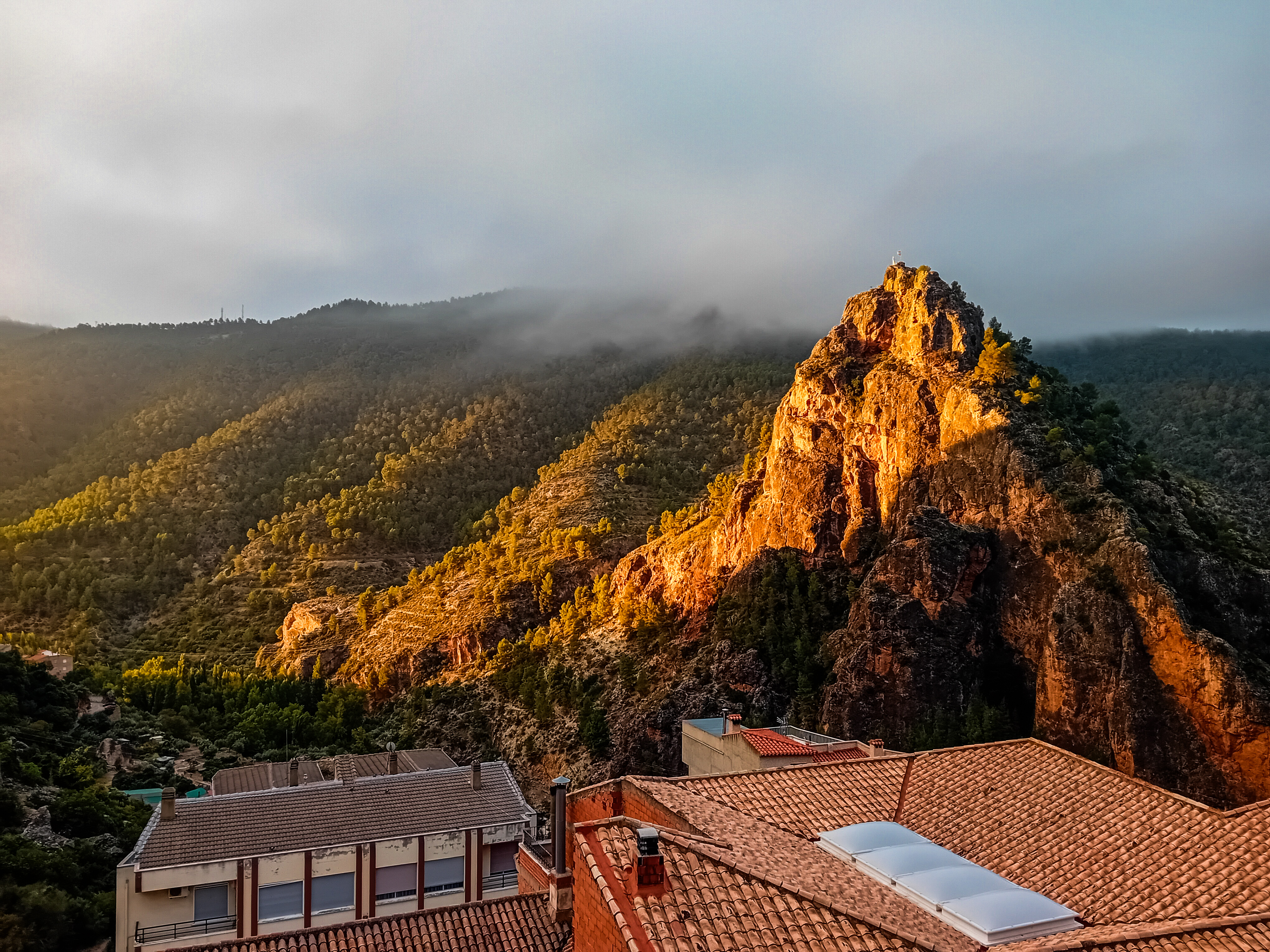
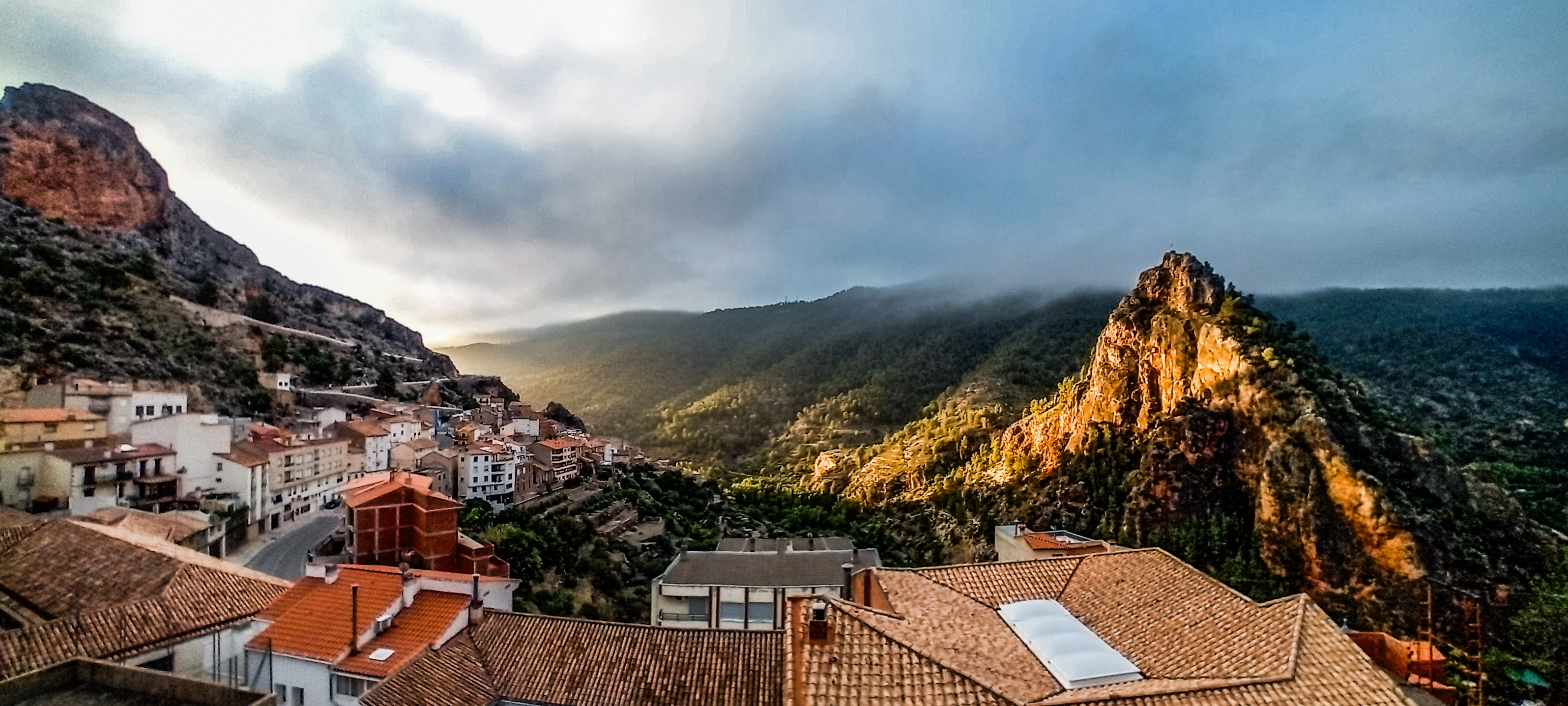
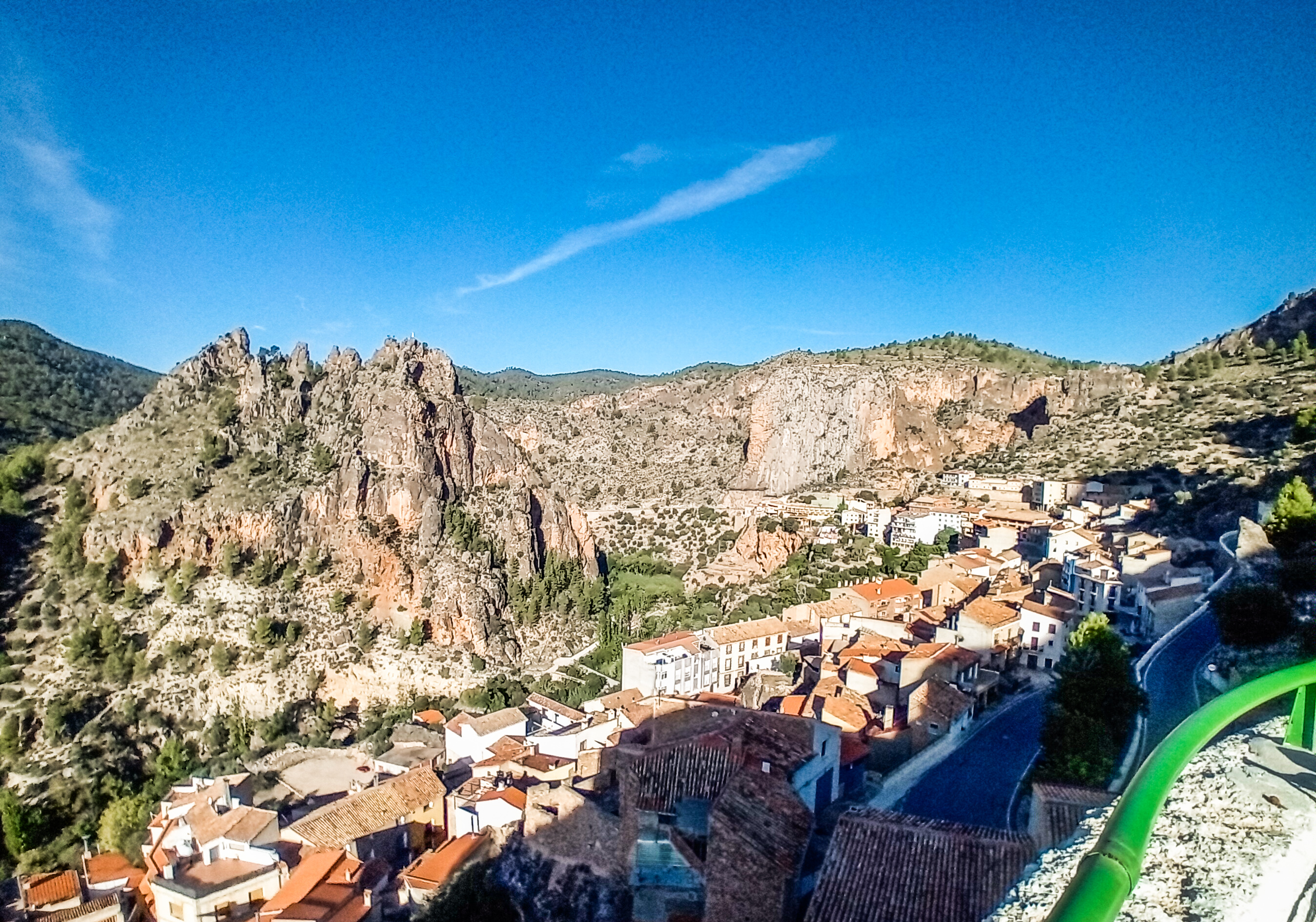
Ayna is known to most (well, some) Spaniards as the shooting location of the absurd cult comedy “Amanece, que no es poco” (“Dawn breaks, which is no small thing” – if you haven’t seen it, do.). This and its setting in a canyon of outstanding beauty makes it a popular tourist destination. Not on Monday nights. I arrived at 9 pm (which is not even dinner time in Spain), and the lady in my hotel informed me that no restaurant or bar were open for business that evening. Upon seeing the sheer horror on my face (my prospect was to have mango flavoured energy bars for dinner), she offered to make me a sandwich. One of the best meals of my life.









Day 2: Ayna to Riópar
GPS here.
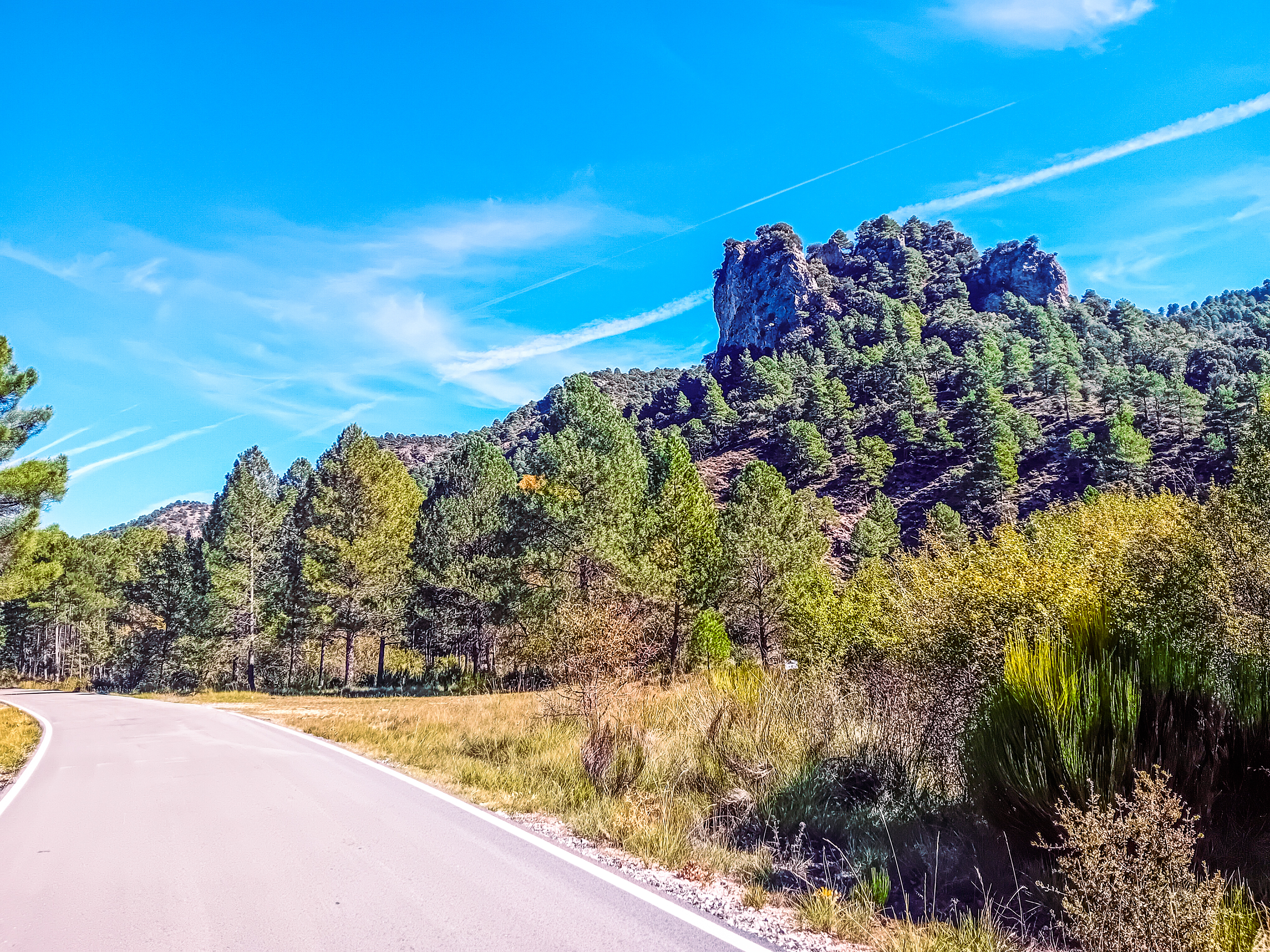
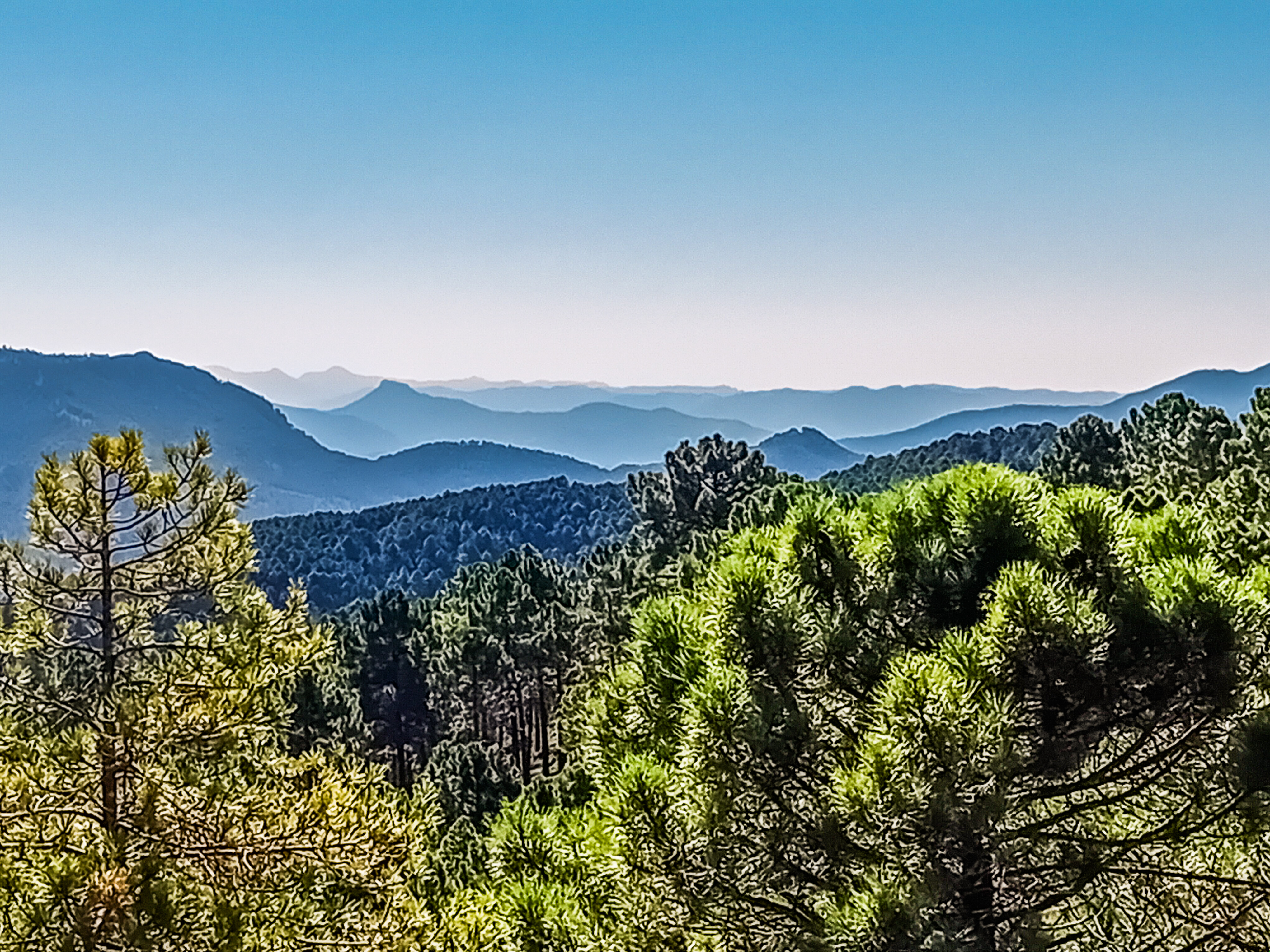
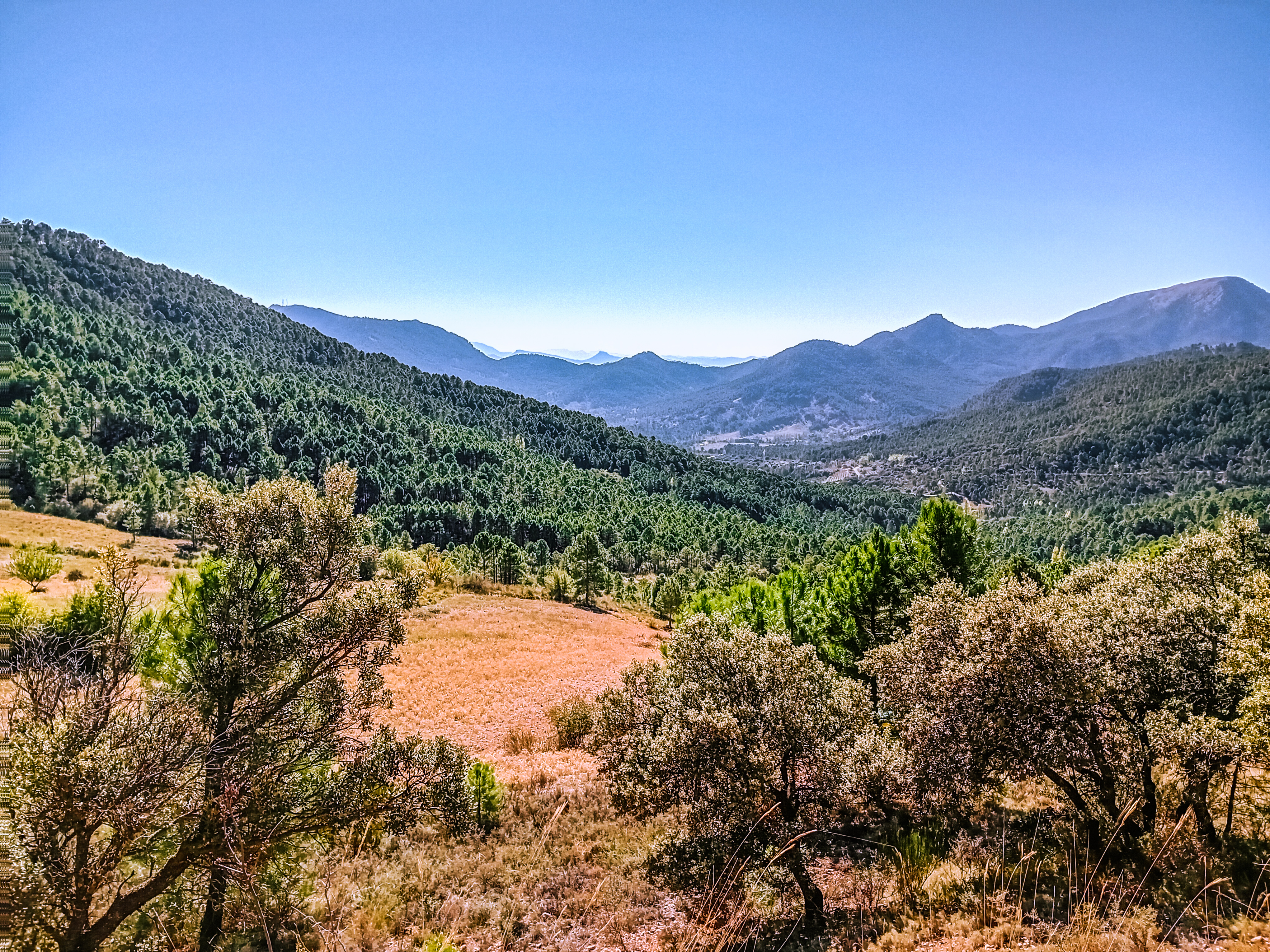
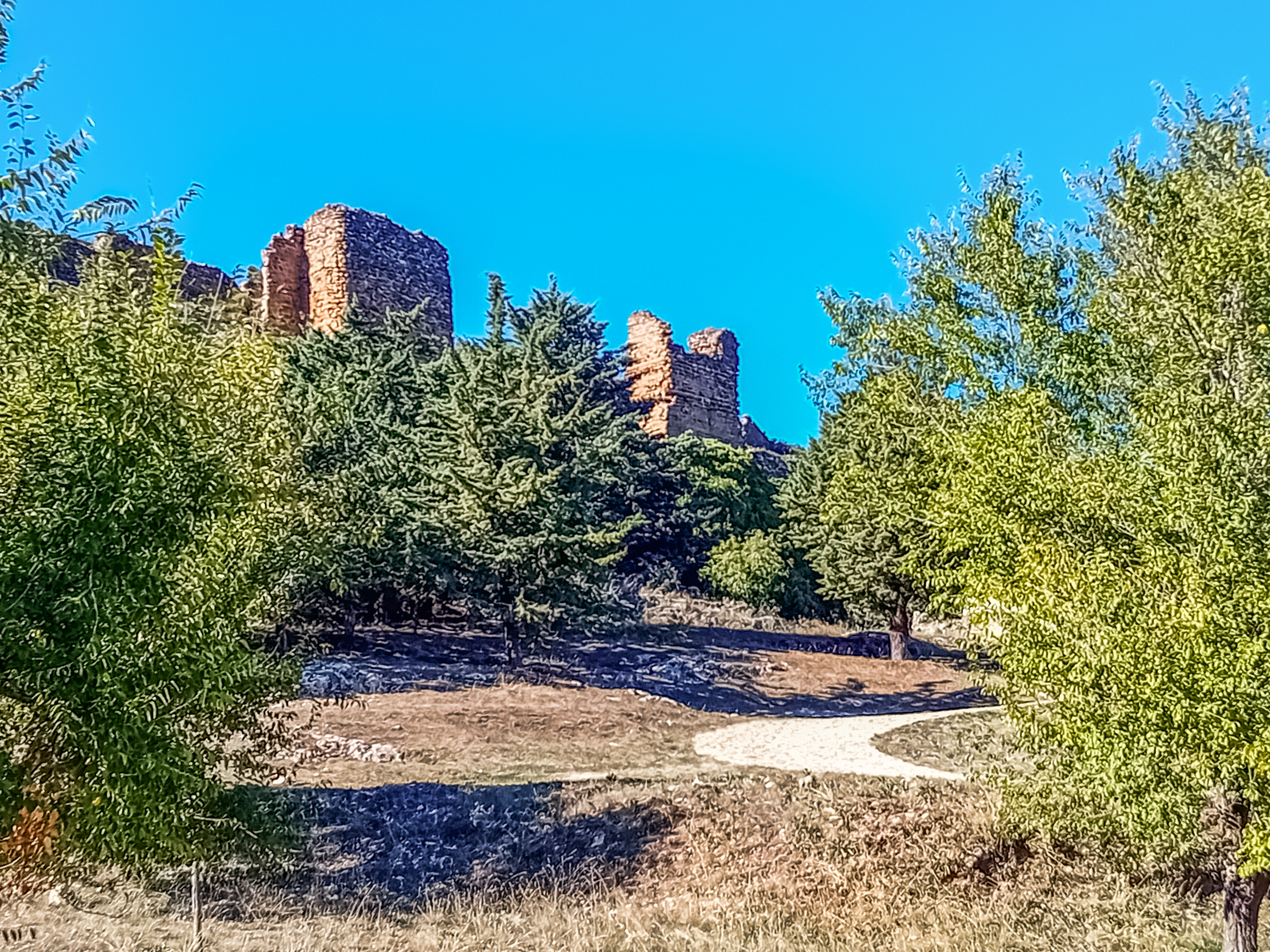
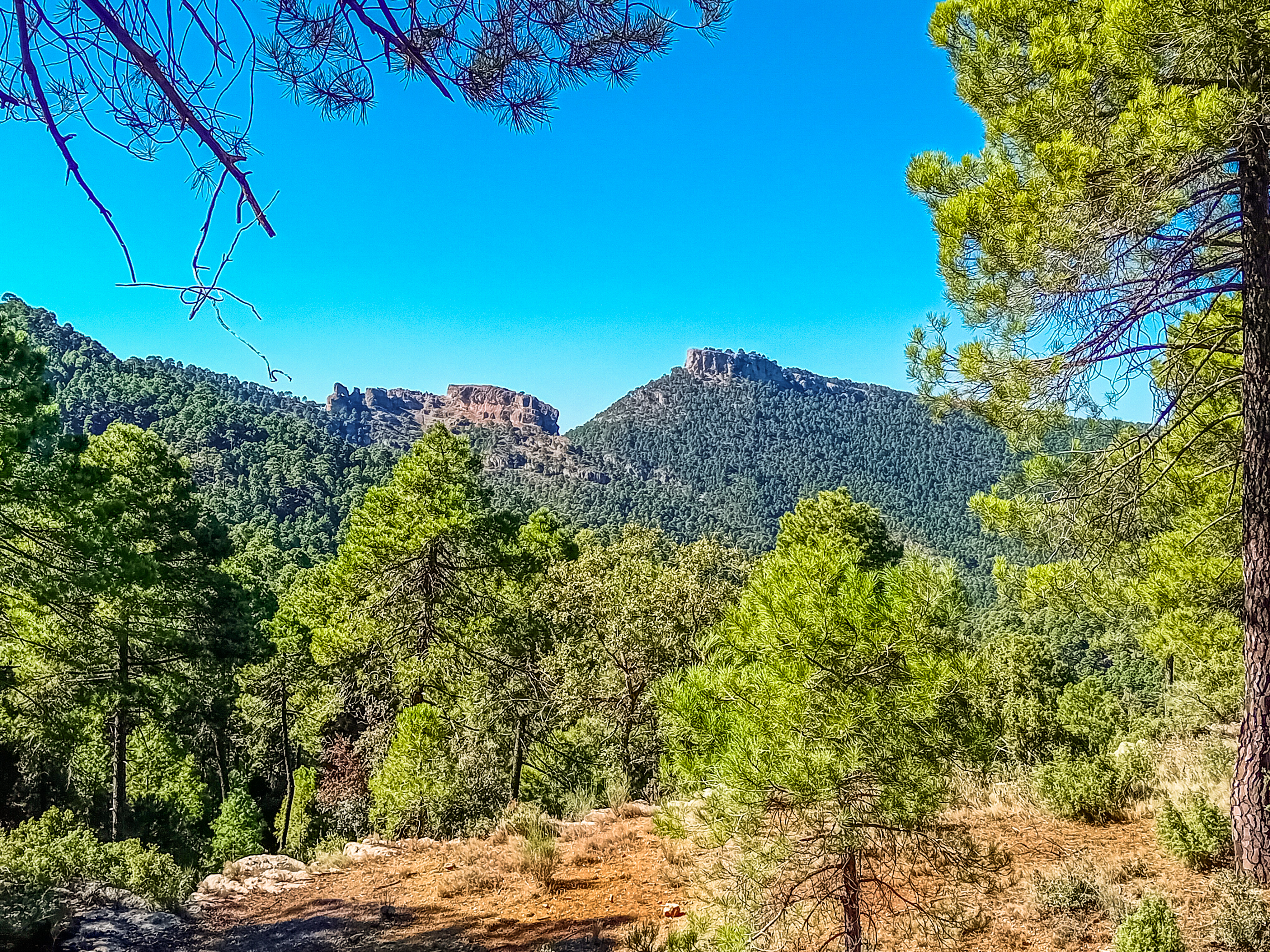
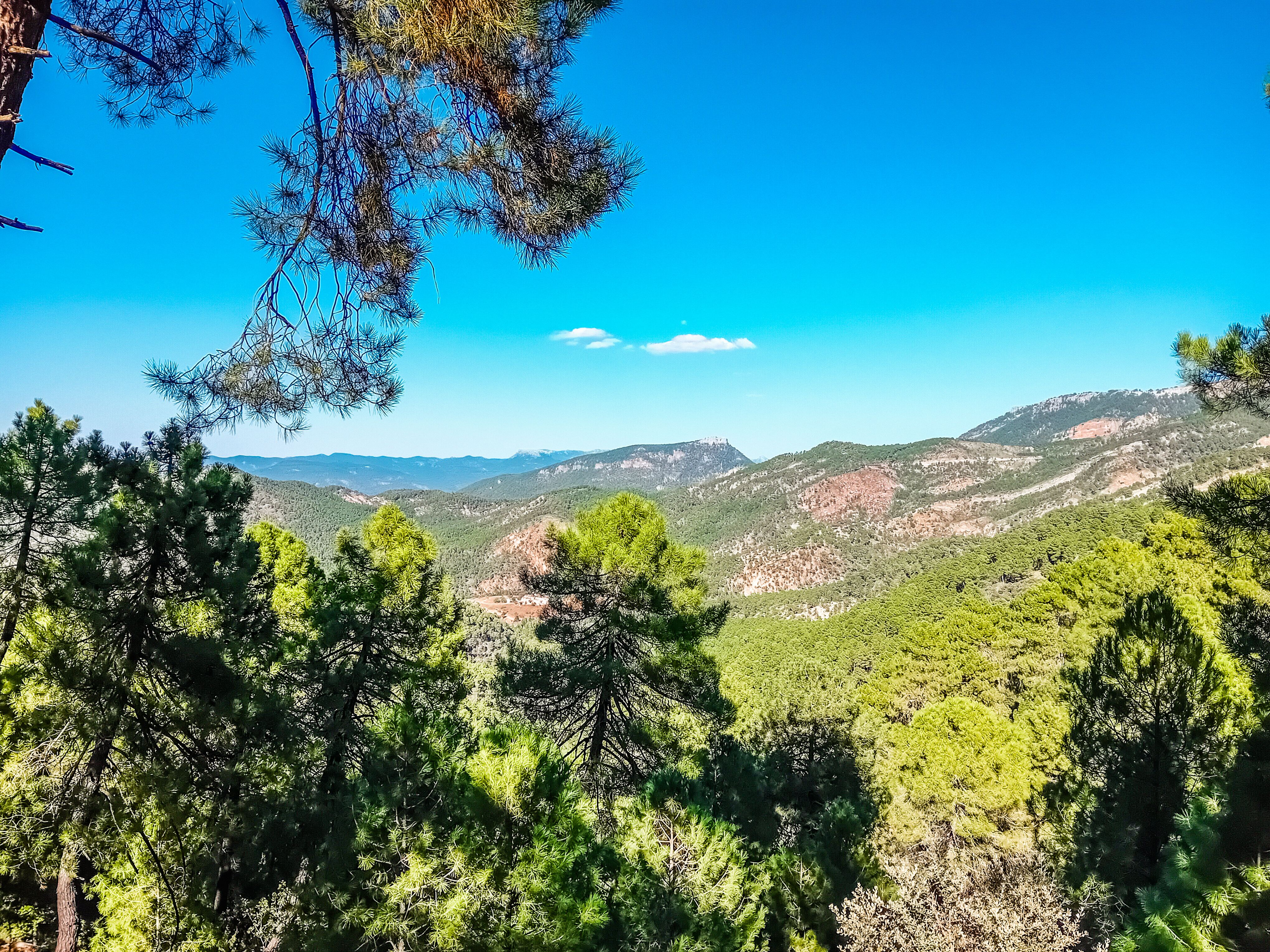
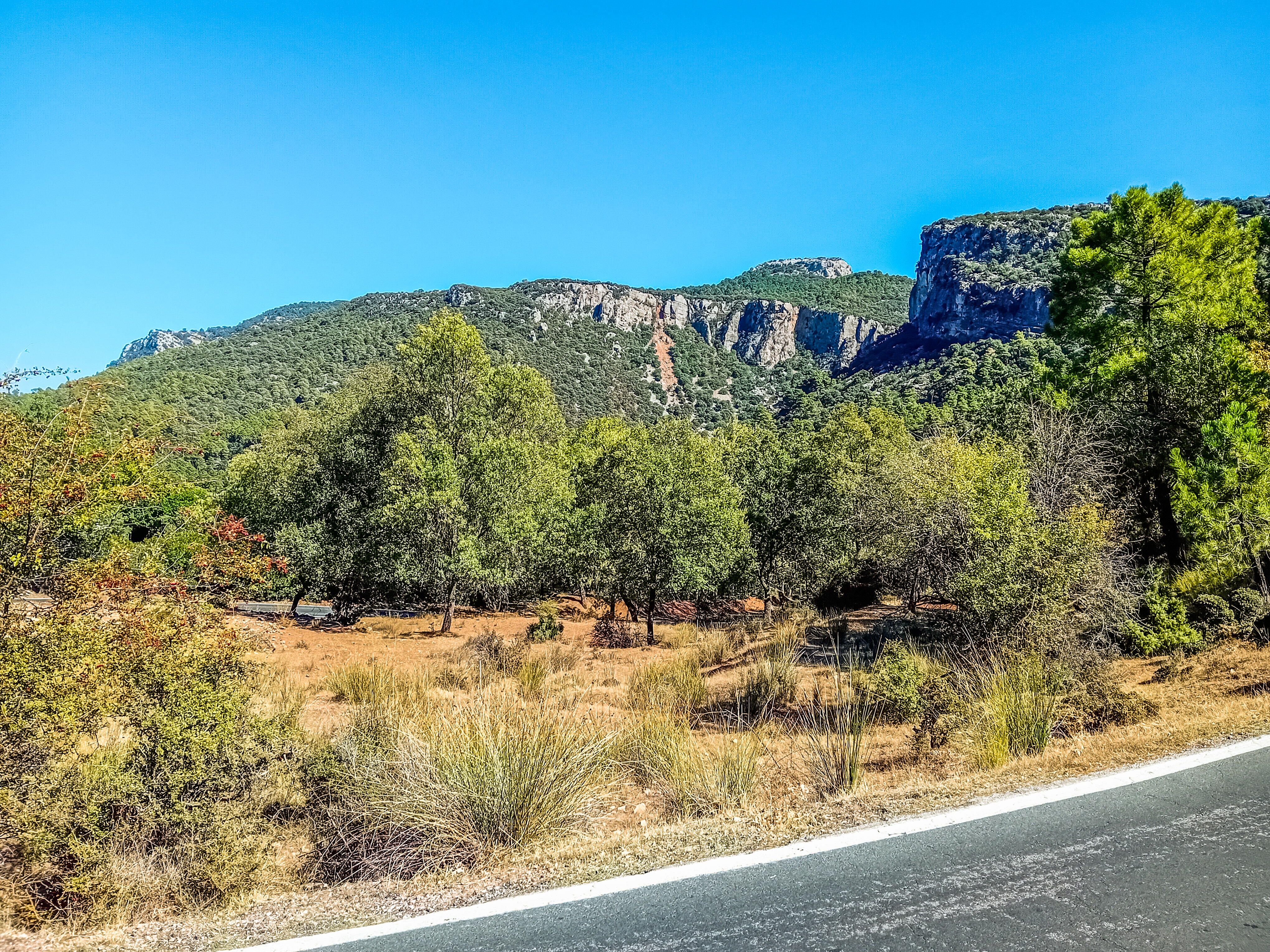
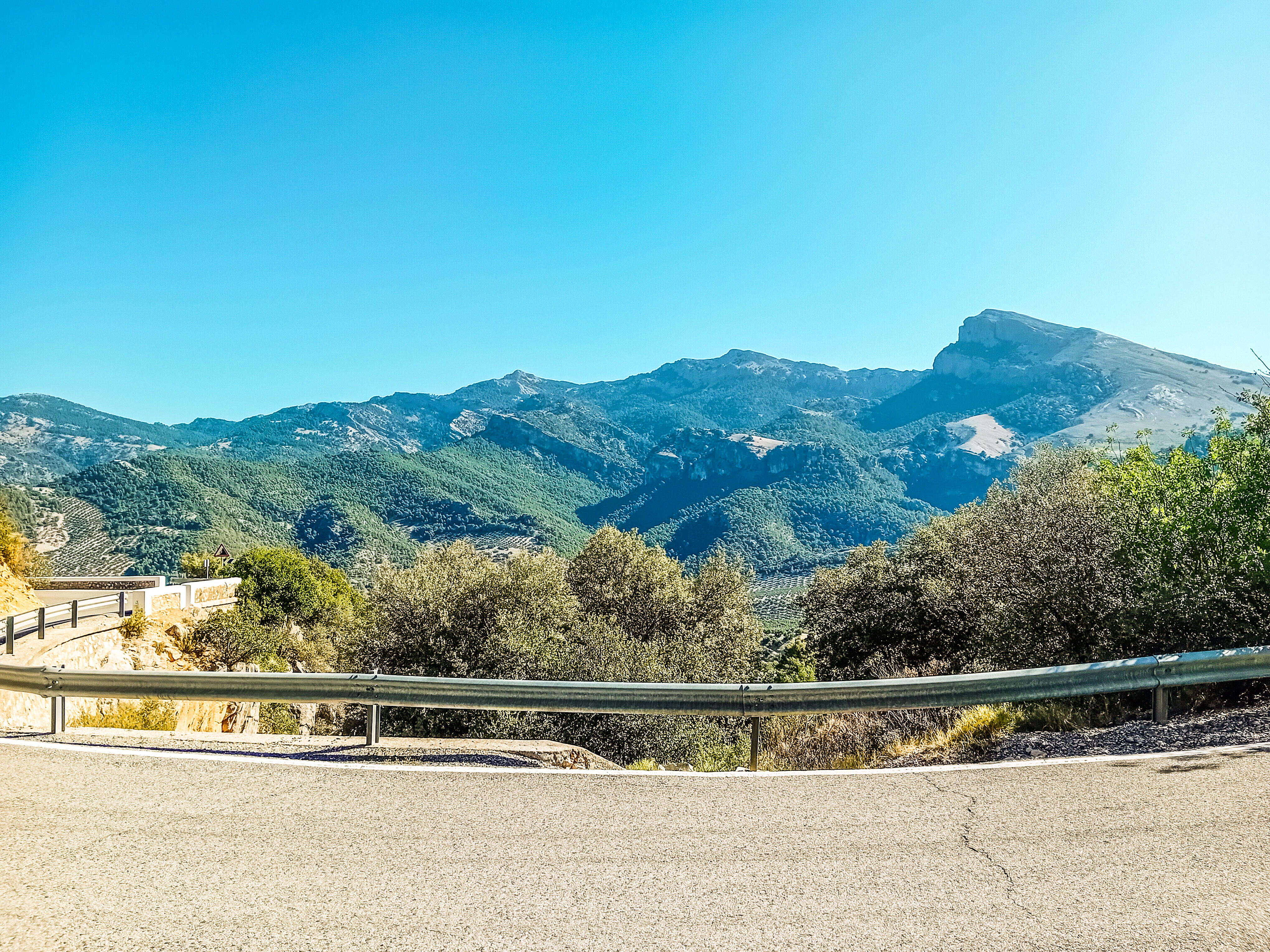
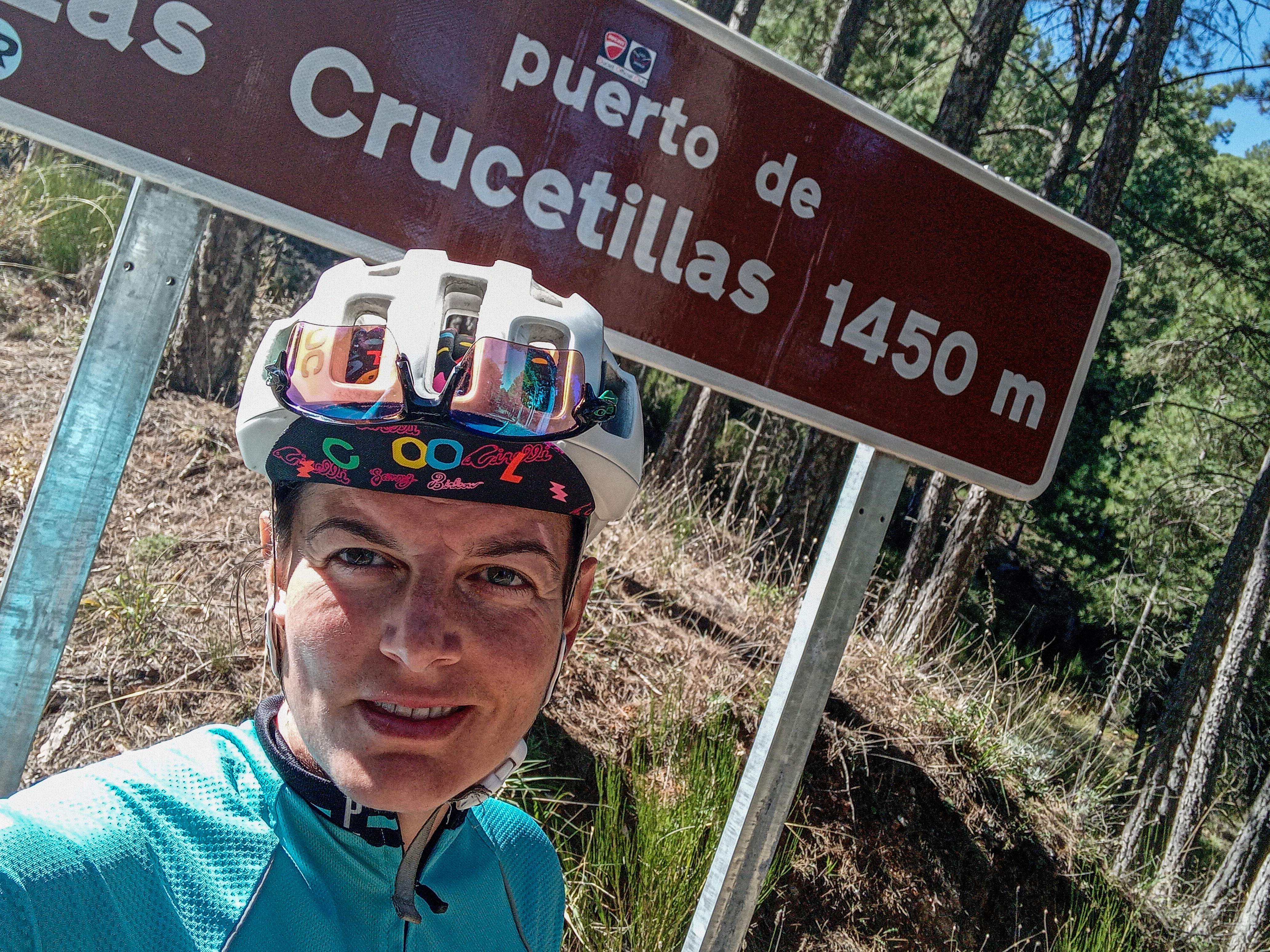
The day starts with the climb from Ayna back to the main road, that way I have time to appreciate how spectacular the canyon really is. Then it was pine woods and nearly deserted (but recently paved) roads for most of the day. And constant climbing until Puerto de las Crucetillas, where you will be rewarded by a stunning view over the entire Sierra de Cazorla. I don’t remember the day as extremely difficult. Yes, it is a lot of accumulated climb over relatively short distance, but the gradient is very mild, so you just get into the granny gear and enjoy the scenery. Breaks: there are not many options. Bogarra is the first town on your way (I had a coffee break, which probably wasn’t necessary after only 20 km, but I wasn’t in a hurry). After that your only lunch option is Casa Maria in Batán del Puerto at km 35. You either stop there or there is no other populated place until Riópar, so you might as well. The restaurant has a delightful garden and Maria’s judiones con perdiz (giant beans and partridge stew) alone are worth the stop. Even though it may not be the most indicated dish if you have to get back into the saddle after that. Do not miss the detour to Riópar Viejo before reaching the village, it’s only an extra 100 m climb to a beautiful viewpoint. You can also explore a little church and a ruined castle. Riópar offers a little more life than the previous stop, there were several open restaurants and bars to chose from. I ordered fried sheep brain for dinner. Probably not the best sport nutrition, but I am only a weak sinner and succumb to my vices any chance I get. What can you do.











Day 3: Riópar – Segura – Hornos
GPS here.
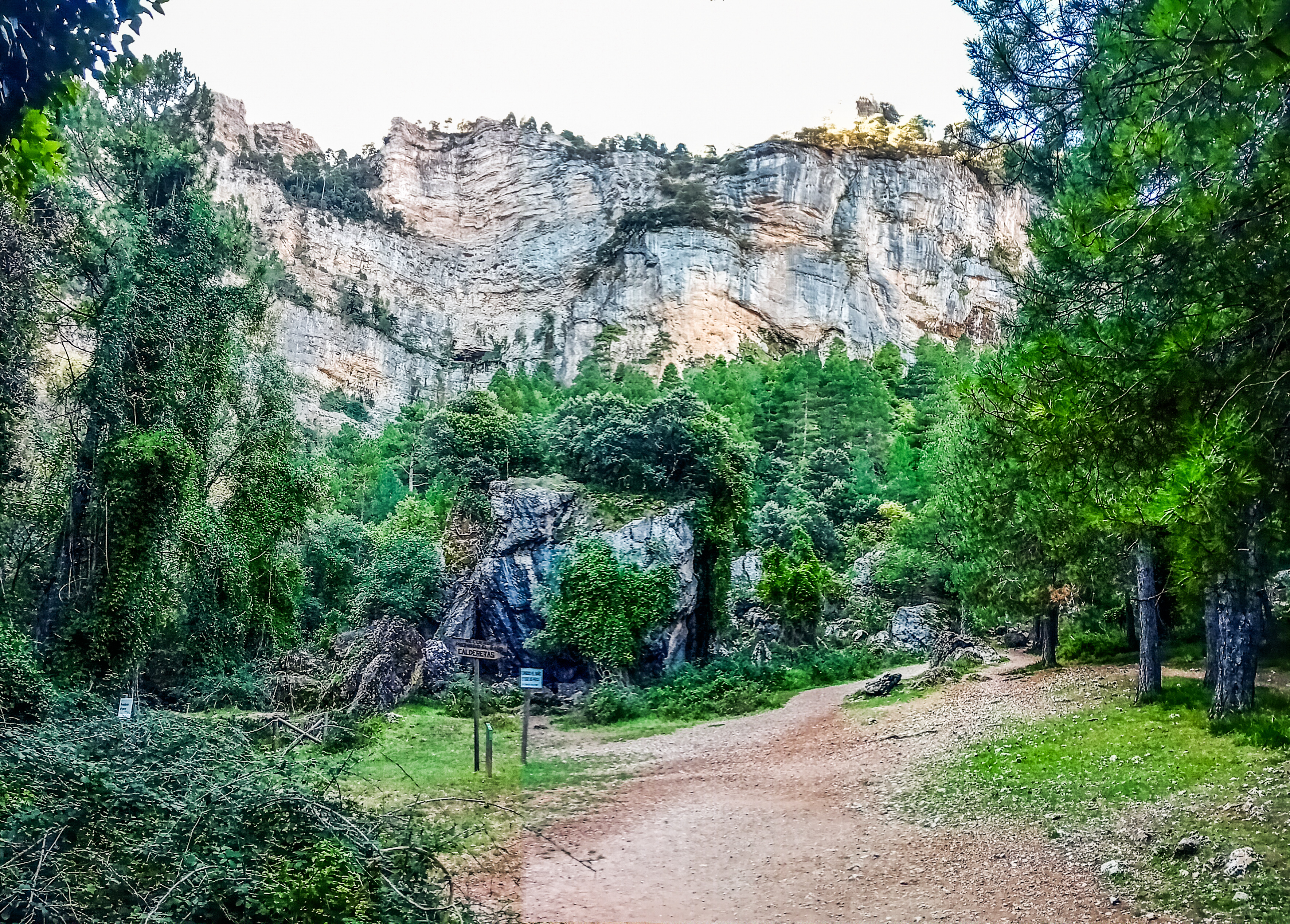
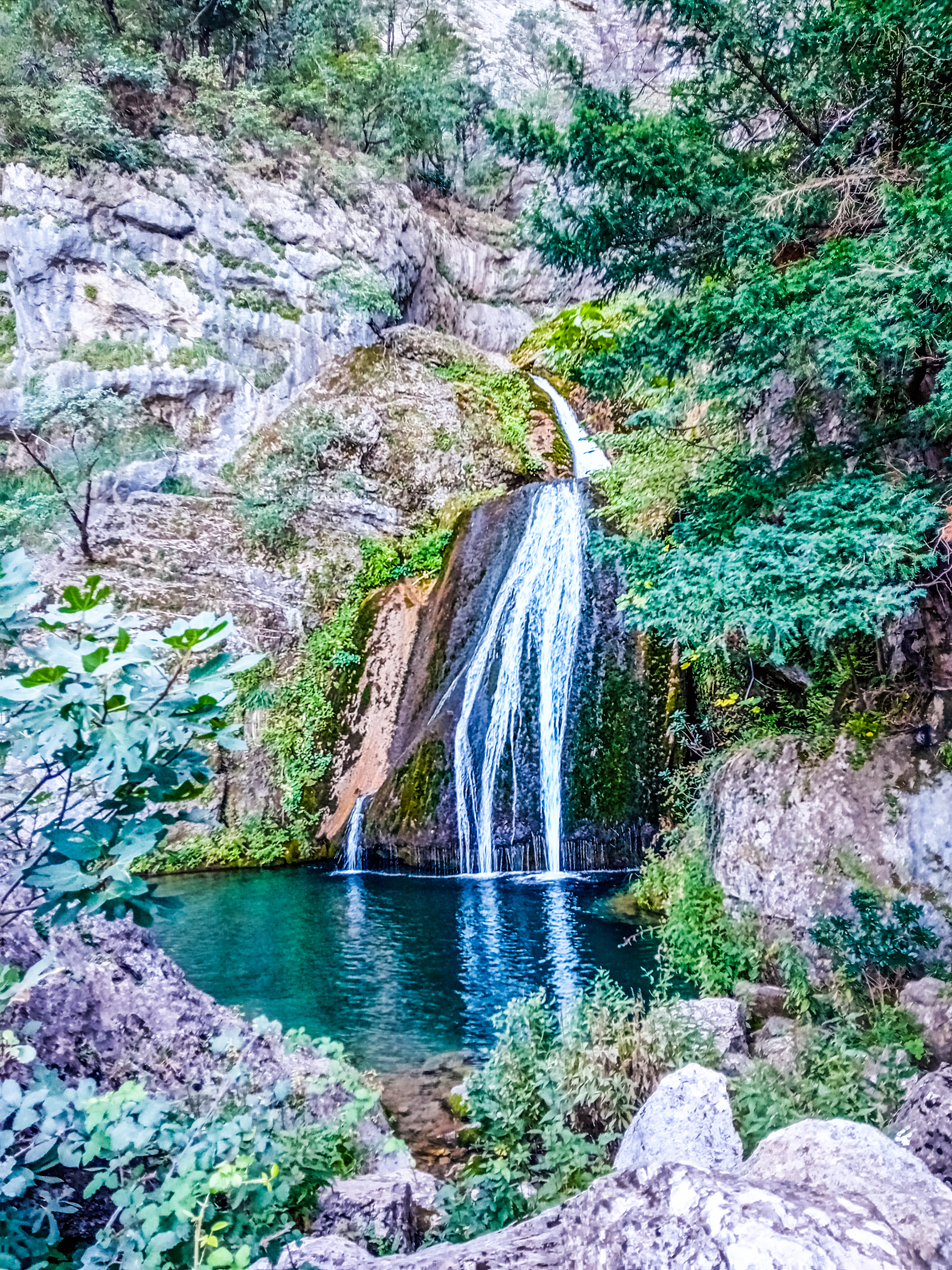
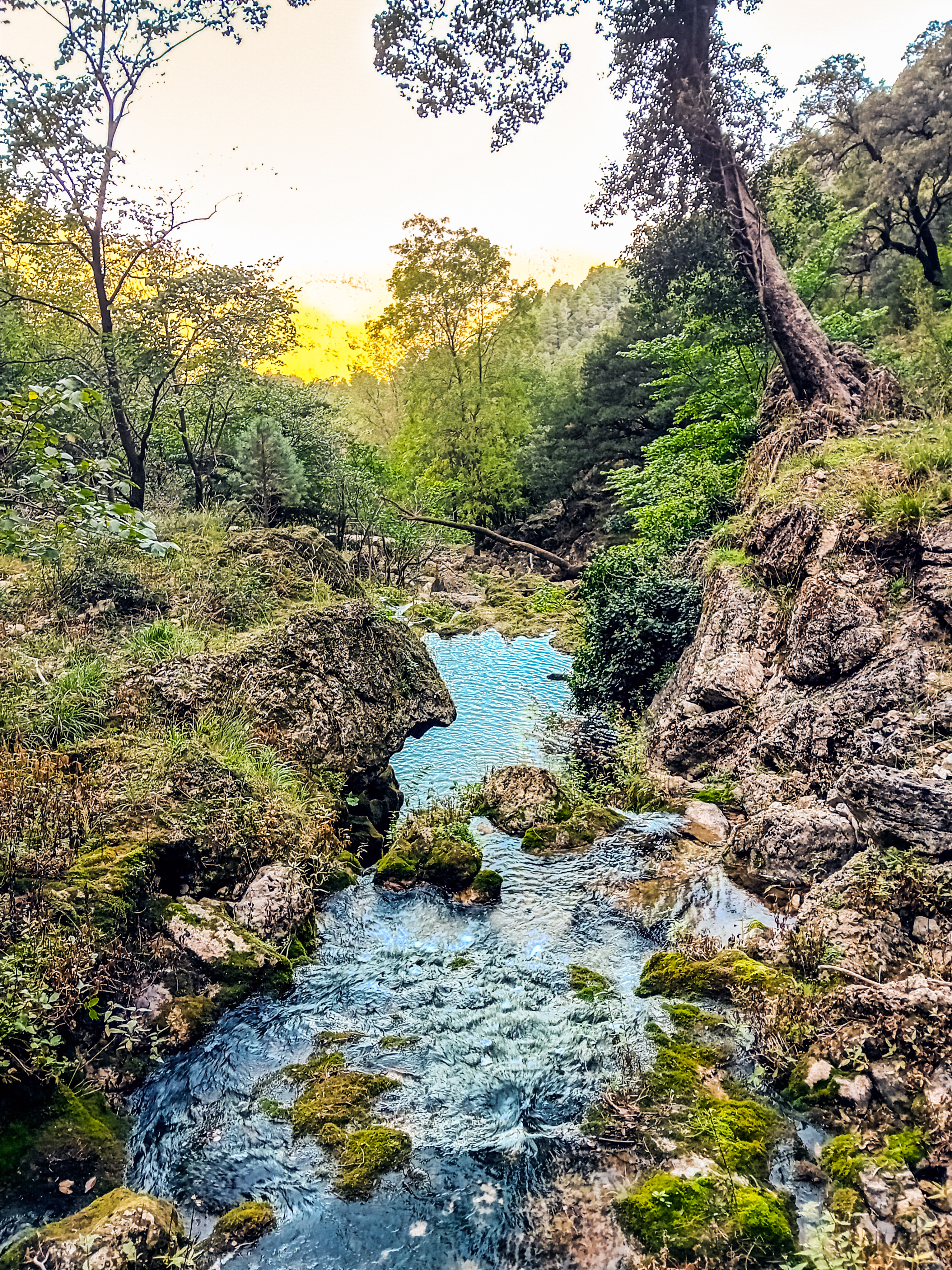
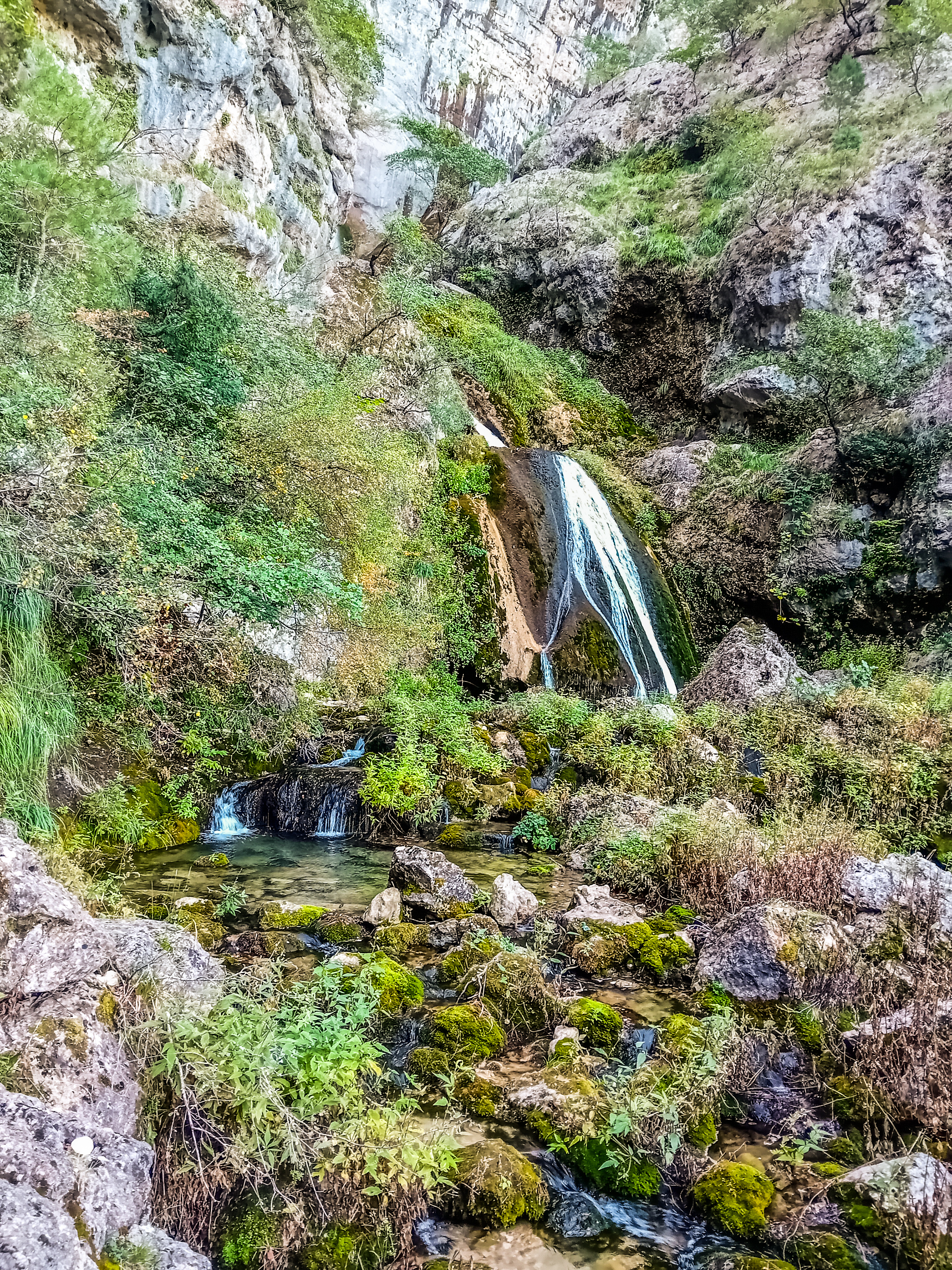
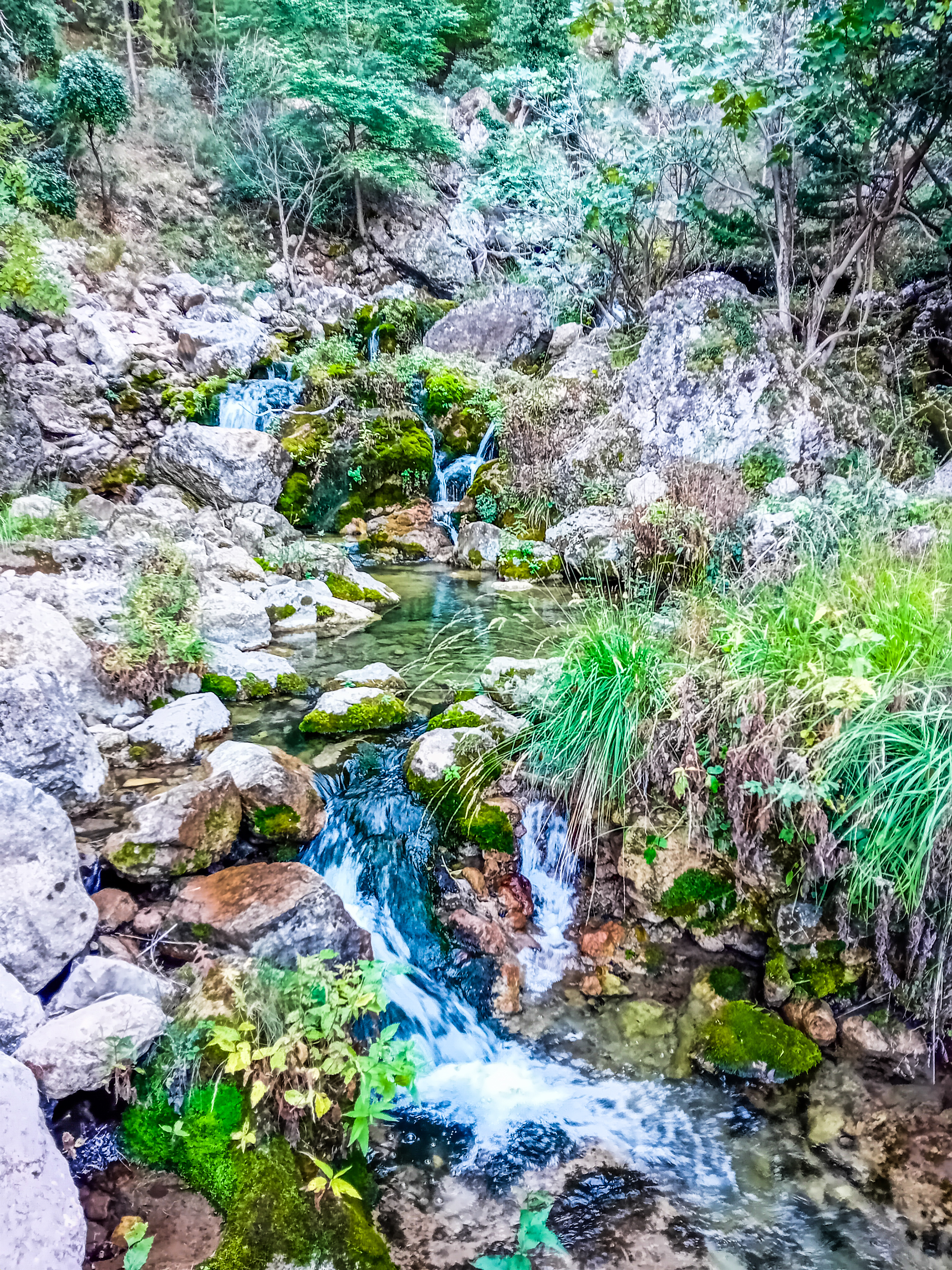
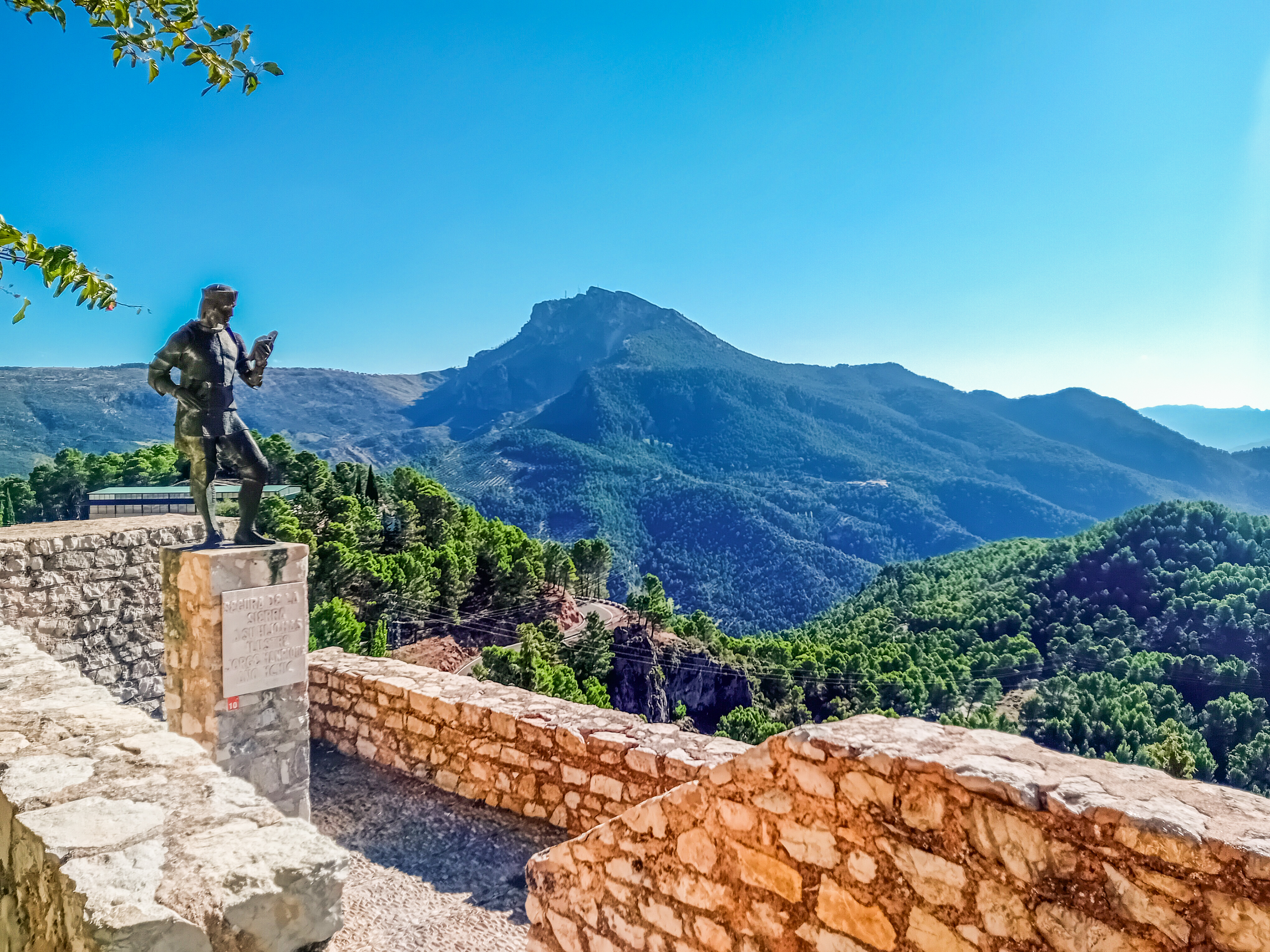
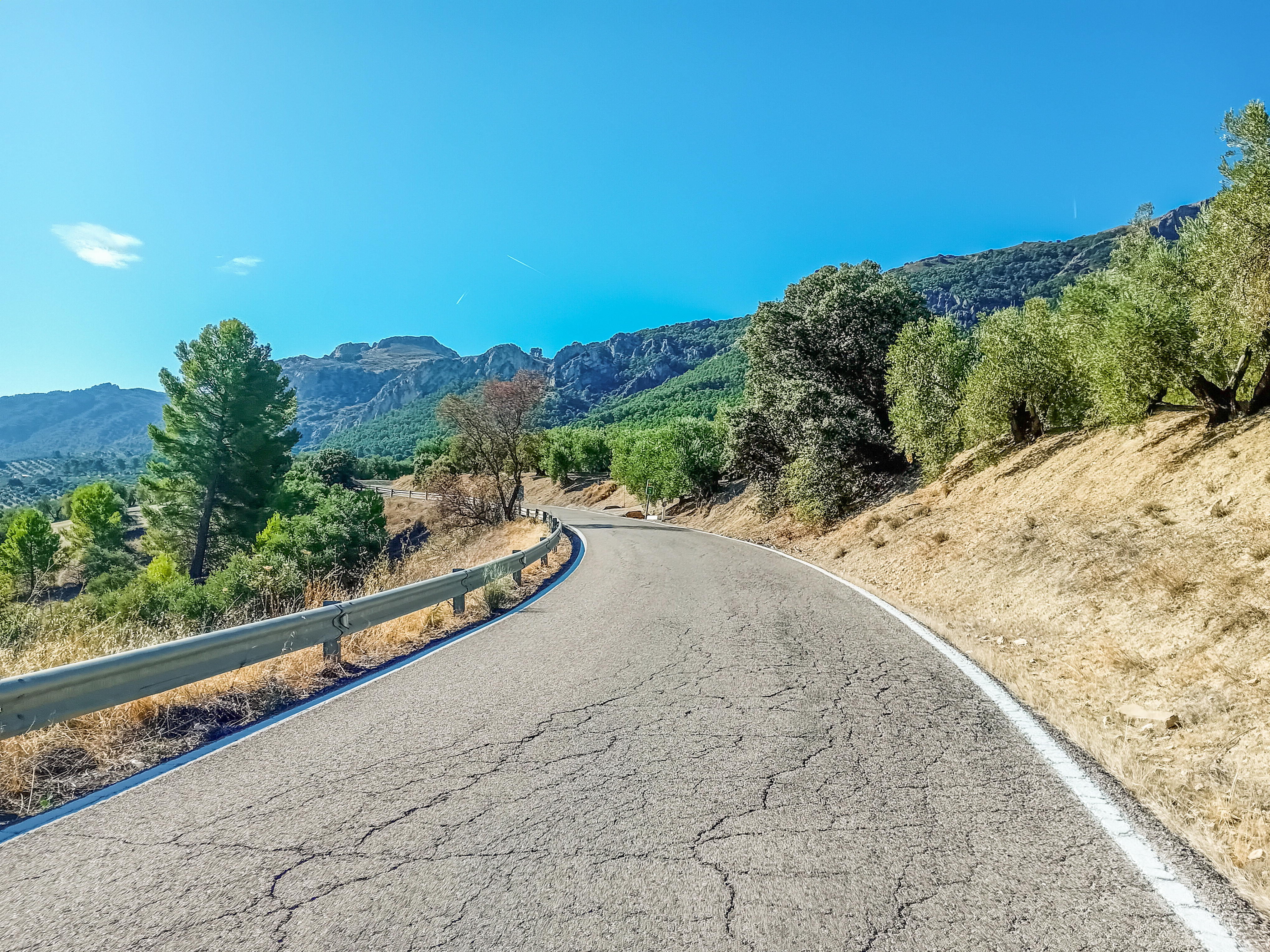
The day starts with a very gentle climb to Puerto el Arenal. Perfect for a warm up, as the morning was a little chilly. Just before reaching the top, do not miss the detour to Nacimiento (spring of) Río Mundo. Depending on the time of the year, the waterfall can be spectacular. Even after the long and dry summer that we had had, there still was some stream left and it was worth the extra climb. Then descend towards Siles and finally entering Andalucía. More pine trees, deserted roads and fantastic views. I had a light lunch in Siles, mainly because I lost time during the walk to the spring and next available stop would have been too far. I climbed from Siles towards Navalperal, possibly the toughest climb of the entire week, because it’s almost 10 km long and the first half is over 9%. On the other hand, it’s all in the shade and the views are awesome. There are other and easier ways to continue from Siles, but I’d recommend this one because of how quiet it is. You will arrive to the castle of Segura from above, it sort of appears in front of you, and then you enter the city centre straight away (as opposed to having to climb to it, for once). Unfortunately, both restaurants in the centre were closing, but the bartender, who was a cyclist himself, took pity on me and sold me a cold drink. You get the first glimpse of olive groves on the last stretch of the road towards Hornos, although nothing compared to what was about to come in the next days.
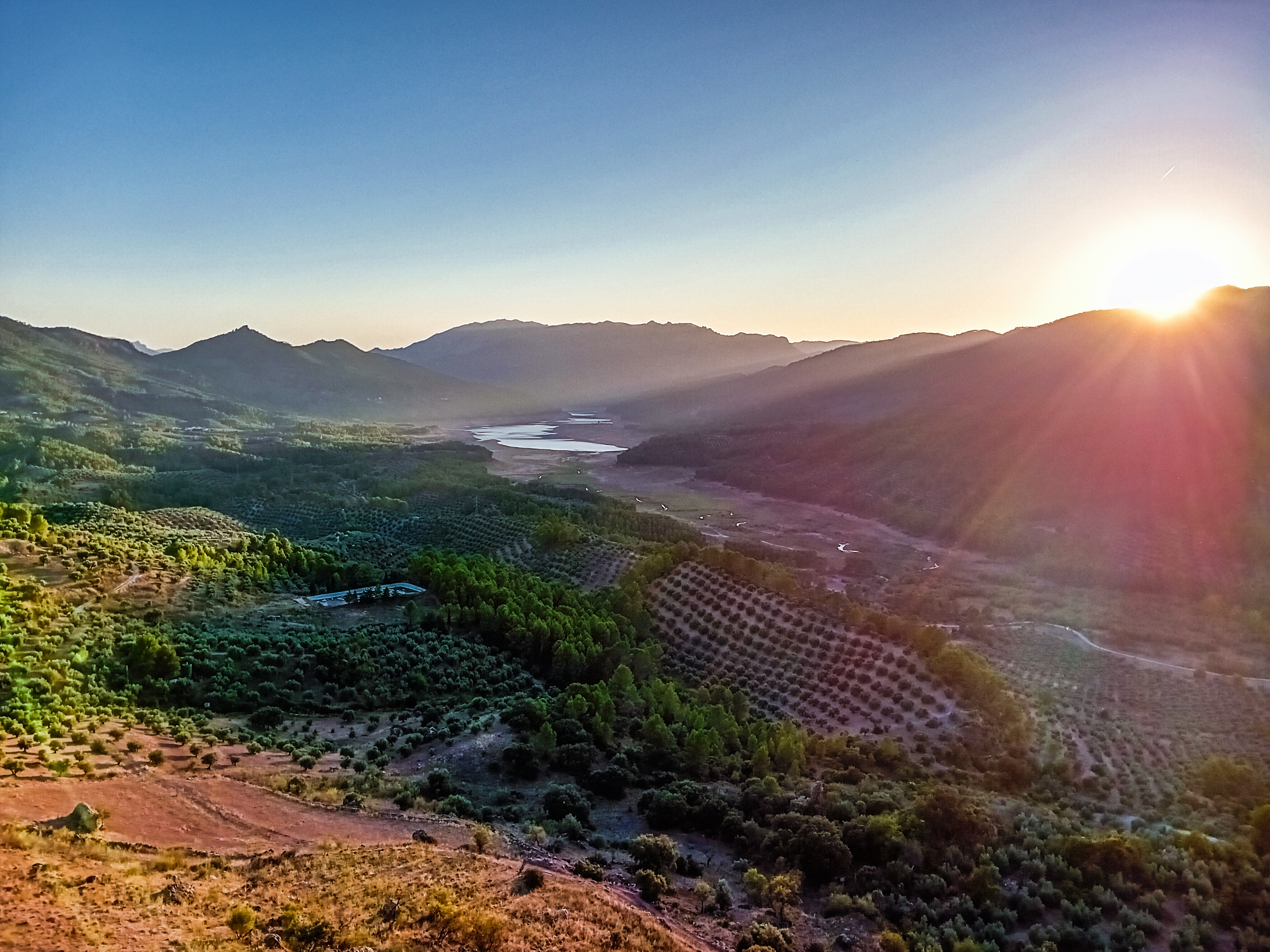
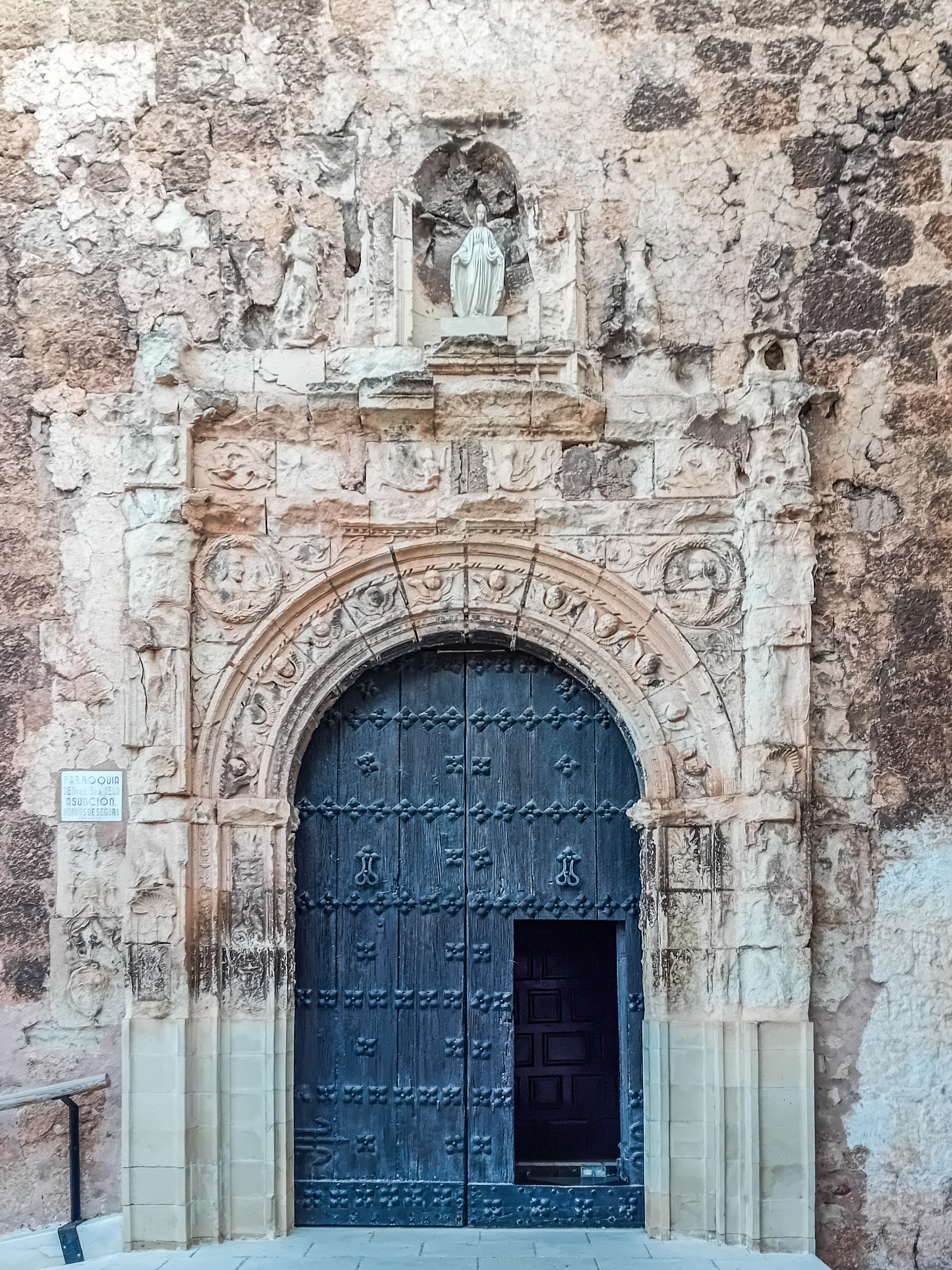
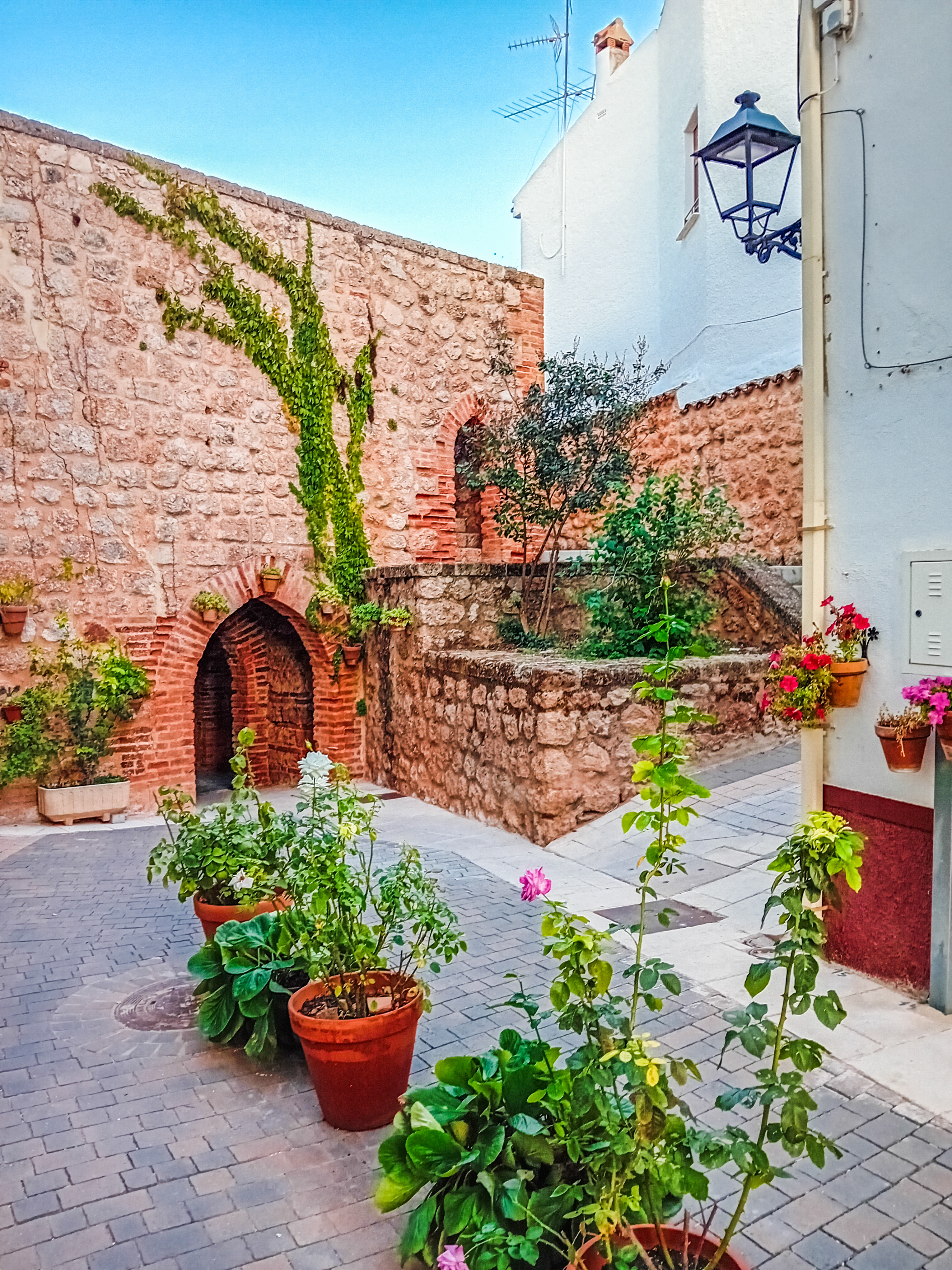
Below: evening walk around Hornos and watching the sunset over the reservoir of Tranco de Beas on the river Guadalquivir.



Day 4: Hornos – Cazorla
GPS here.
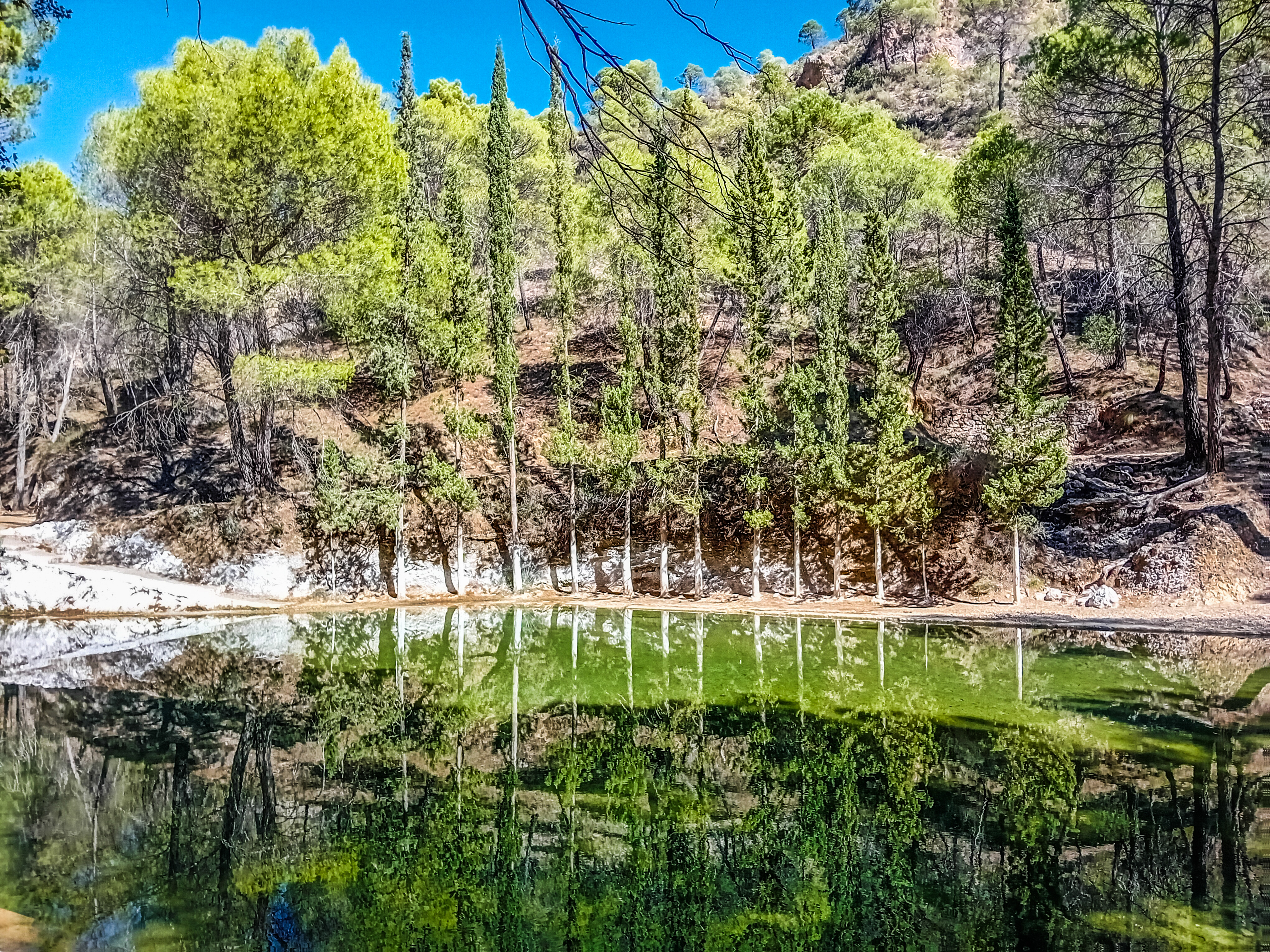
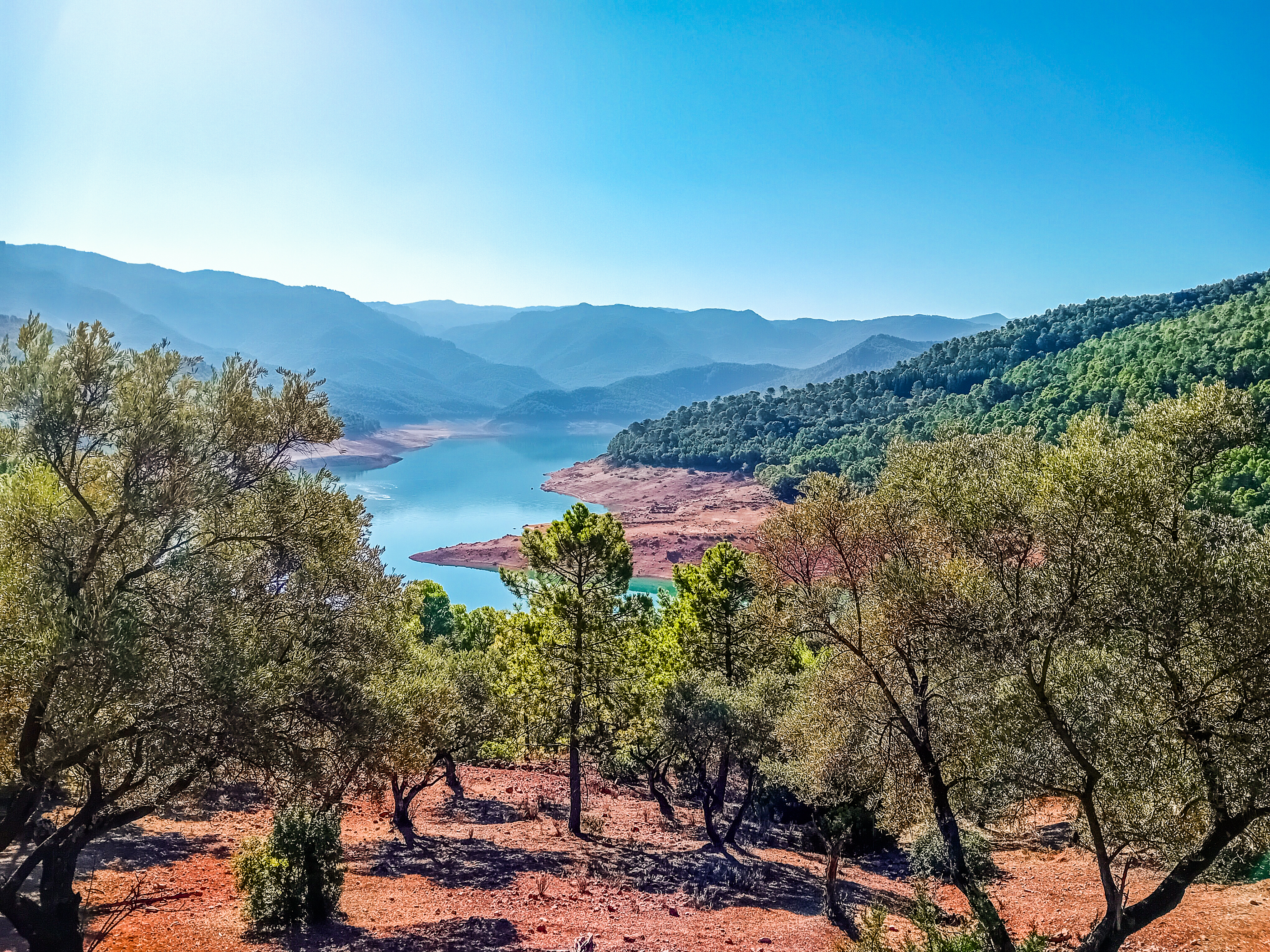
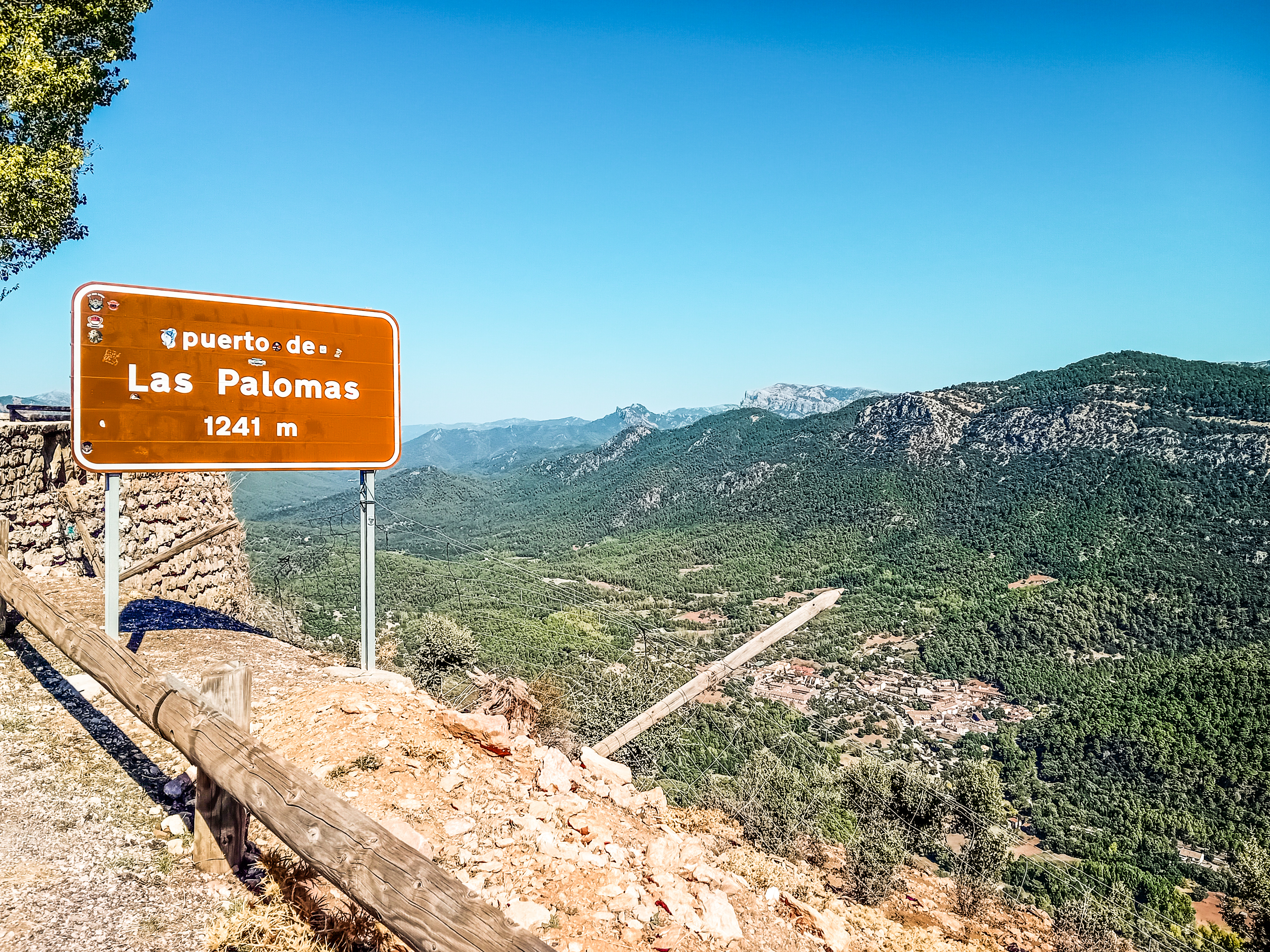
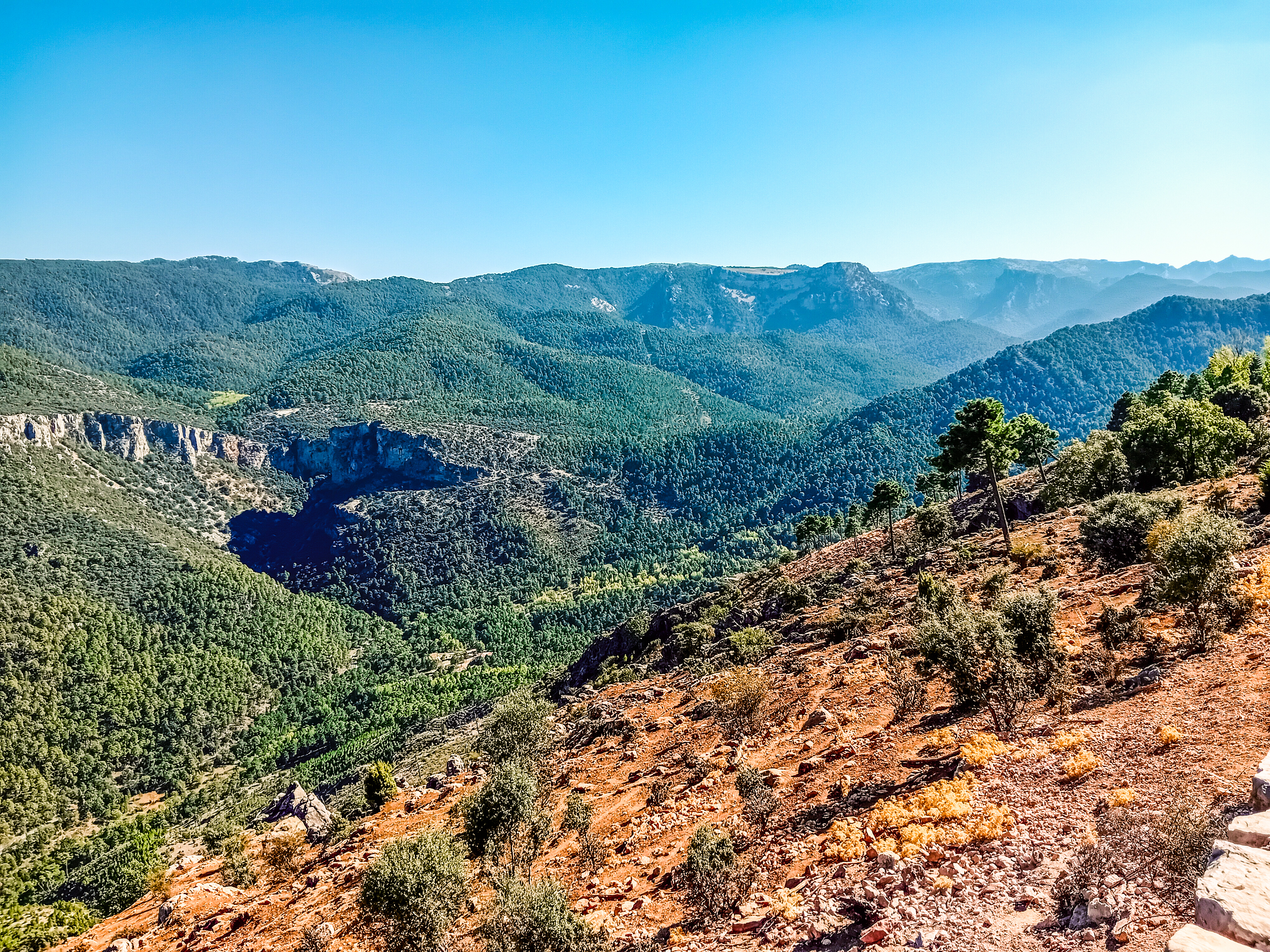
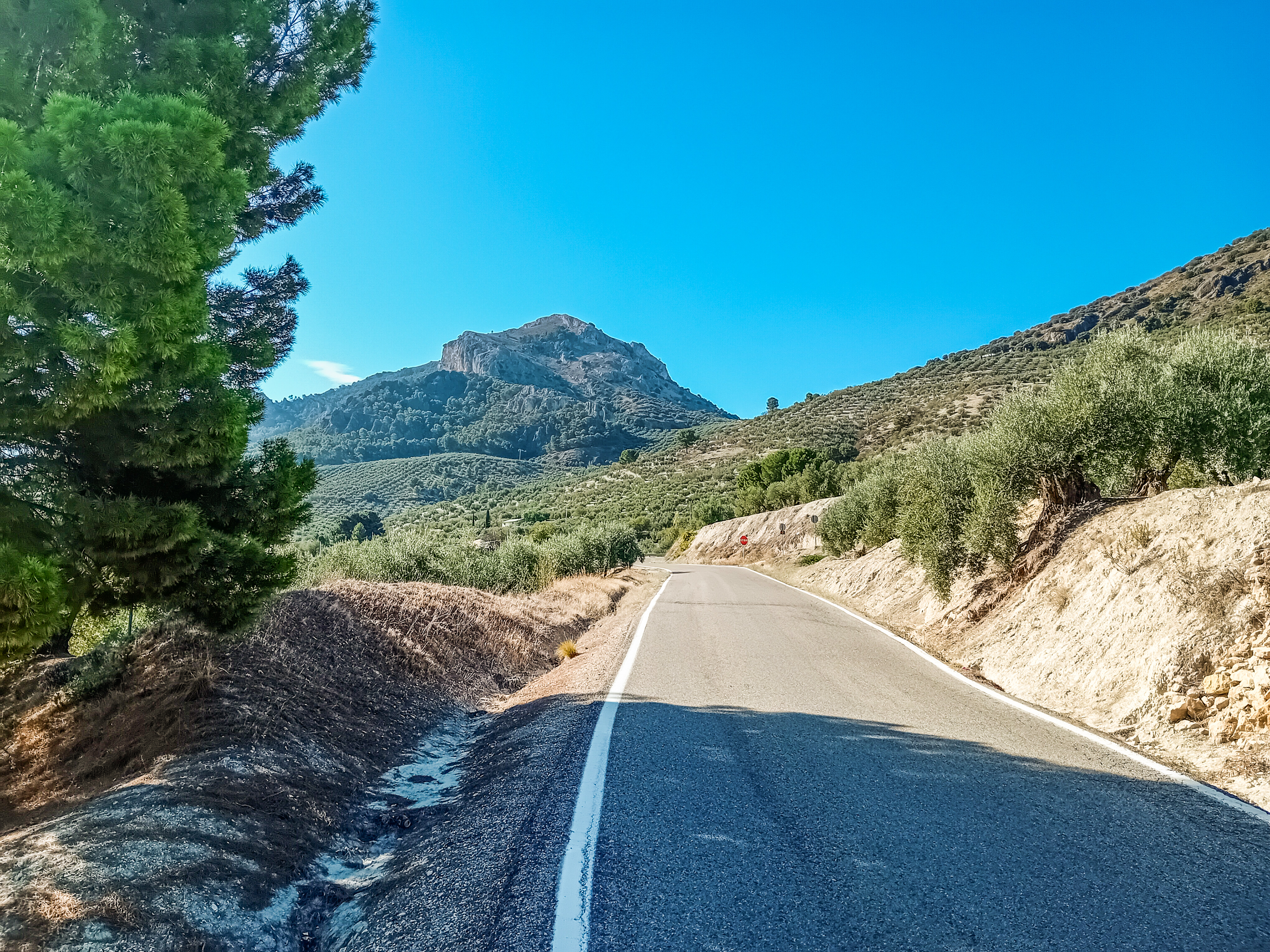
This was supposedly the day with most traffic, as it was national holiday, but even then, compared to Madrid, there were very few cars. The entire day was incredibly pretty. I rode on the shore of the reservoir Tranco de Beas for good part of the day, shaded by pines and surprisingly cypresses. The road is mostly flat all the way to Arroyo Frío, where I stopped for lunch, and then crowned the day by climbing to Puerto de las Palomas. It’s a hell of a climb, but so beautiful. Then you reach the pass and the valley of Guadalquivir opens in front of you, and there are only olive trees for as far as you can see. It’s breathtaking. And then you get to enjoy the descend all the way to Cazorla. Well, almost, there is one tiny bump left, but after what you just climbed, you won’t even notice.







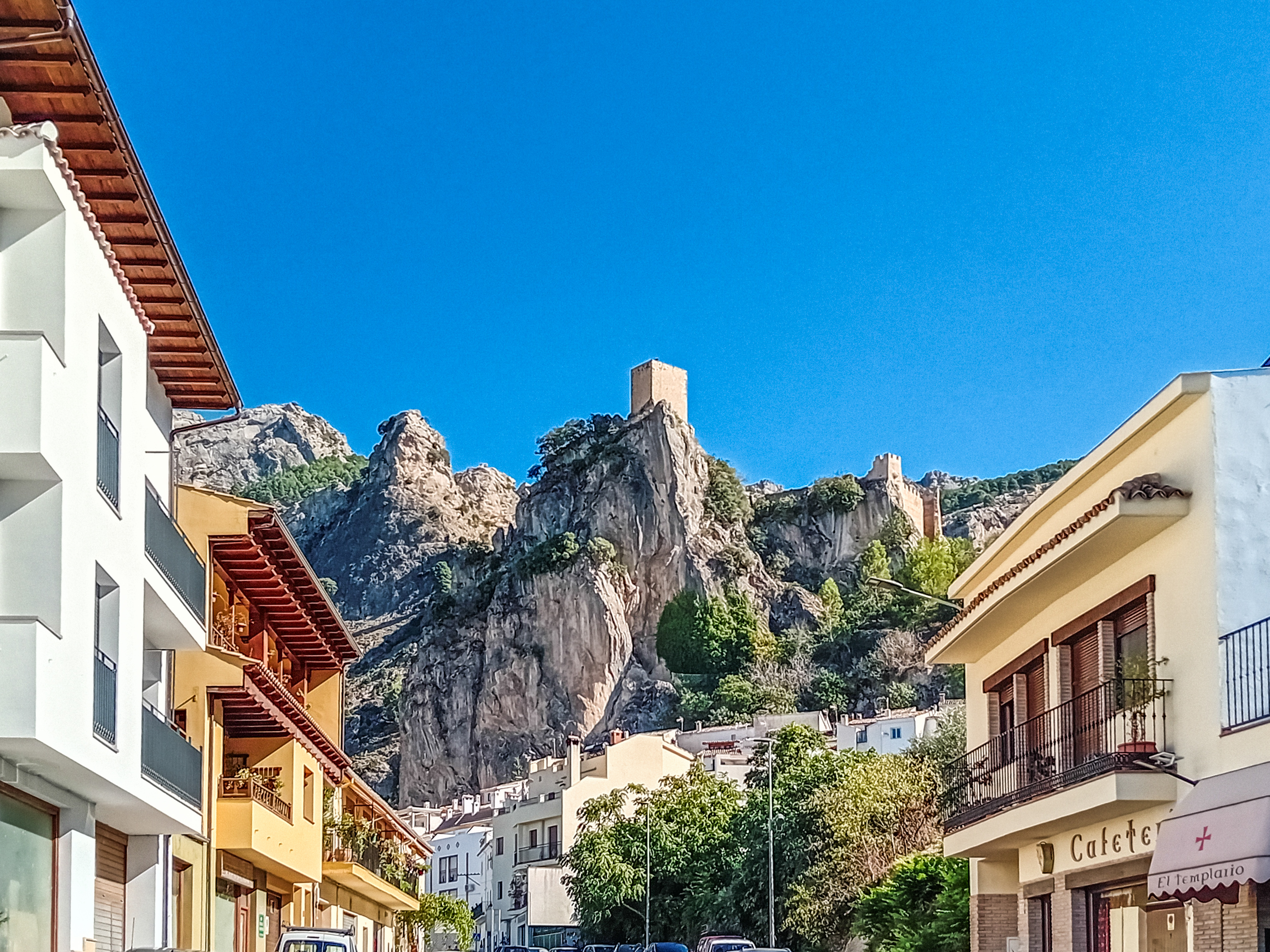

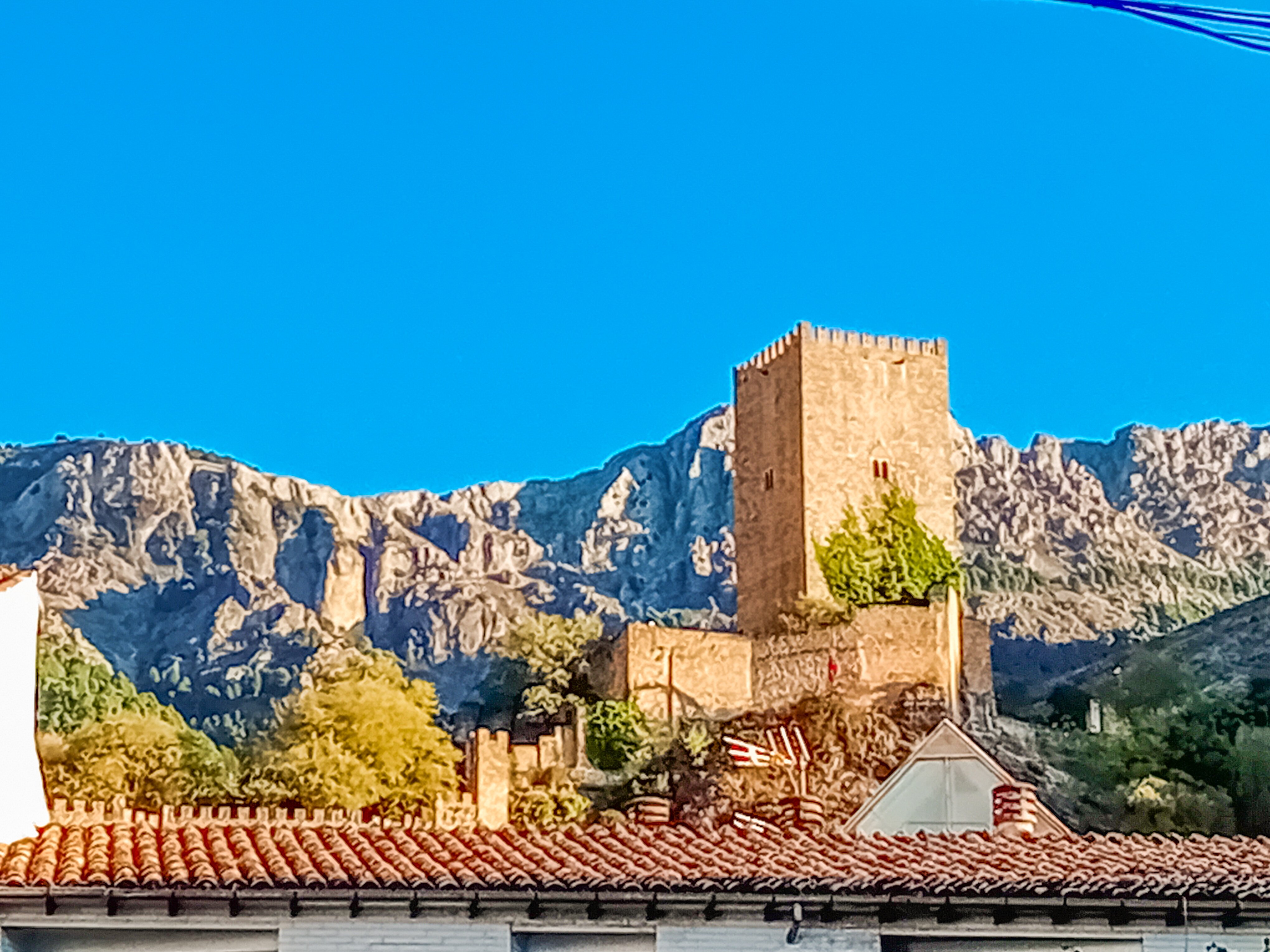
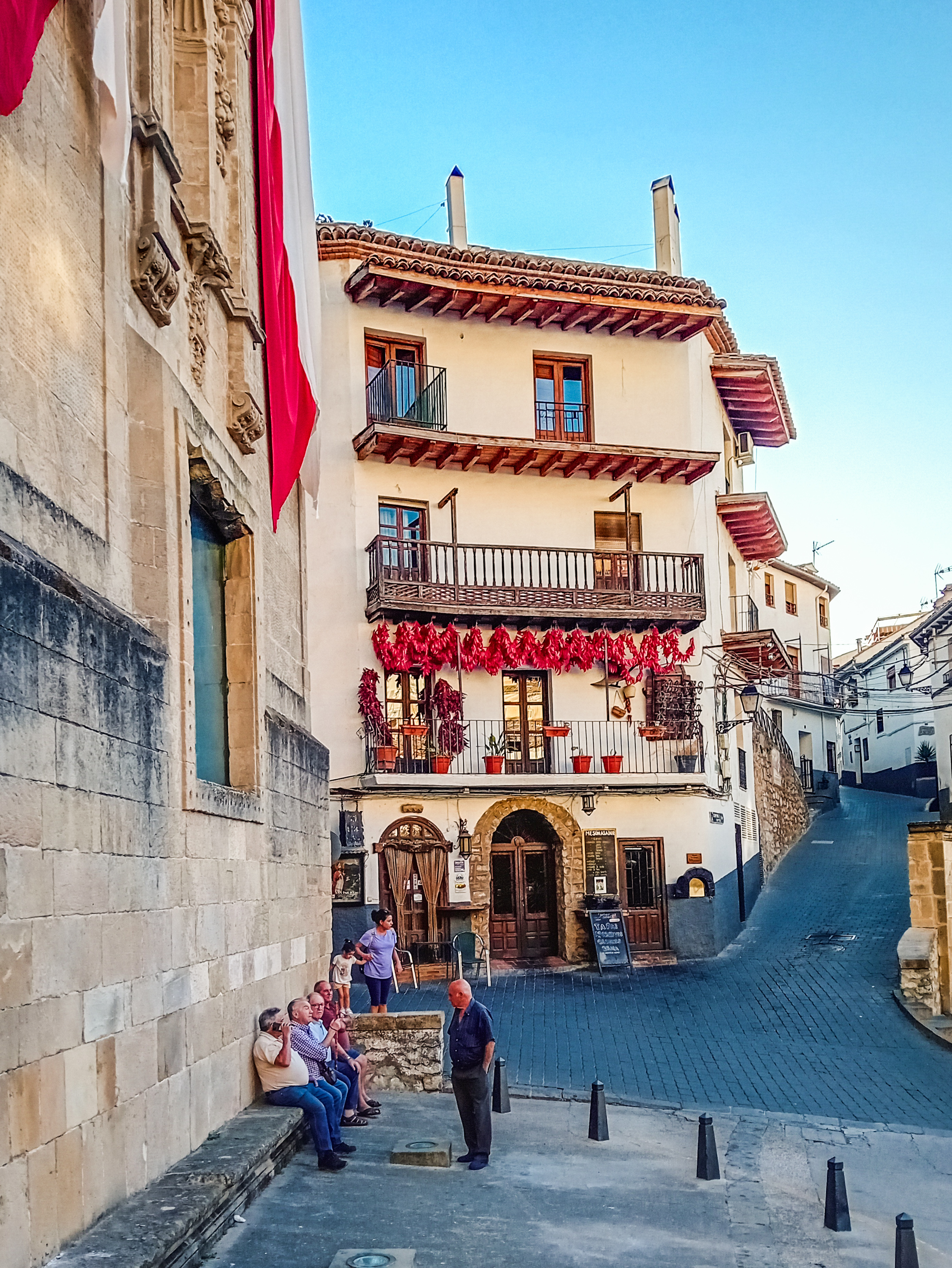
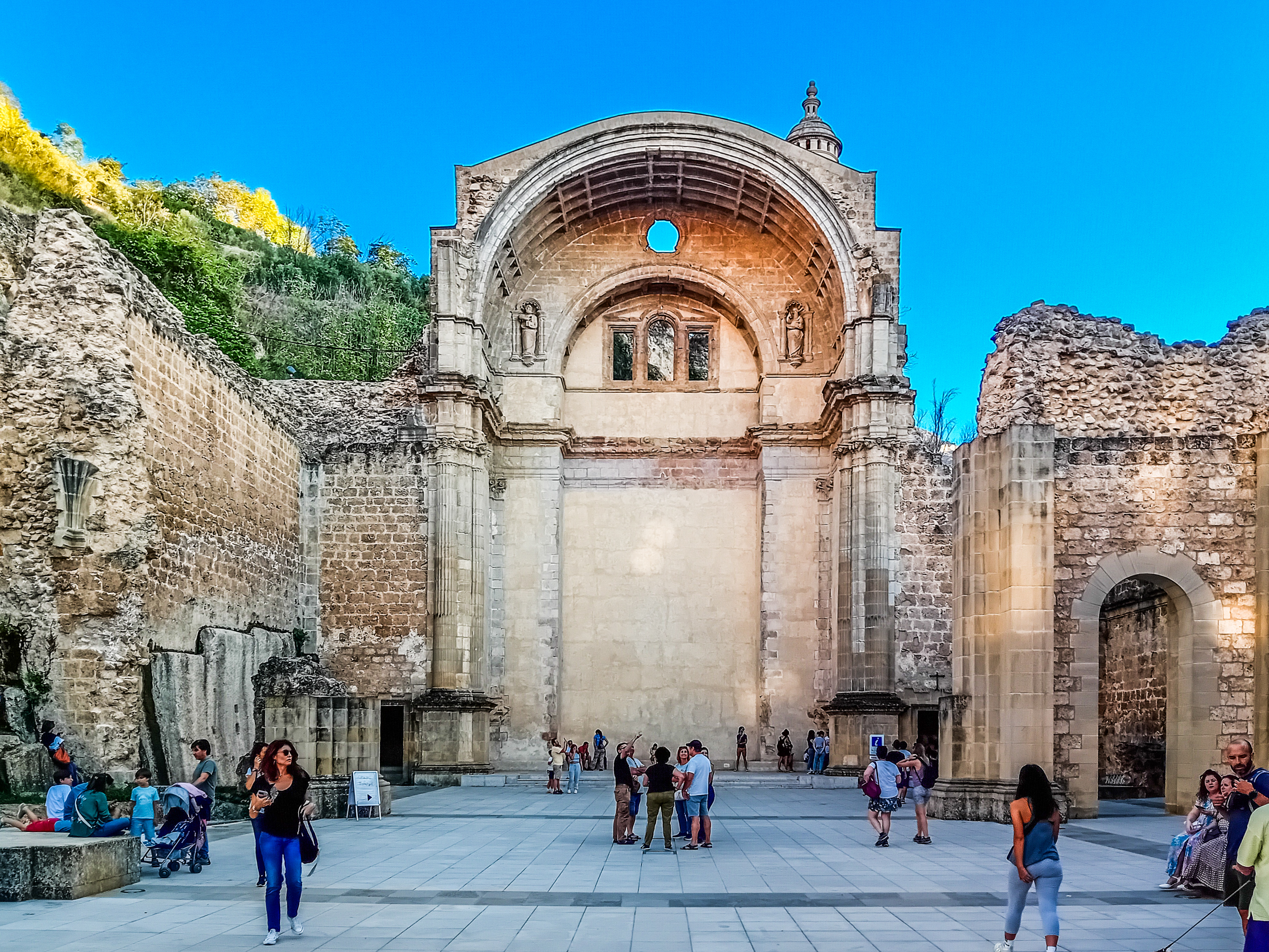
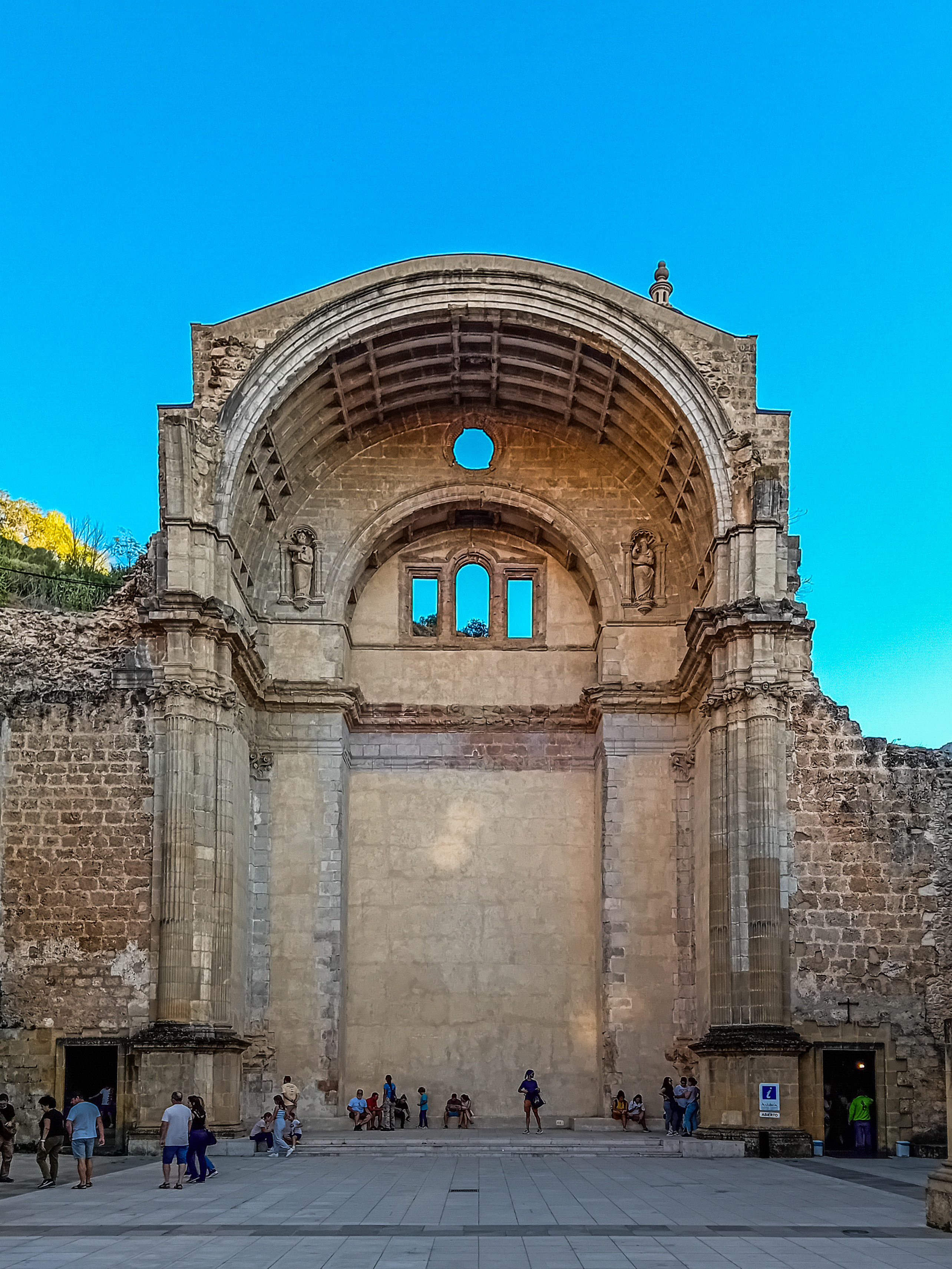
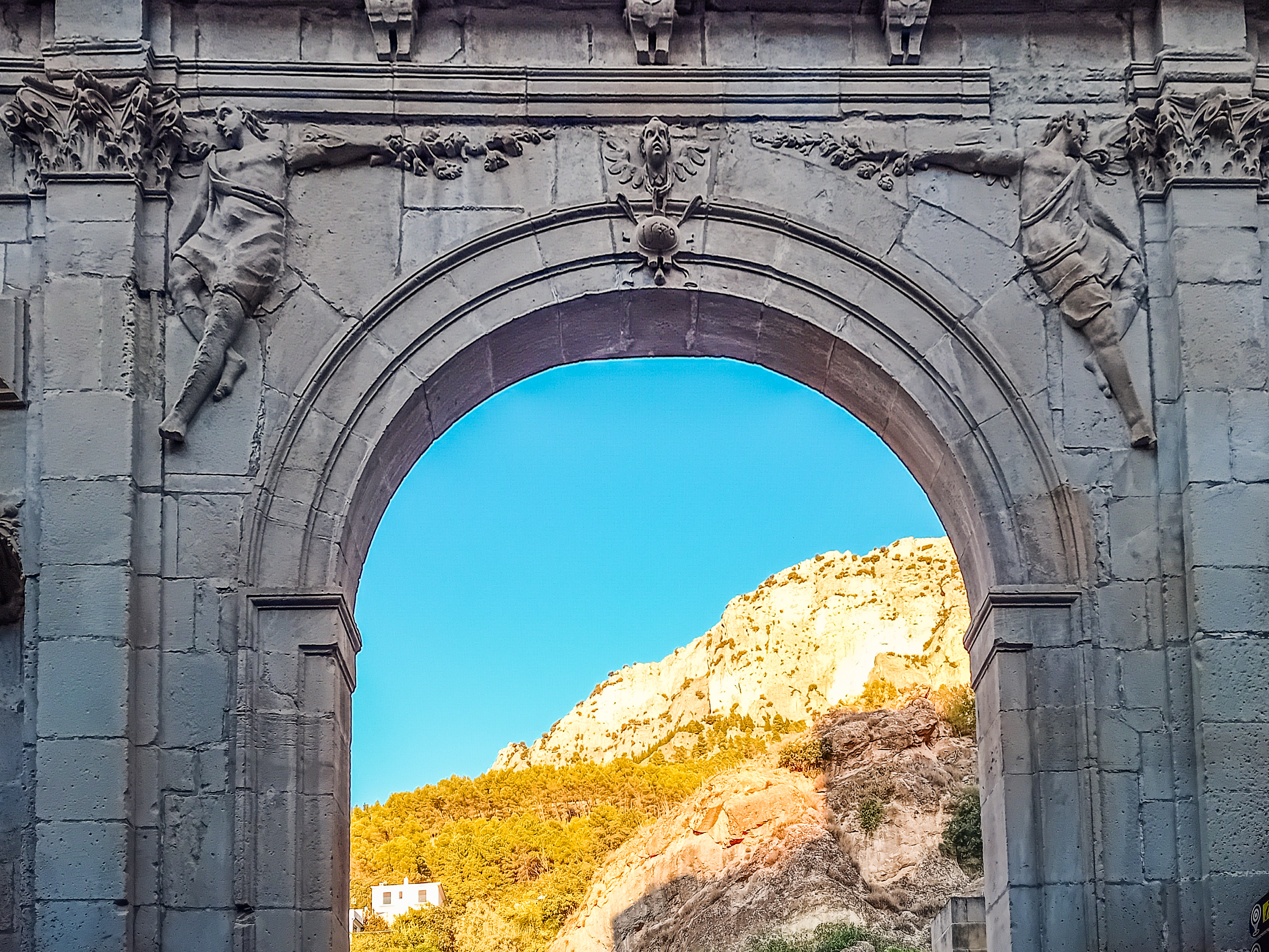
Cazorla – the old part is amazing, especially the ruins of the Iglesia de Santa Maria. It is attributed to Andrés de Vandelvira (a renaissance architect who built most of the province of Jaén). I am not entirely sure what is the reason of abandonment of the church. Some sources say that the construction was heavily affected by floods in 1694 (meaning a more than a 100 years after the construction started) and this seems plausible as river Cerezuelo flows directly below the church. Other sources say that the church was destroyed after it was set on fire during the War of Independence (from the French) in 1811. Either way, the that is left from the building is magnificent. There is also a castle in Cazorla, but I had no desire to go all the way up, because I had already climbed enough in one day. I was more interested in finding a nice place for dinner. Tip: Mesón Leandro and go for the game. I had venison sirloin steak and could have easily eaten two. Also, points to them because (and this seems to be the case in most spanish restaurants) even if it’s an elegant establishment, they did not care that I was not dressed accordingly. I wasn’t in stinky cycling kit, but I was wearing running shorts (with razor sharp tan lines on display) and a hoodie, so not exactly business attire.






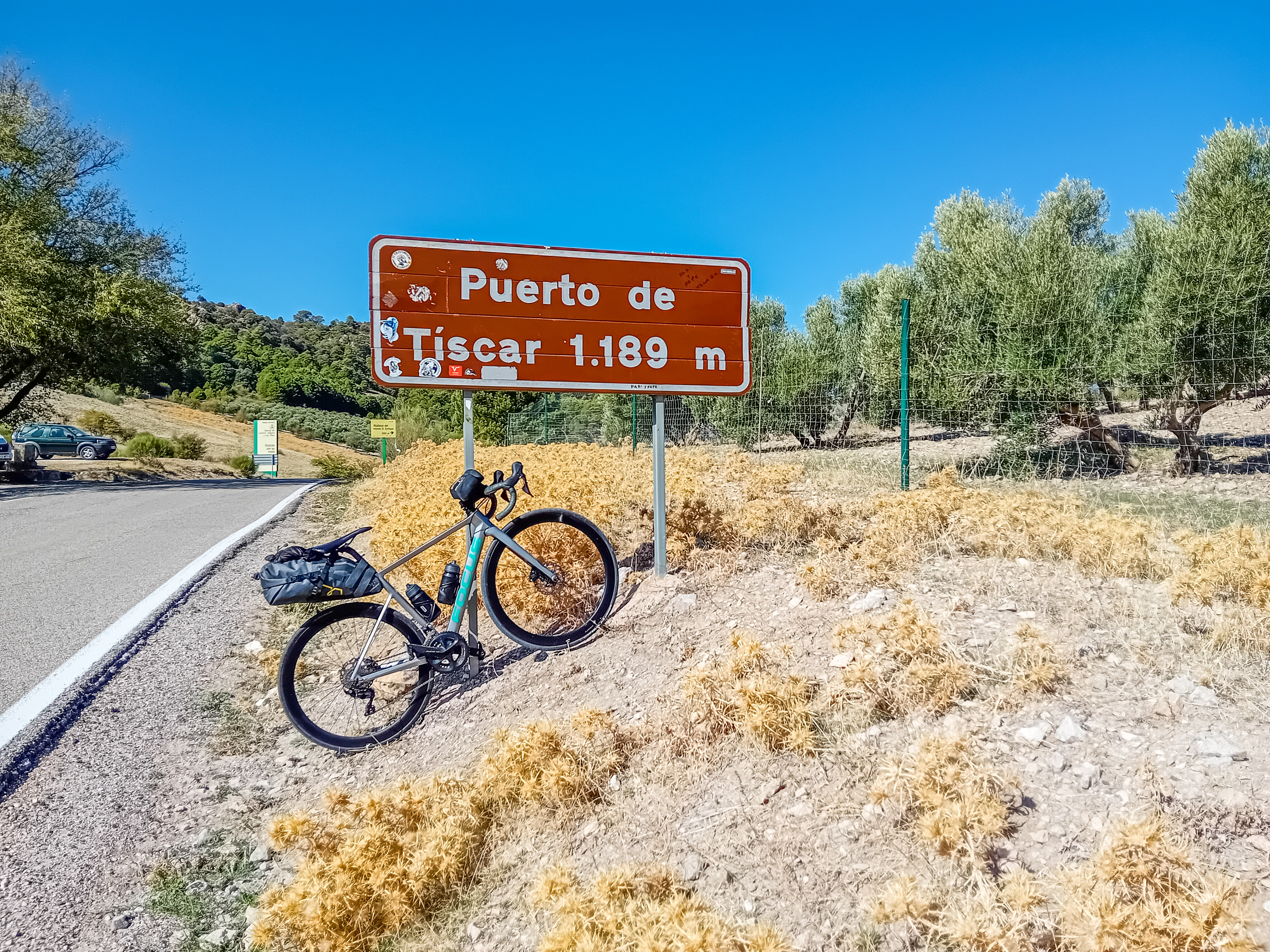
Day 5: Cazorla – pto Tíscar – Huesa
GPS here.
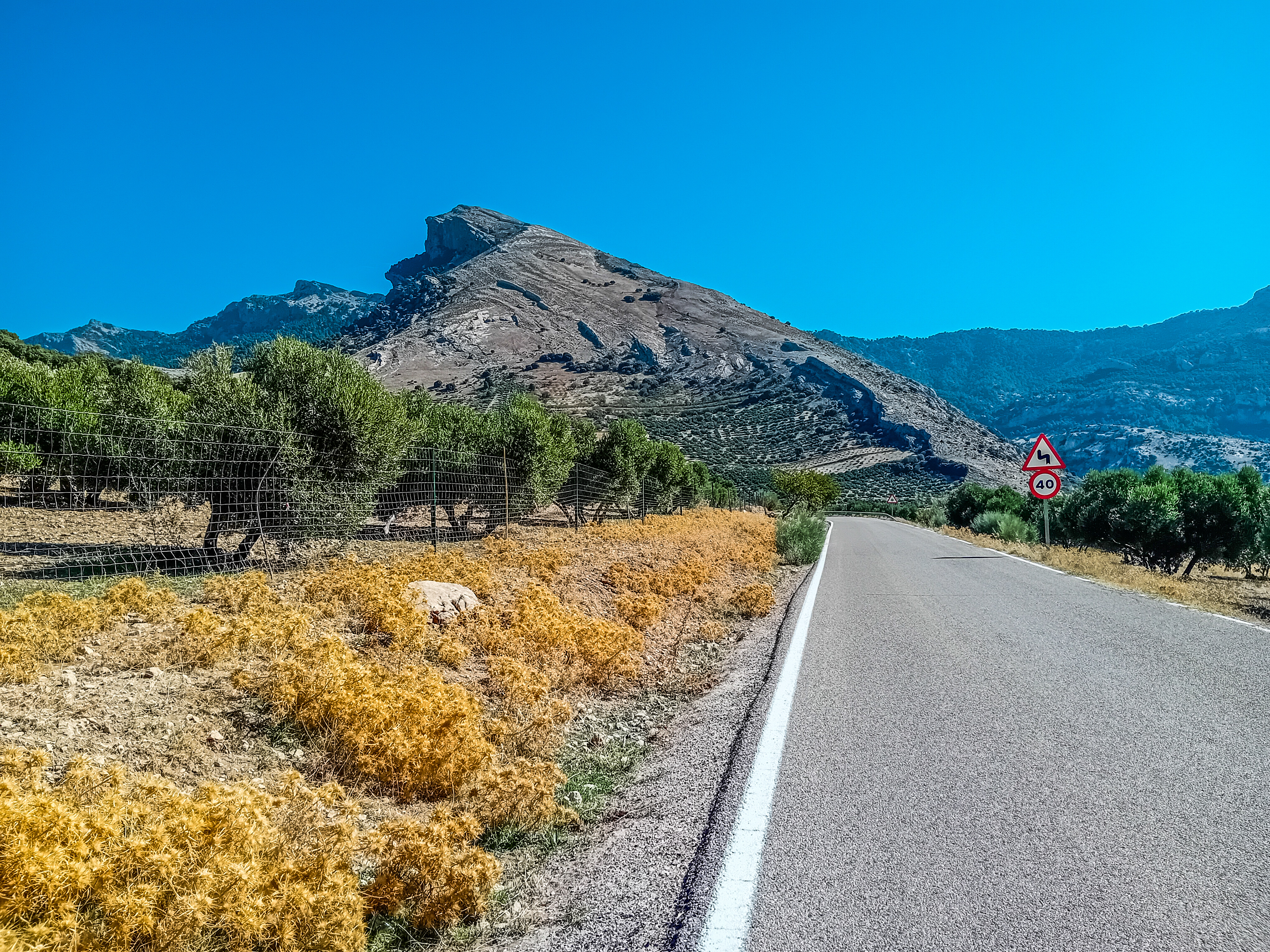
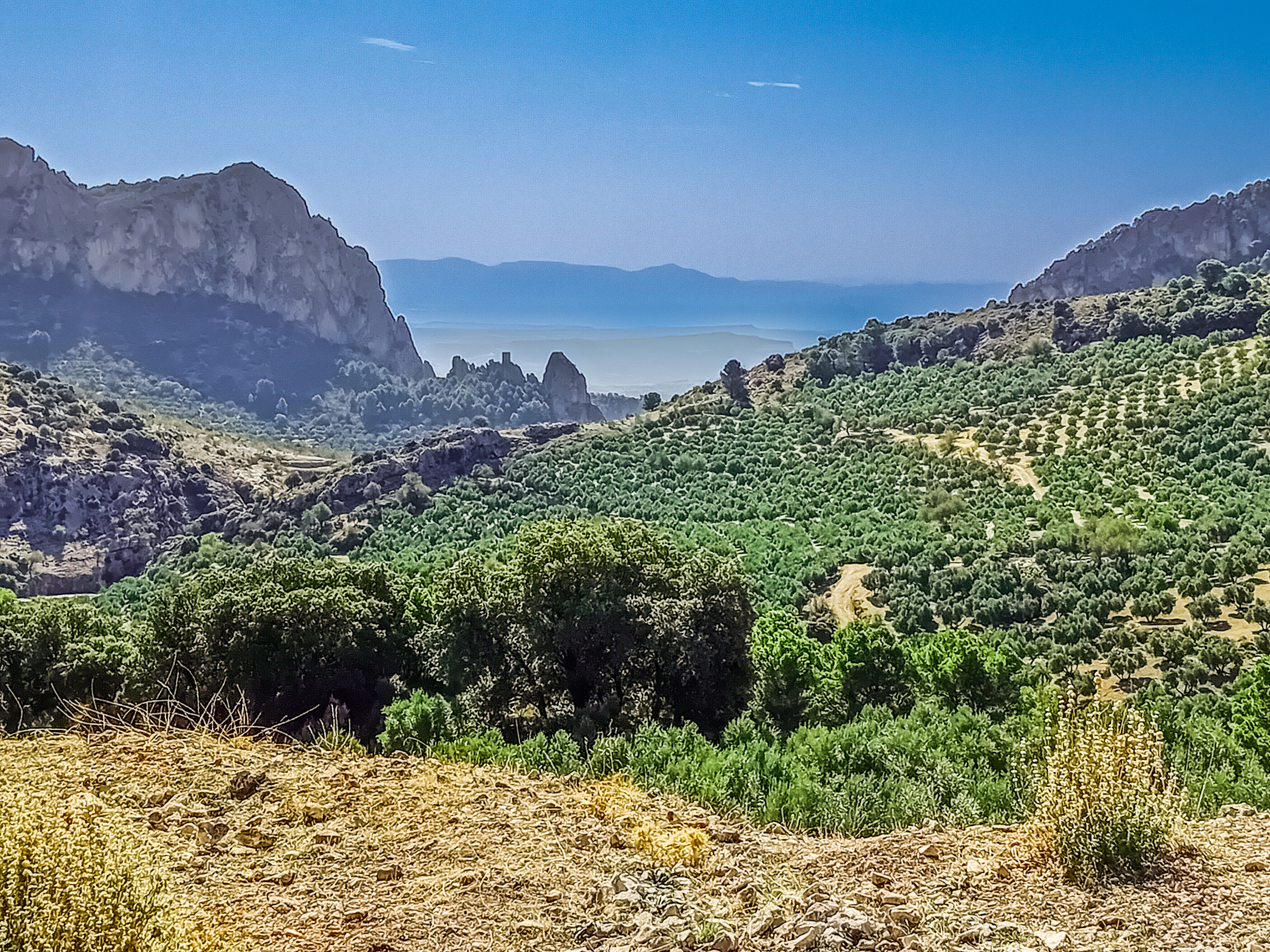
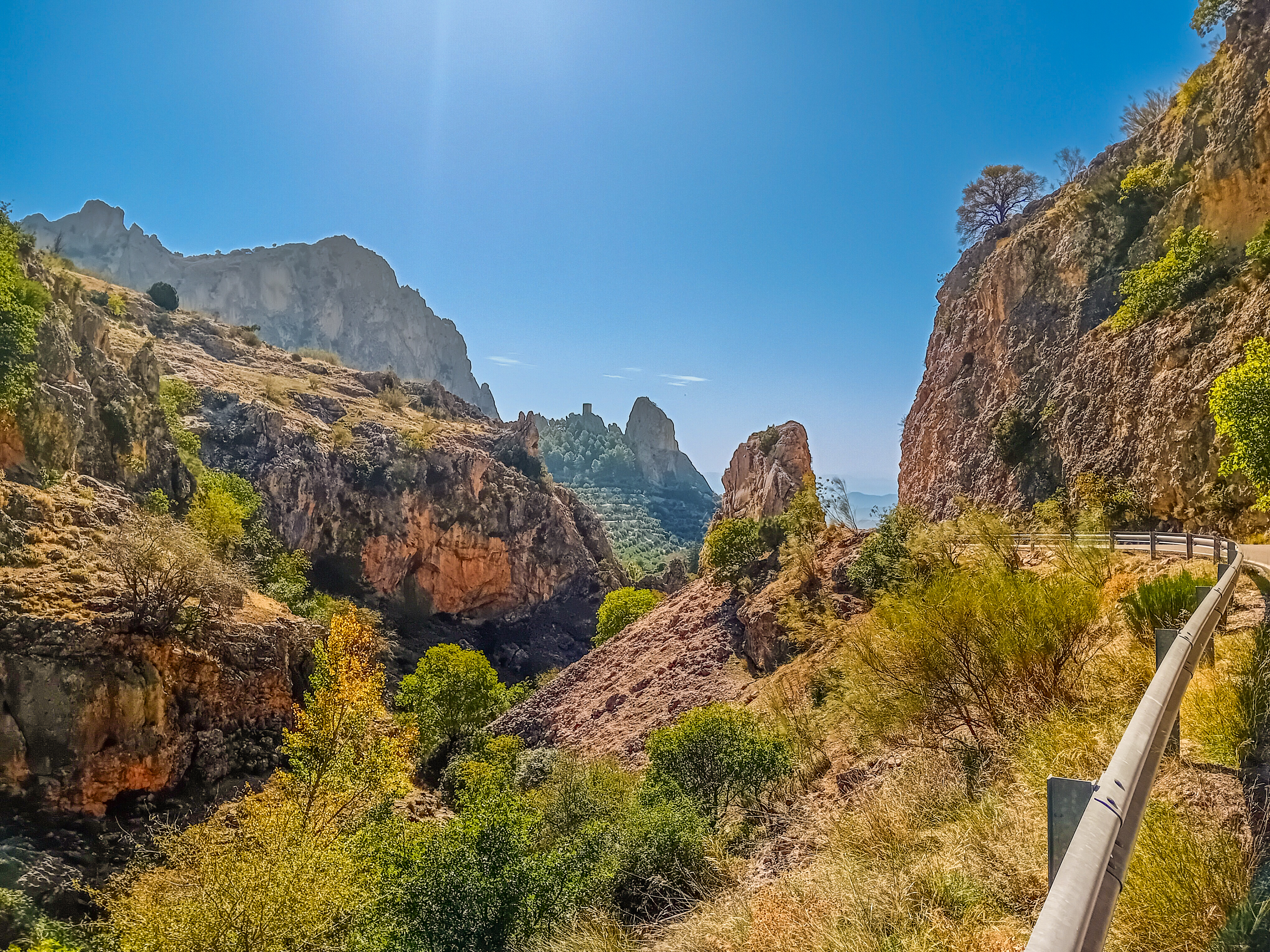
There is a shorter way from Cazorla to Úbeda, but remember, this is an excursion, and the point is to enjoy the views, not to get from A to B on the fastest road. Also, I am probably becoming one of those people who see a hill and are not happy unless they climb it. The scenery has changed significantly compared to the previous days: it’s rolling hills covered by olive trees in the lower altitude and when I start the climb to Tíscar, the mountains become almost completely bare. Again, the climb is long, but mild, and the biggest problem is that there is almost no shade along the way, so on a warmer day, this would be an unnecessary suffering. The descend to Tíscar is stunning. I visited la Cueva del Agua, a narrow cave created by river Tíscar, that normally has a beautiful waterfall (and a statue of the Virgin, obviously, there is a virgin in every cave in Spain), but was completely dry this time of the year. I met up with a friend from my fencing club who has family in the area and invited me for lunch. He insisted that it was downhill all the way to Huesa from Tíscar, but forgot to mention a 2 km hill at 19% through some olive grove. That was just pure evil. (The home made-lunch was awesome though).









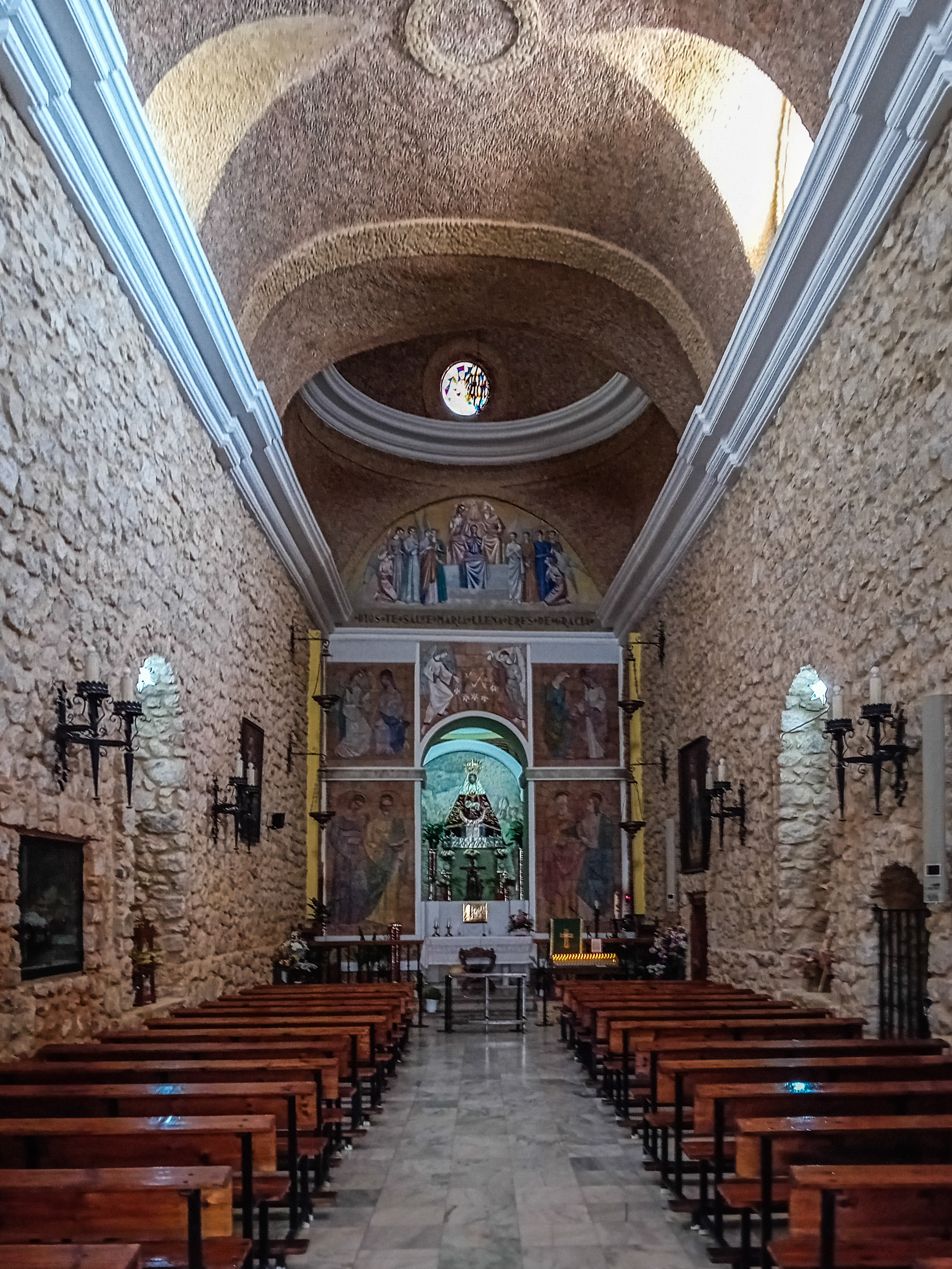

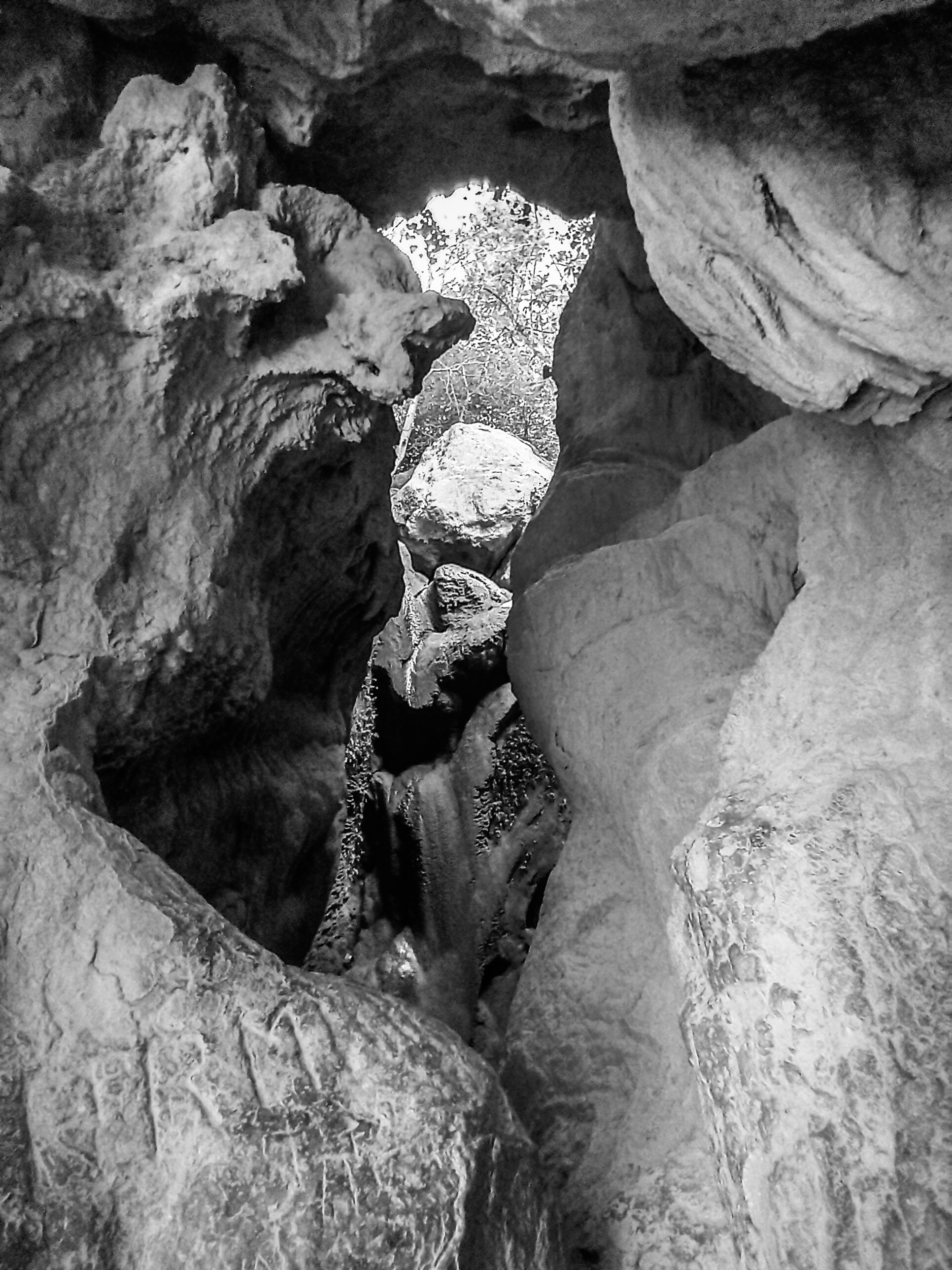
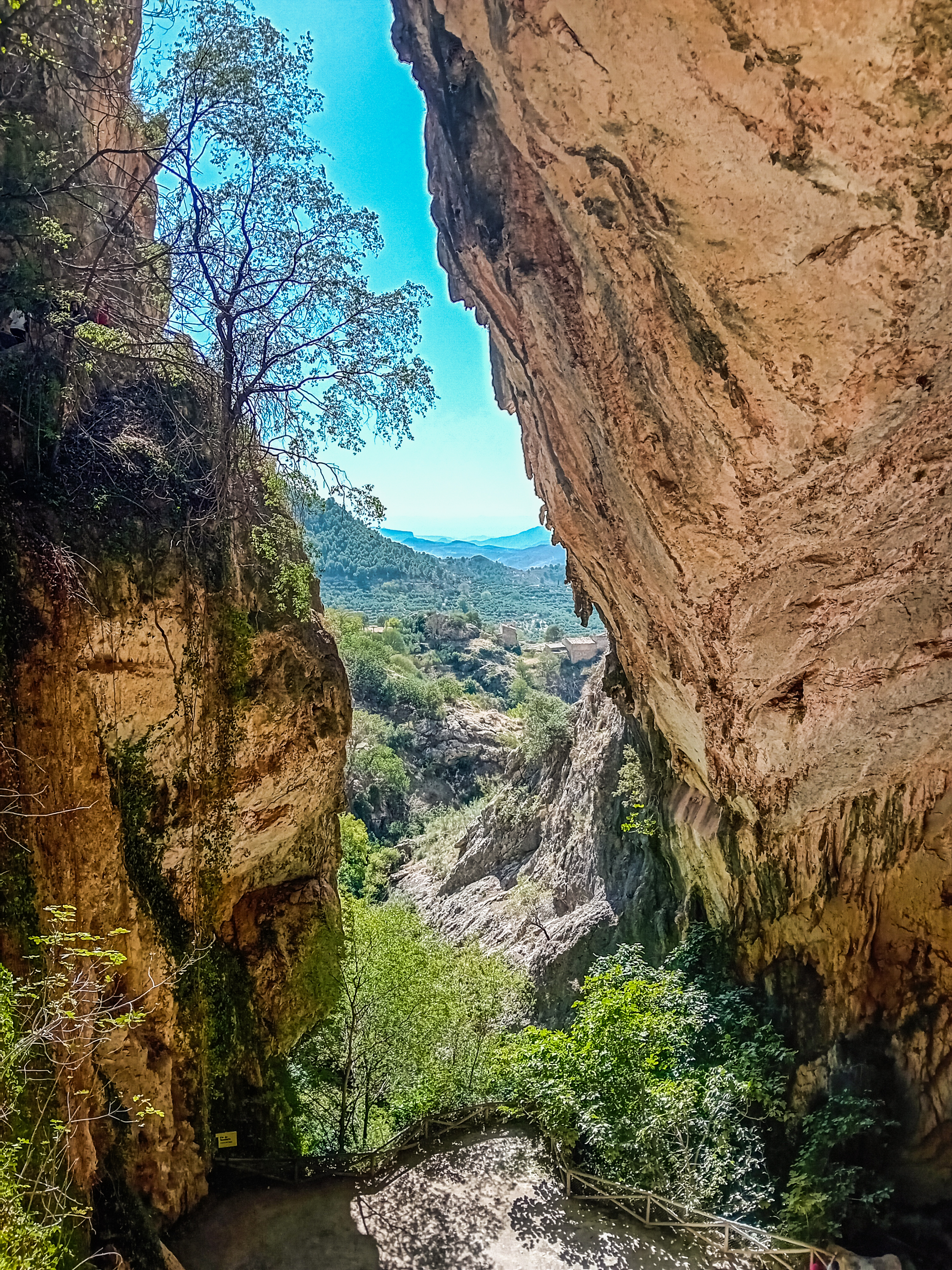
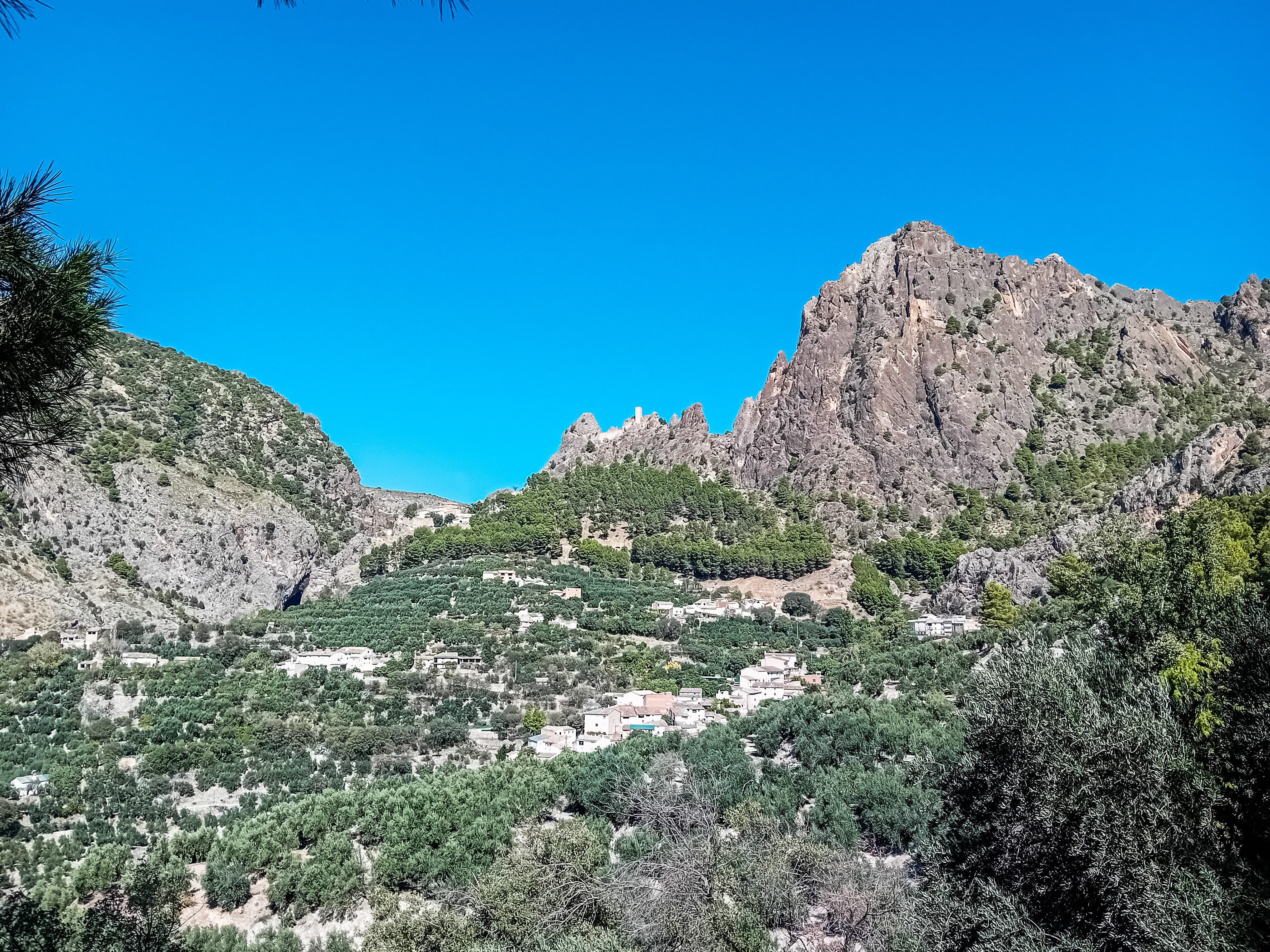
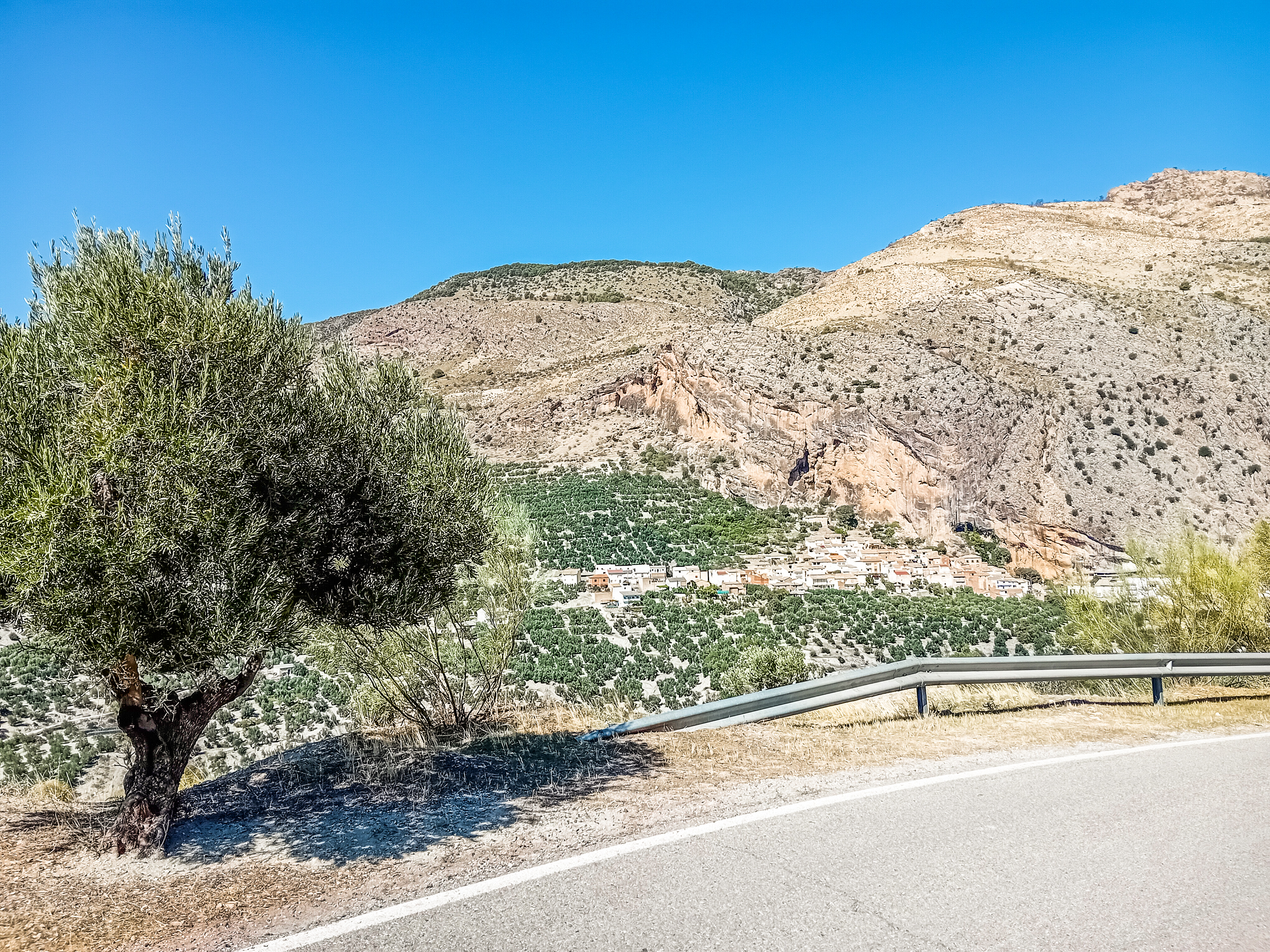
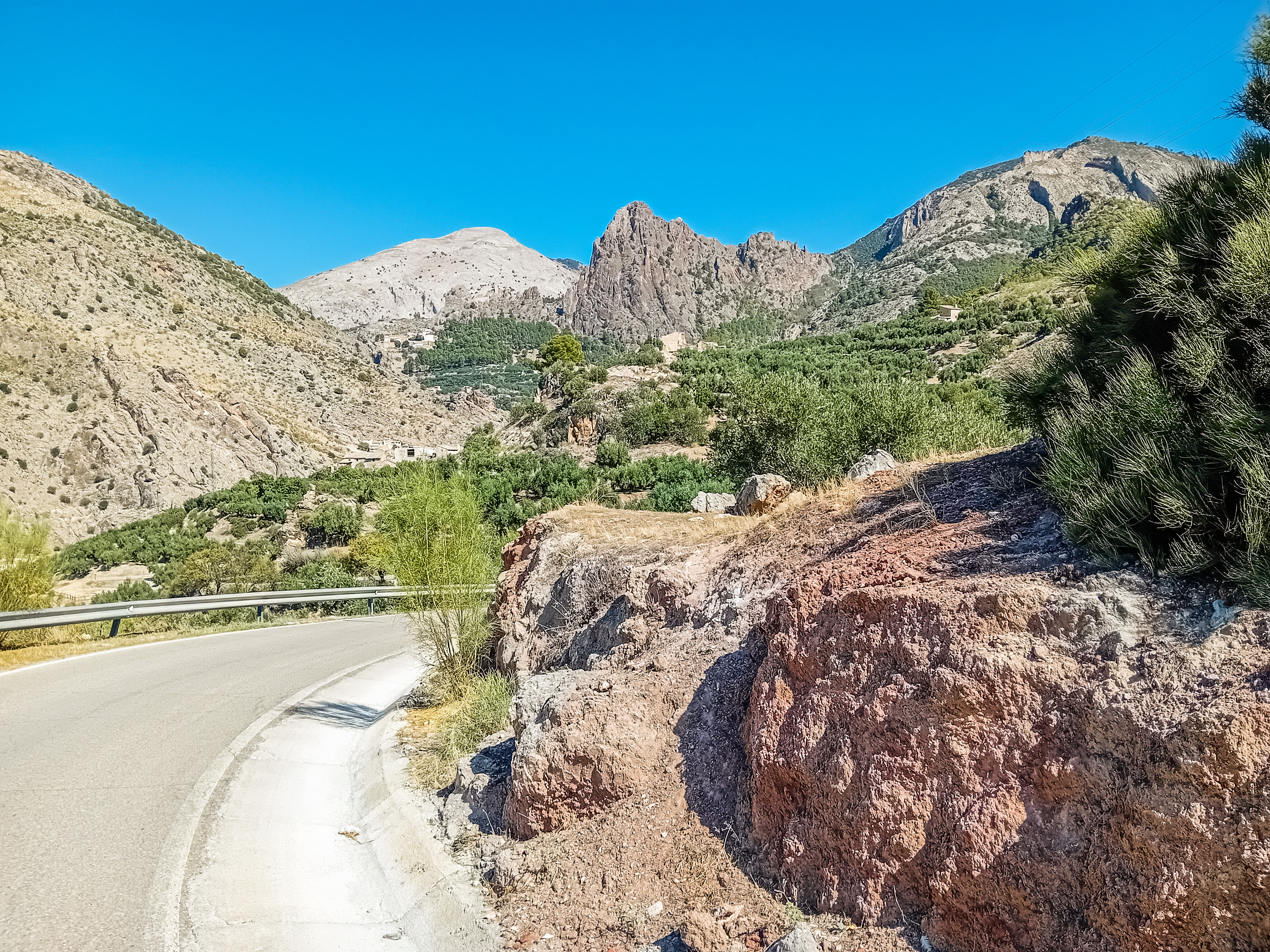


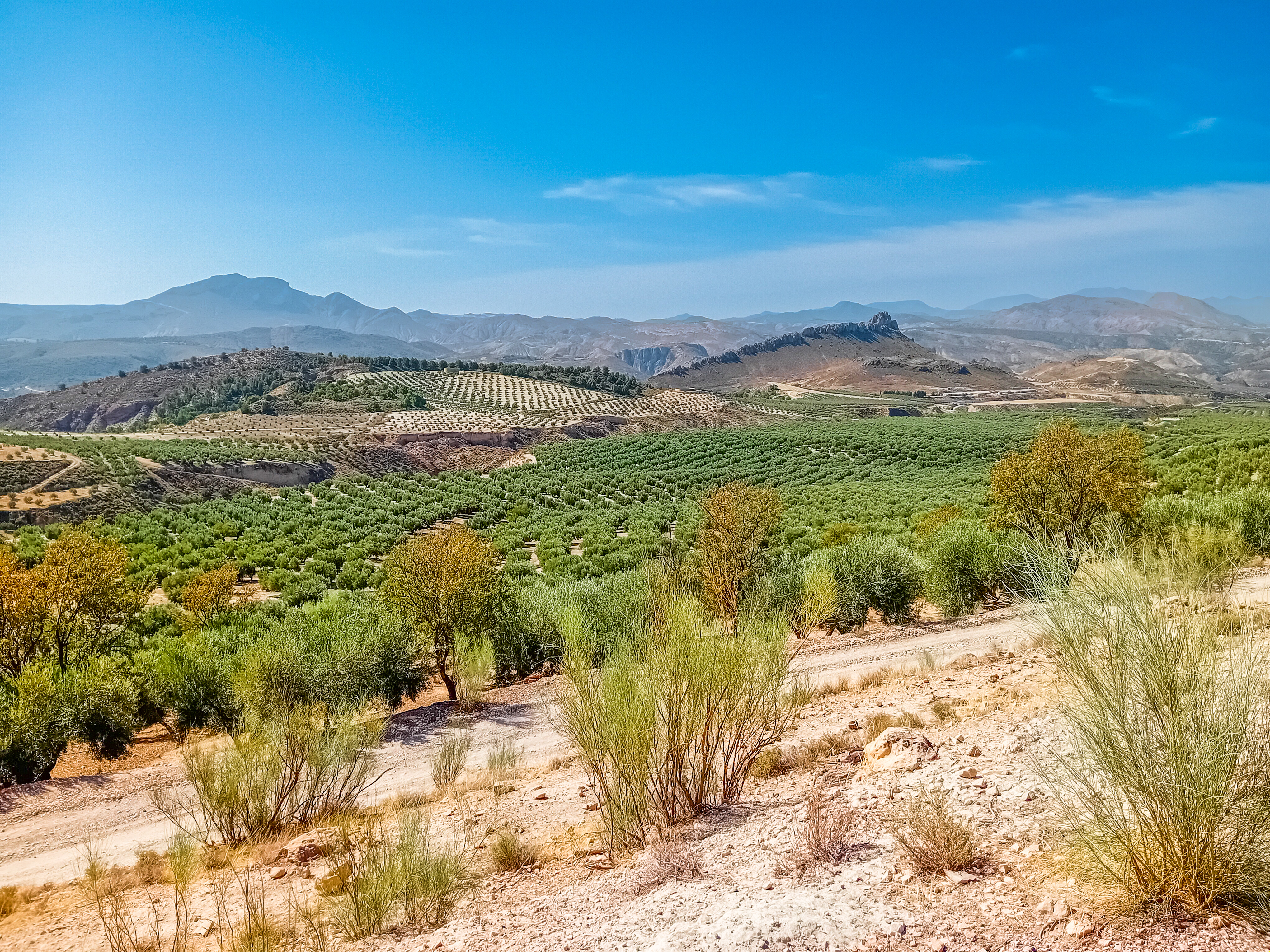

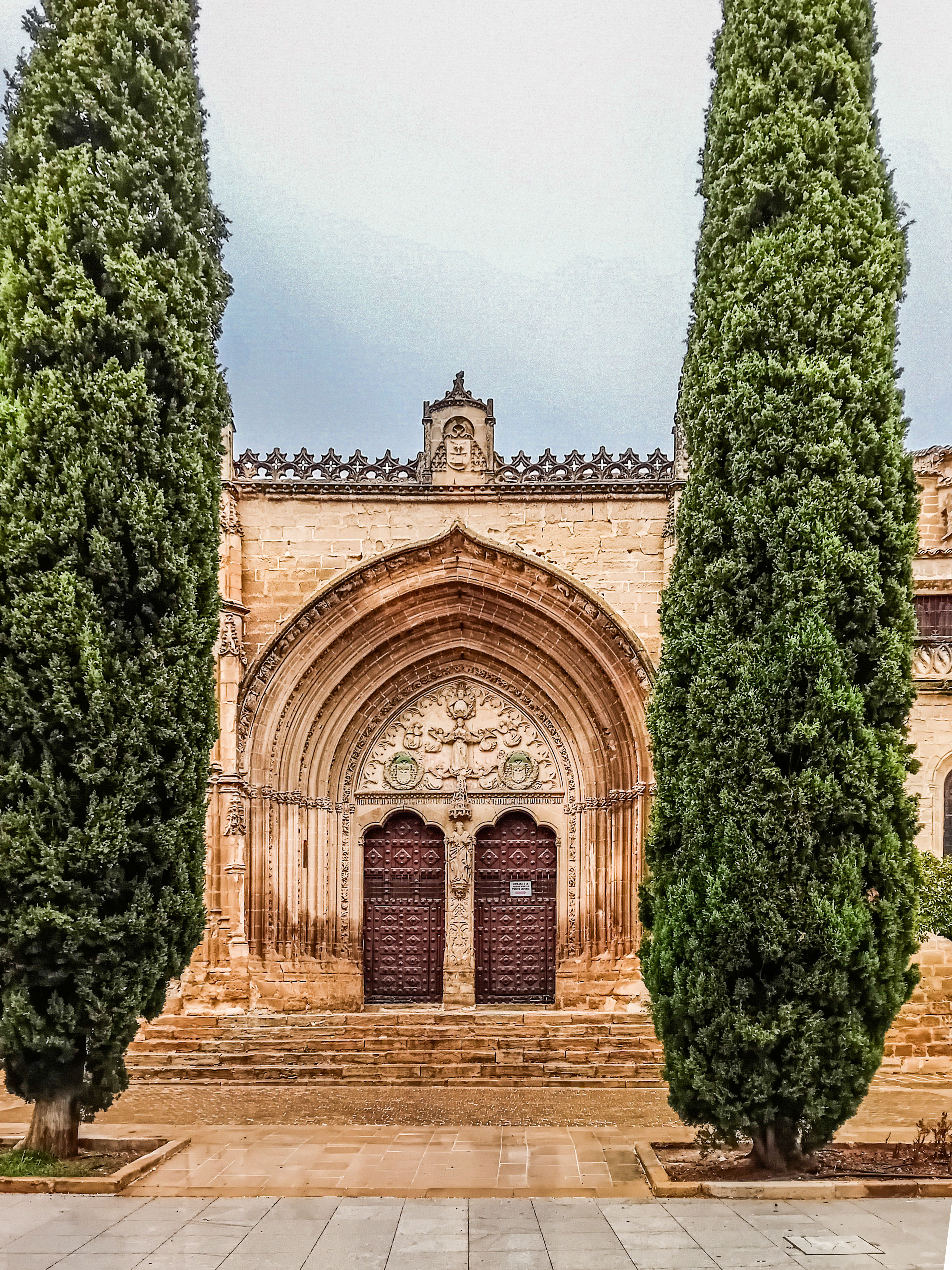
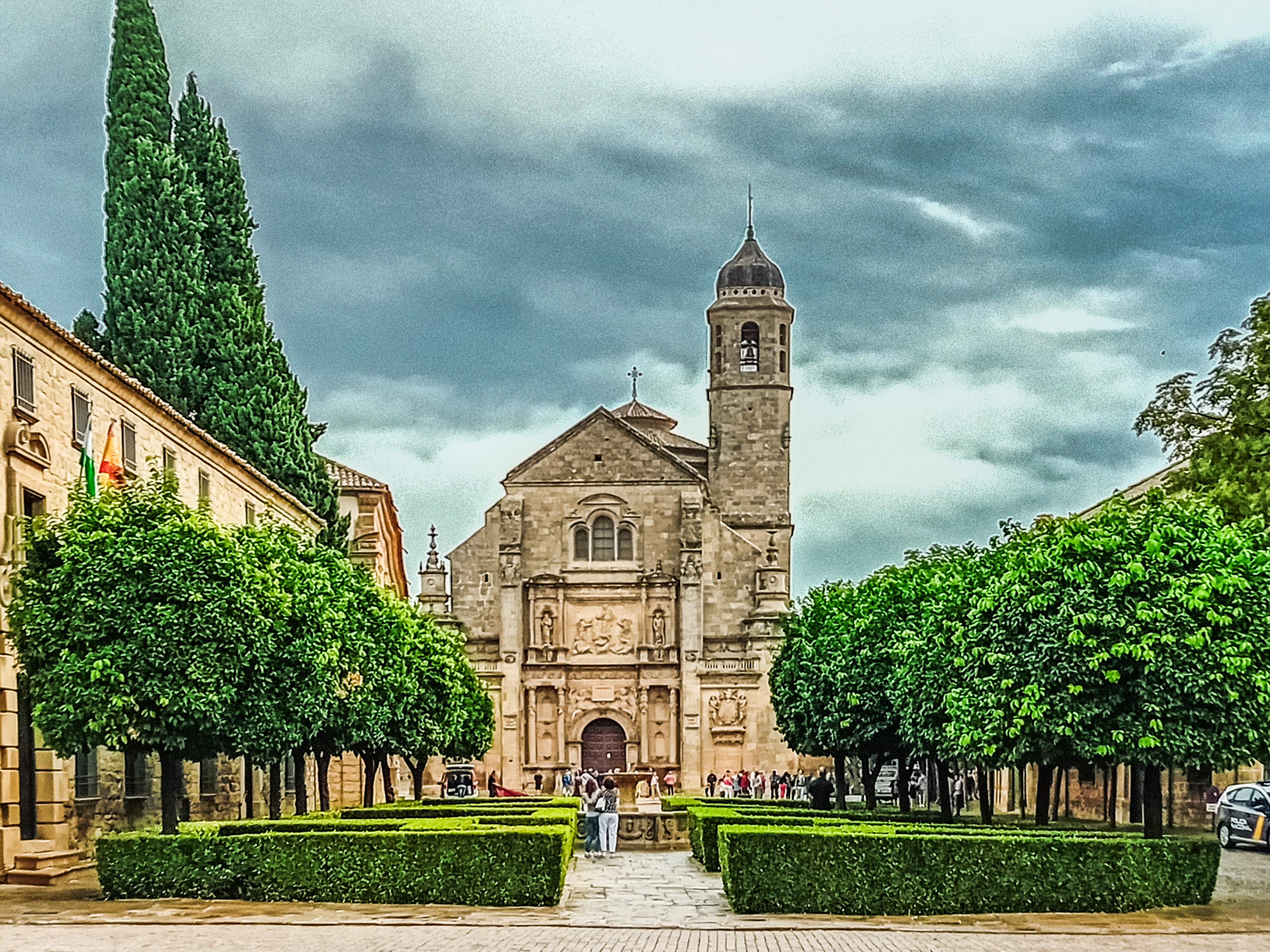
Úbeda – I gladly accepted a lift to Úbeda and went for a walk and drinks instead of cycling in the afternoon. Úbeda was declared UNESCO heritage (along with neighbouring Baeza) in 2003. The city centre is a renaissance gem. Many buildings were designed by Andrés de Vandelvira, those that stand out are Sacra Capilla del Salvador and the Hospital of Santiago. Vandelvira’s trademark feature is the triple window divided by elegant pillars, as you can see on the façade of the Holy Chapel. I didn’t have much time to do proper tourism and visit the museums, so I will have to come back at some point, but to be fair merely taking a walk through the historical city centre feels like being in a museum. Tip for food: Misa de 12 in Plaza Primero de Mayo.






Day 6: Úbeda – Baeza – puerto Mágina
GPS here.
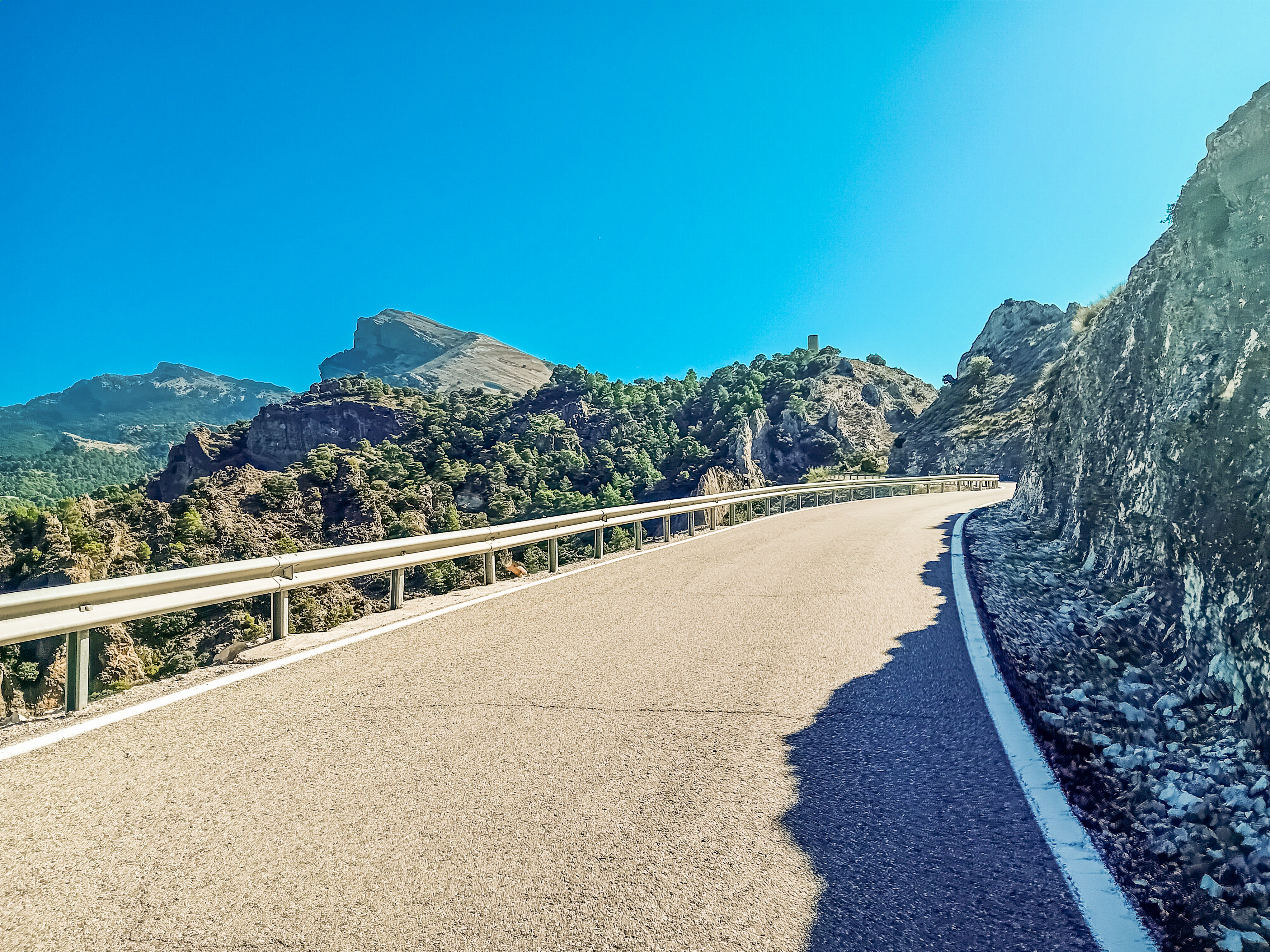
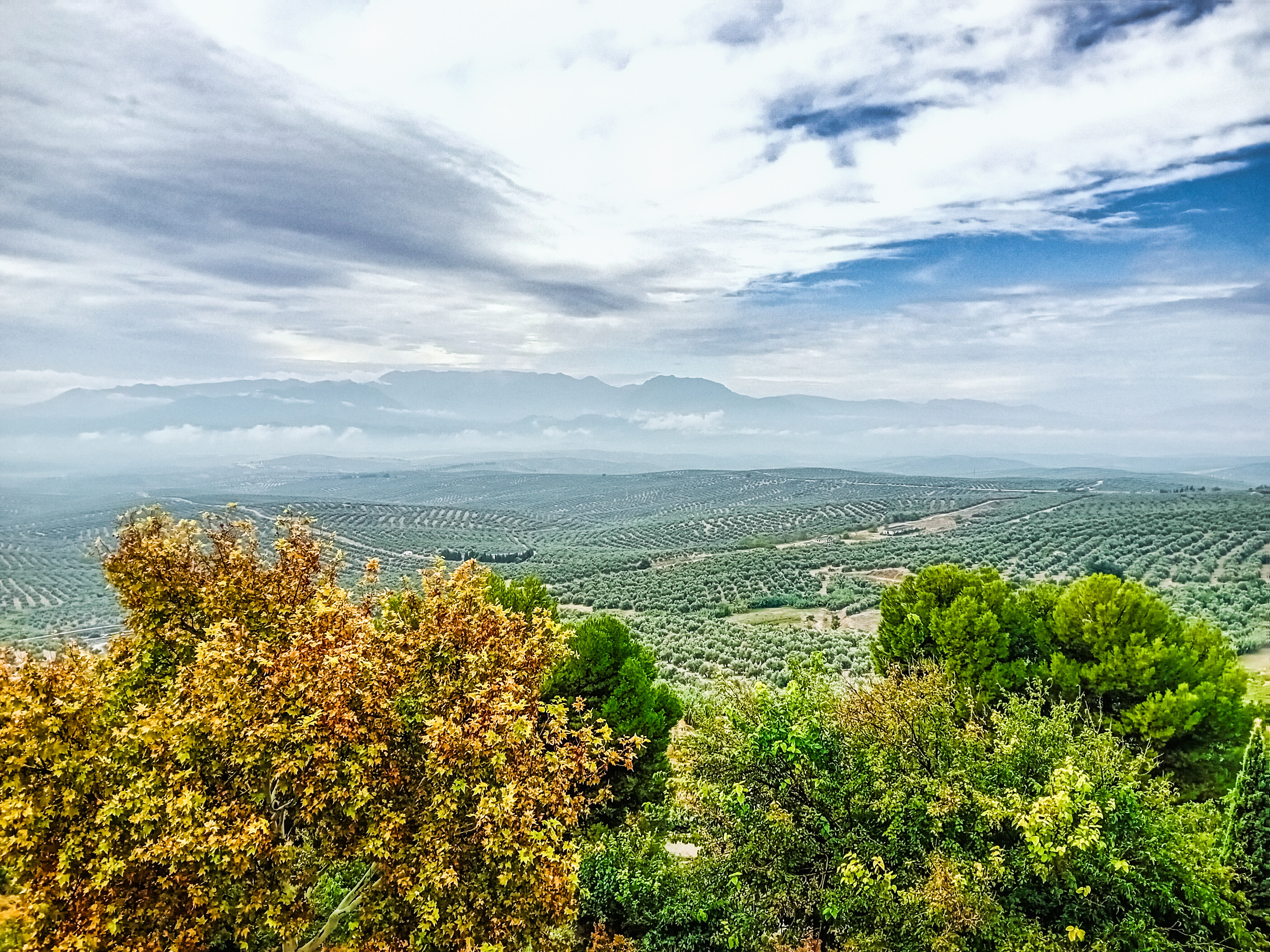
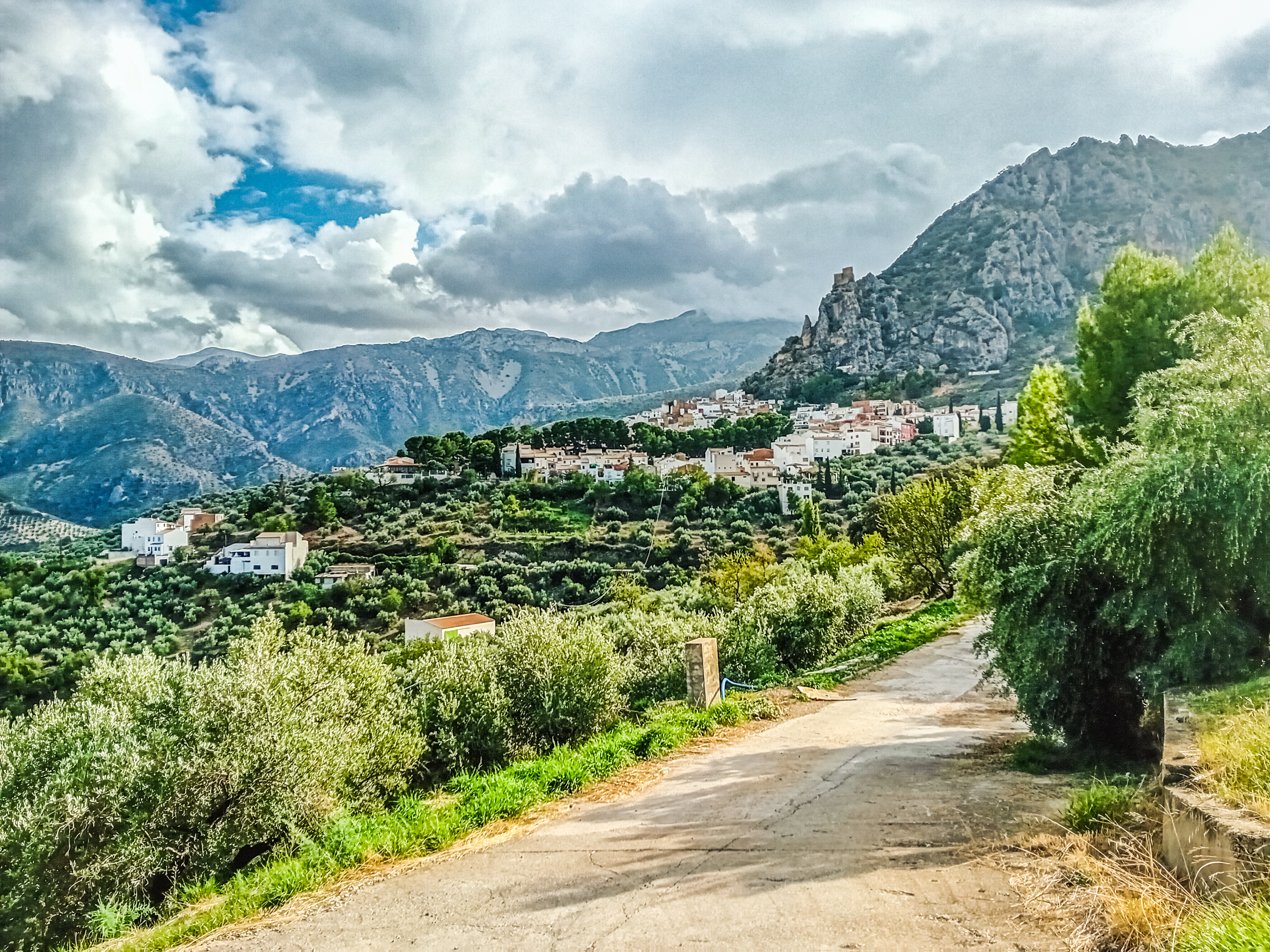
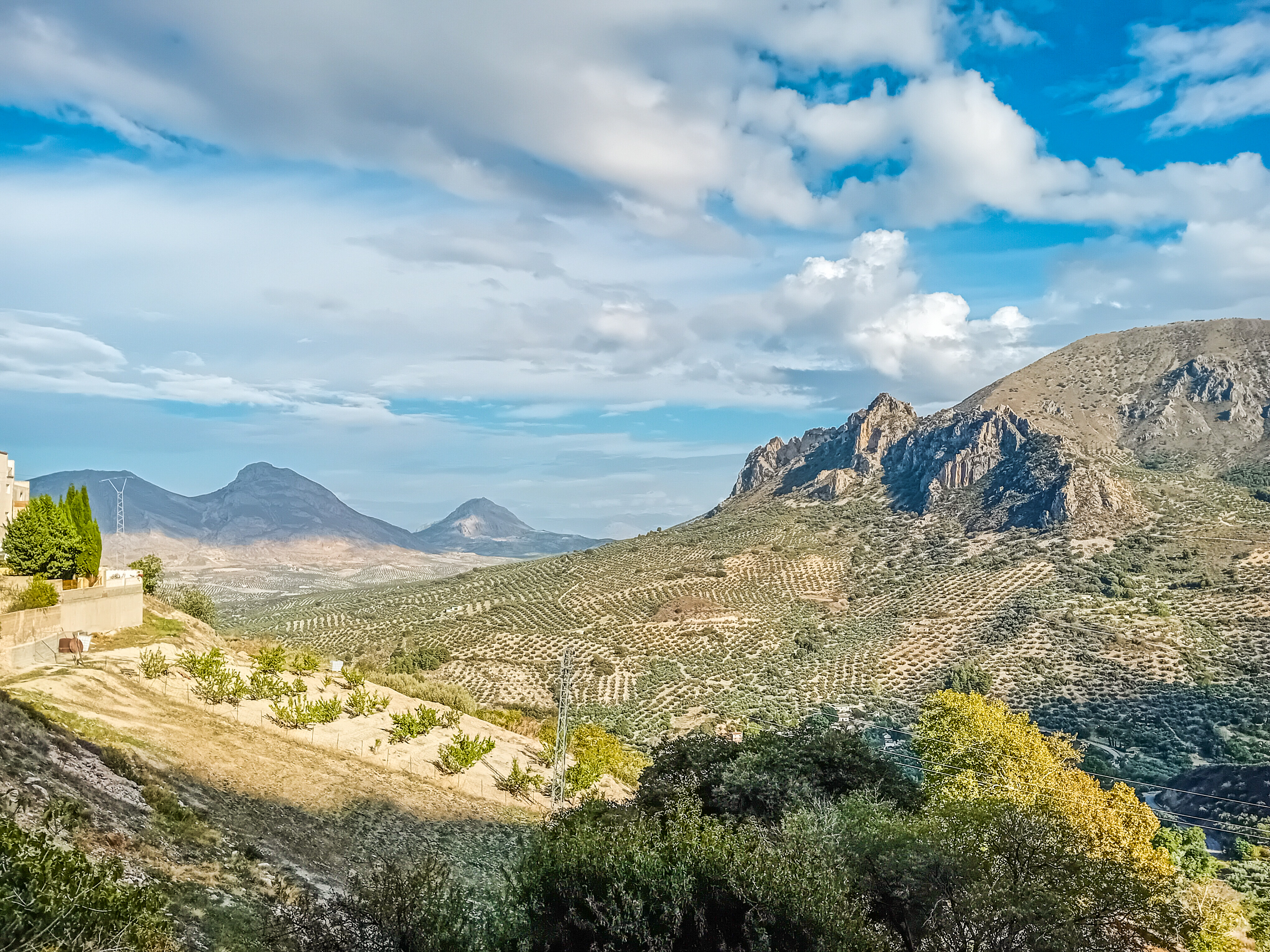
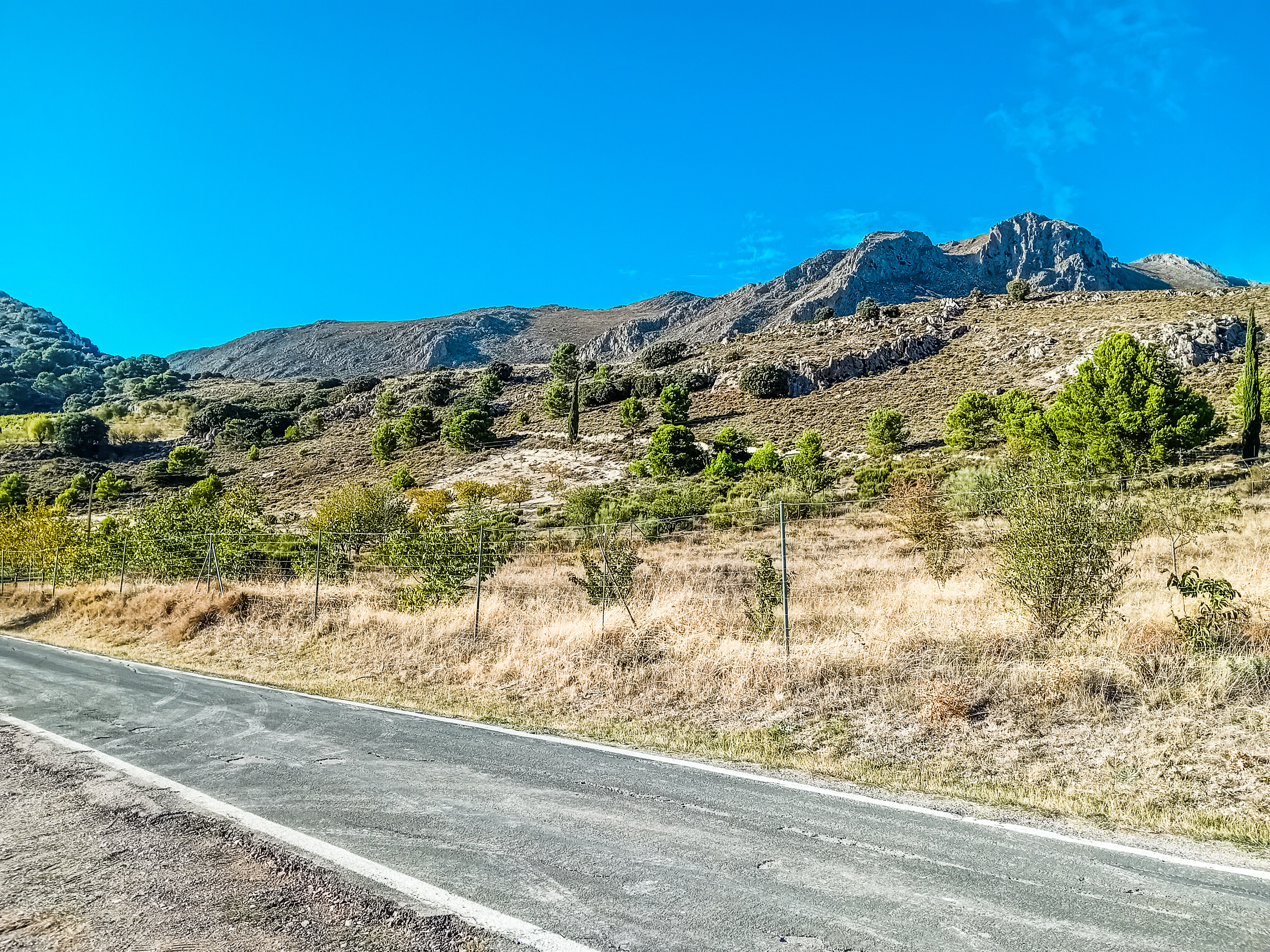
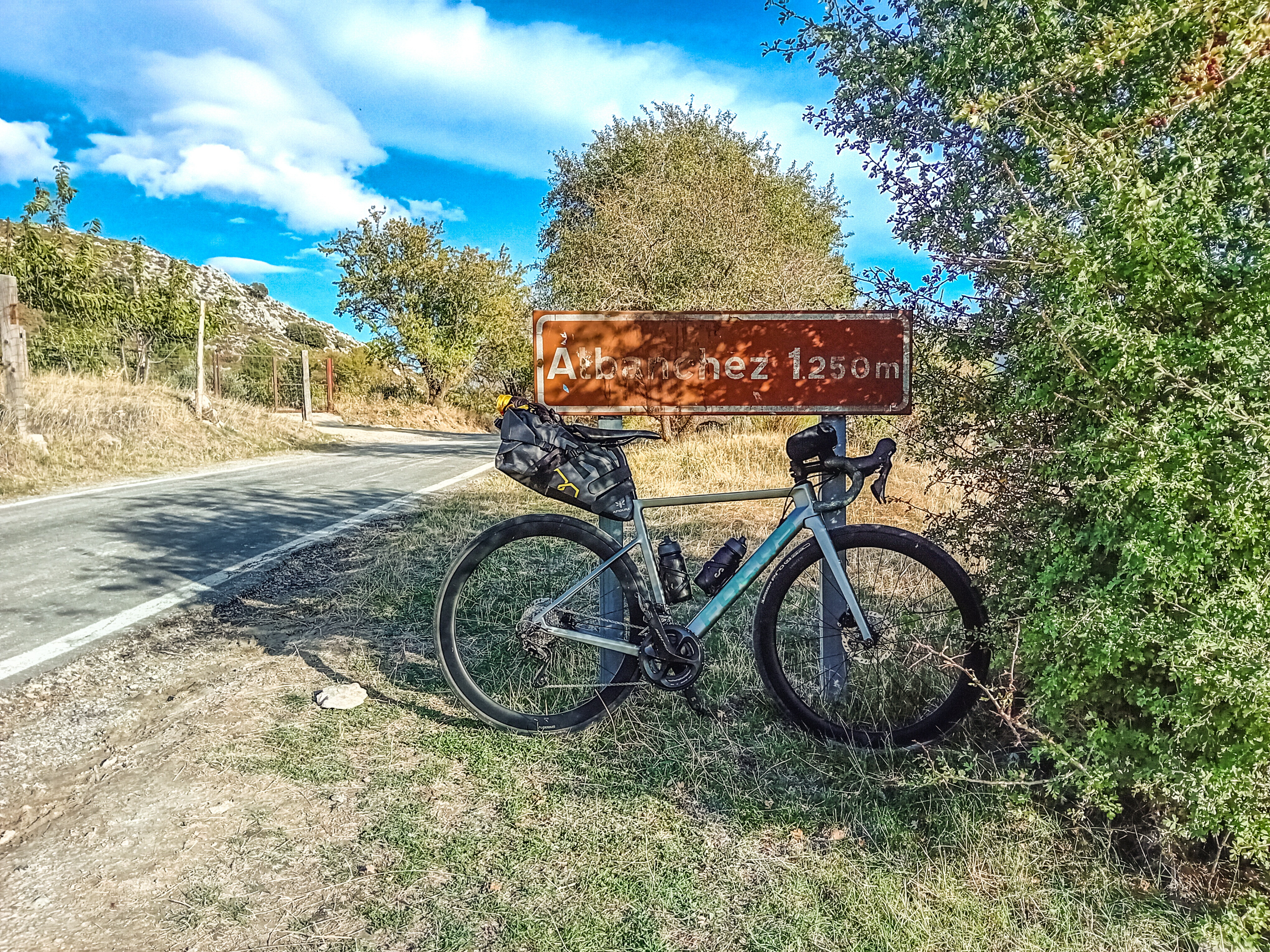
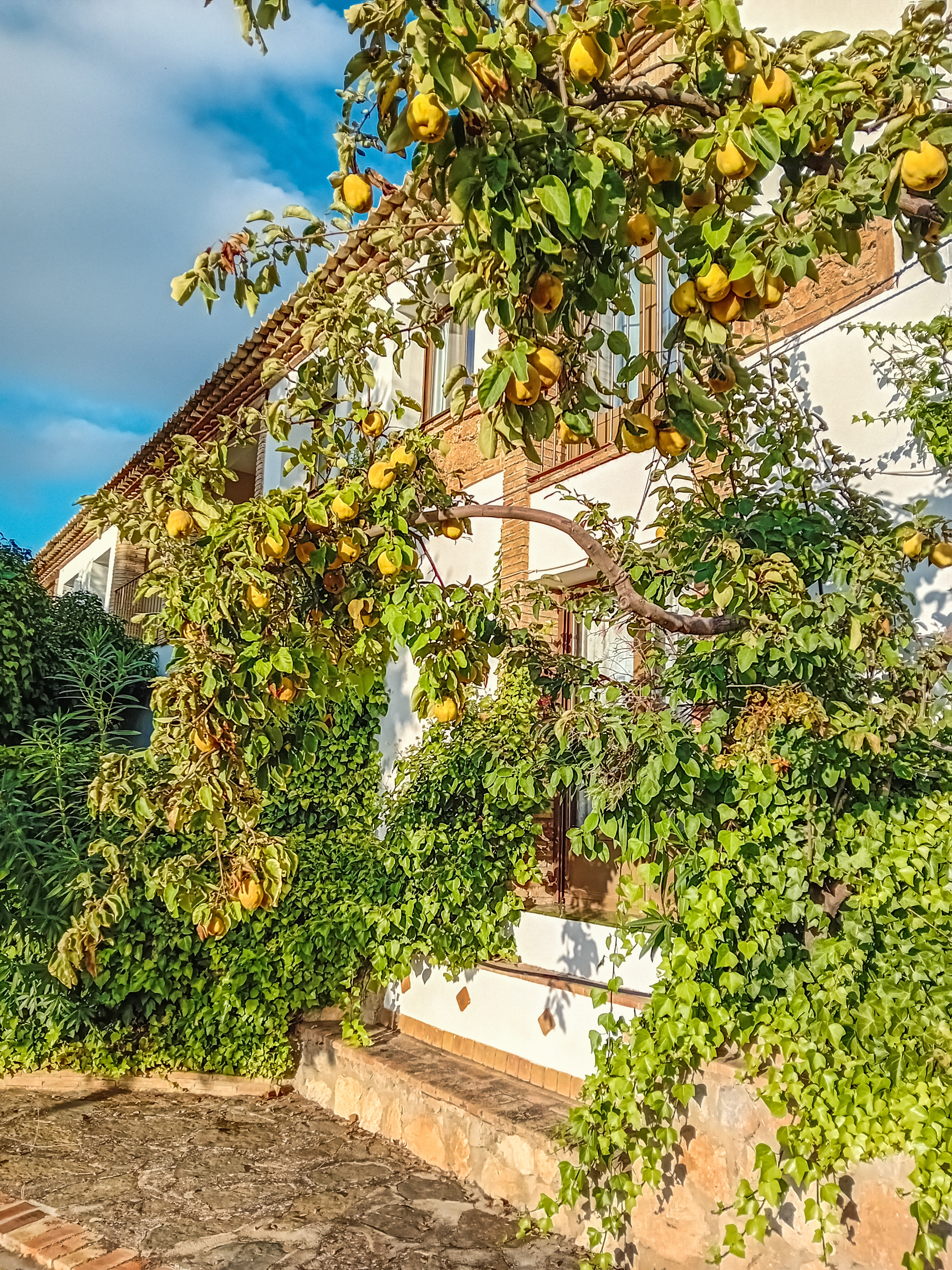
As I was standing in the morning on the city walls of Úbeda, slightly hungover, and looking towards Sierra de Mágina on the other side of the wide valley of Guadalquivir, I had no desire to get back on the bike. But it turned out to be one of the top days of the entire week. I took the cycling path between Úbeda and Baeza. On paper, uniting the two renaissance cities by a mostly flat cycling path is a beautiful thought. Unfortunately, the execution was carried out by a murderous psychopath. If you are on a road bike, be very, very careful. There are certain potholes or ruptures in the tarmac, that are about 5 cm wide and 20 cm long and just perfect for your wheel to get stuck in. Baeza is another stunning city, but I could not visit the cathedral because it was closed for a wedding. So I opted for a wander and early lunch instead. After that I descended through interminable olive groves towards Guadalquivir and headed for Sierra de Mágina. The actual climb towards the Albanchez pass starts at Jimena, but it is a constant climb once you cross the river. The road was breathtaking. And I don’t mean it left me short of breath, I mean the views were astonishing. Apart from several olive harvesting vehicles and one bored guardia civil patrol I didn’t meet a single car. I was staying in the rural hotel 2 km after crossing the Albanchez pass and I cannot recommend it enough. Fantastic views, great restaurant, helpful staff, very romantic setting (sadly I had just Lilith in my room).









Day 7: Torres – Jaén
GPS here.
Last day was purposedly short, to allow for time for tourism in Jaén. It was basically all downhill (and of course surrounded by olives) until the suburbs of Jaén. That was also the first traffic I encountered in the entire week, but that’s normal given I was approaching the provincial capital. It could have ended just there, but for some reason I wanted to terminate the week at Jaén castle that bears my name. Well, my patron saint’s name – Castillo de Santa Catalina, now a Parador. As you can imagine, people in the Middle ages had the bad habit of building castles on top of mountains. The problem of that particular climb is that the access road to the castle is 2 km long with ramps over 20%. After a week of climbing, this particular self-inflicted suffering was completely uncalled for, but one I started, I wasn’t going to give up. After that it was a rushed descend to the cathedral, lunch, a couple of hours of tourism and back to Madrid.


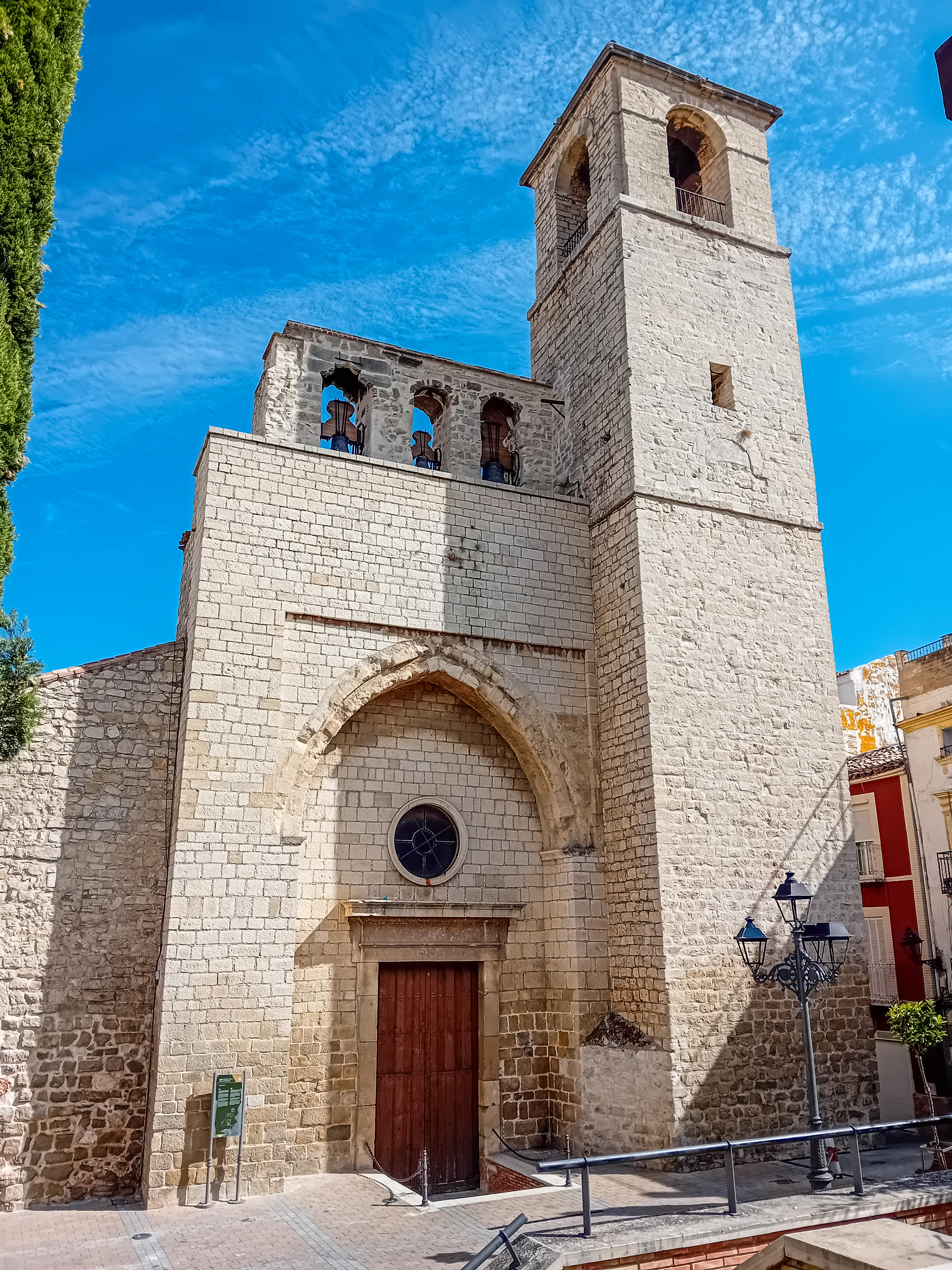


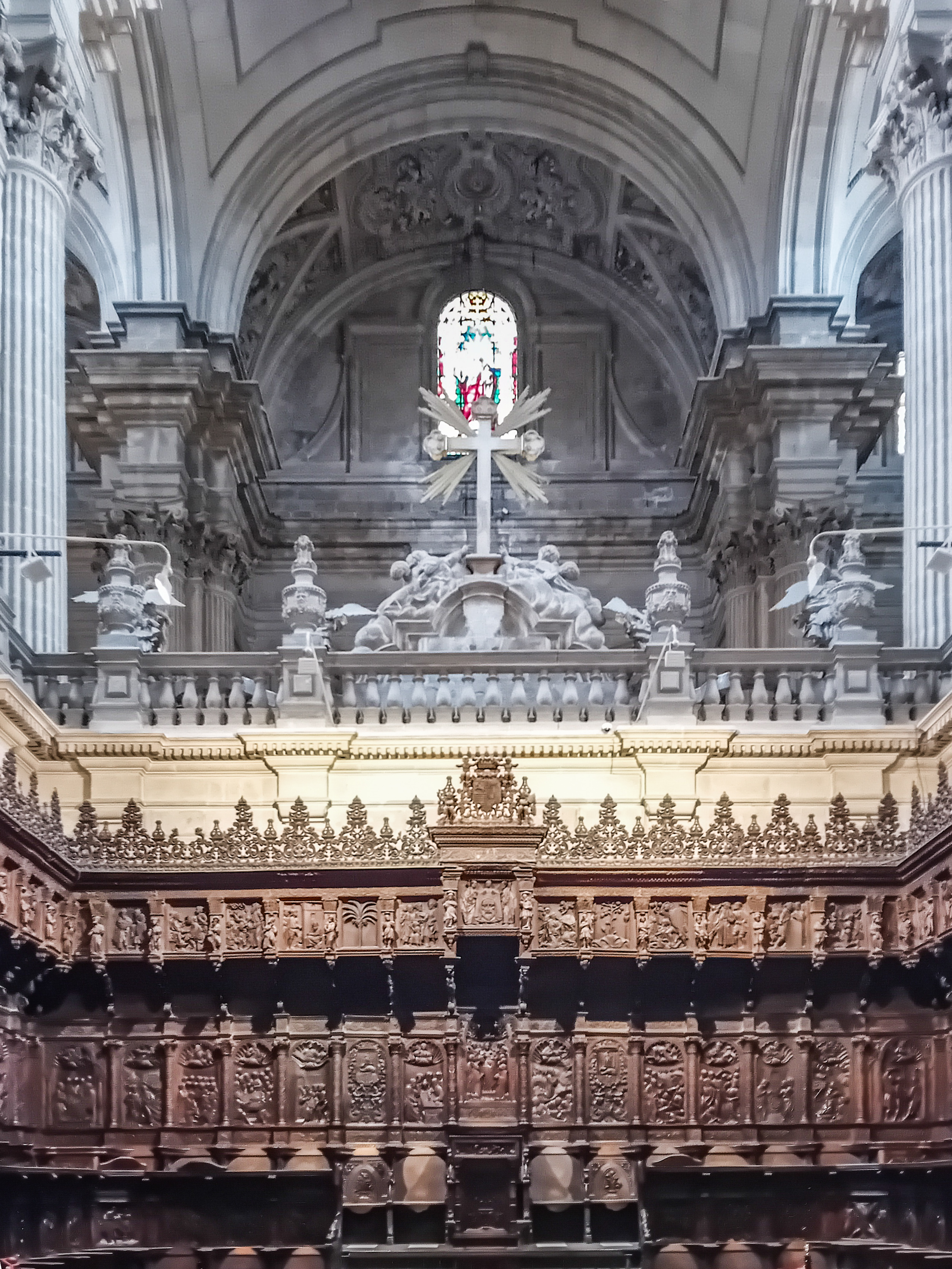
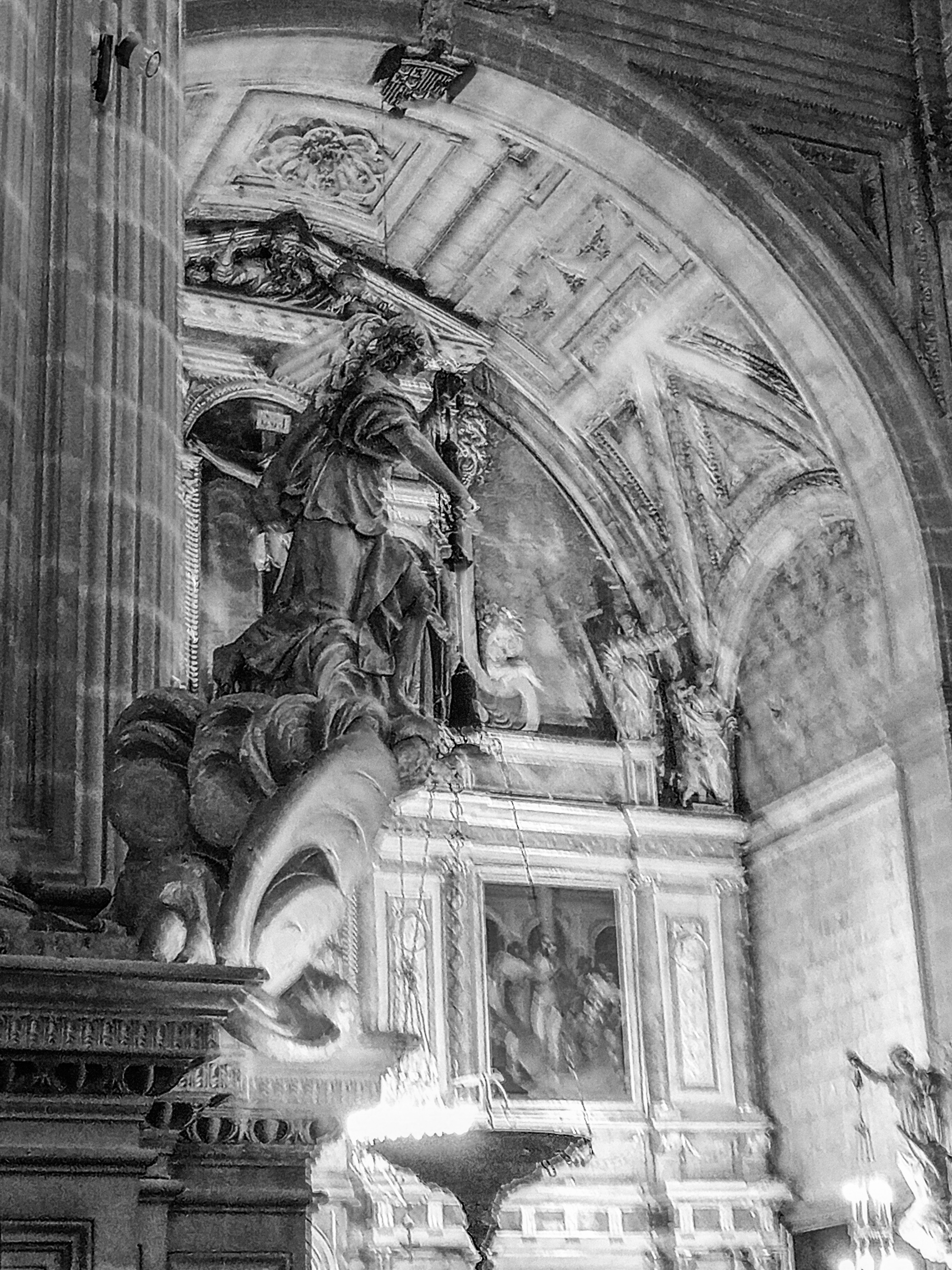
Santa Iglesia Catedral de la Asunción de la Vírgen, built by Vandelvira (among others), declared Unesco heritage in 2008, is one of the most important Renaissance oeuvres in Spain. The cathedrals of Ciudad de México and Lima were modeled after it. The cathedral also keeps a XIV century copy of the Veil of Veronica, if you are into catholic merchandising, it is on public display every friday. There is a virtual reality video (complete with the headpiece and all) avialable that explains the history of the contruction of the cathedral and all the decorative details that – even if it gives you some vertigo – is awesome.


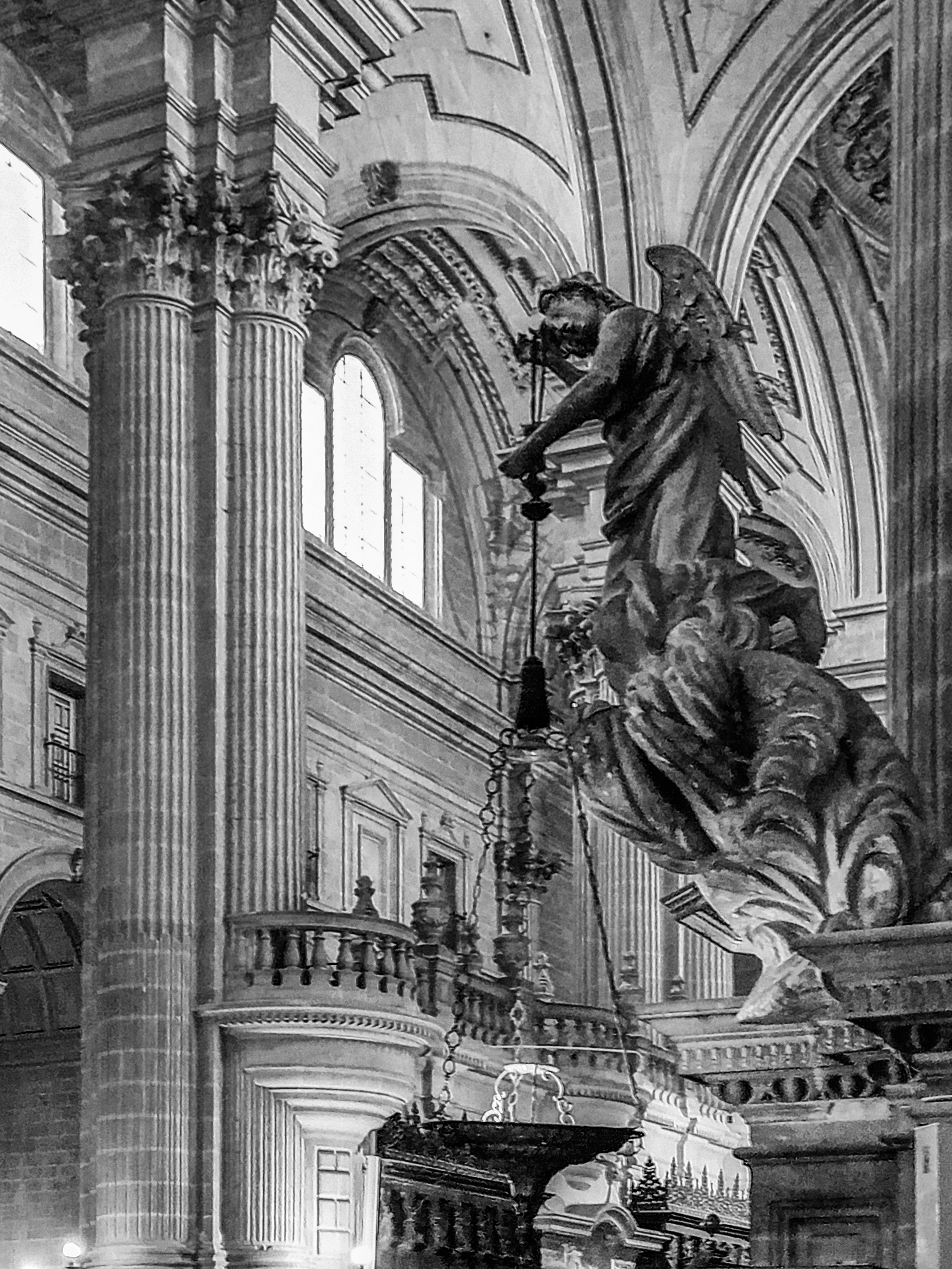
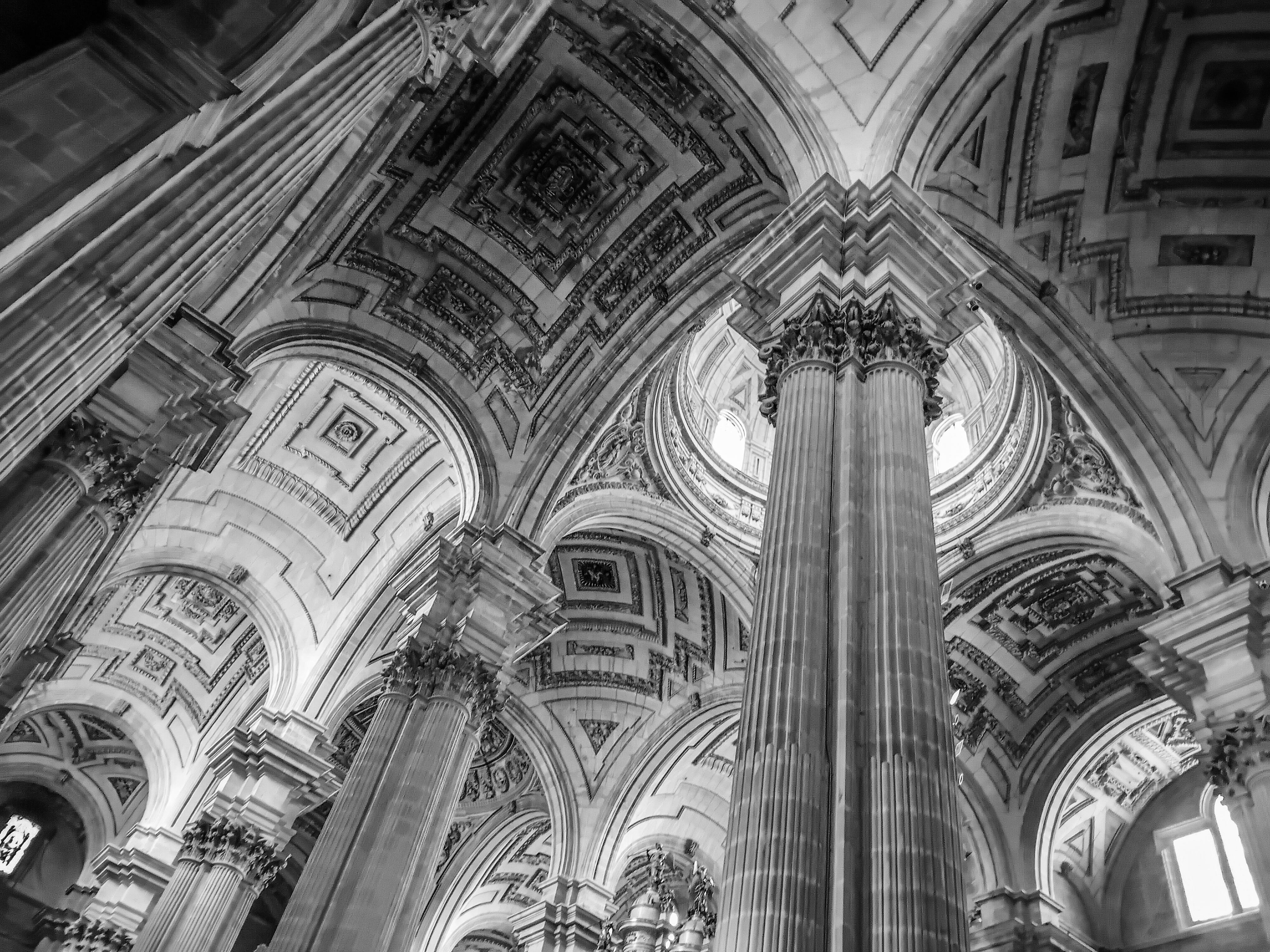
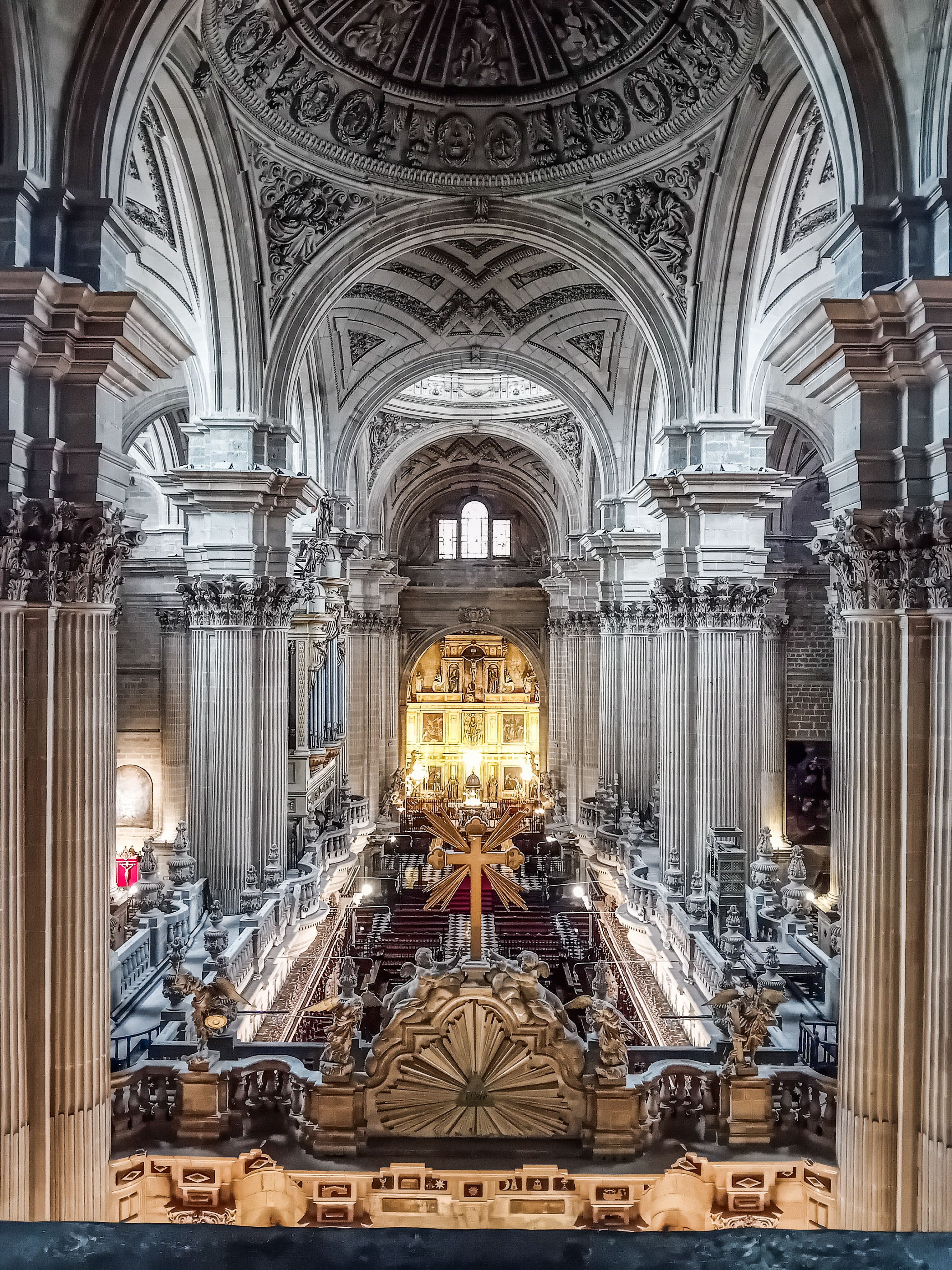
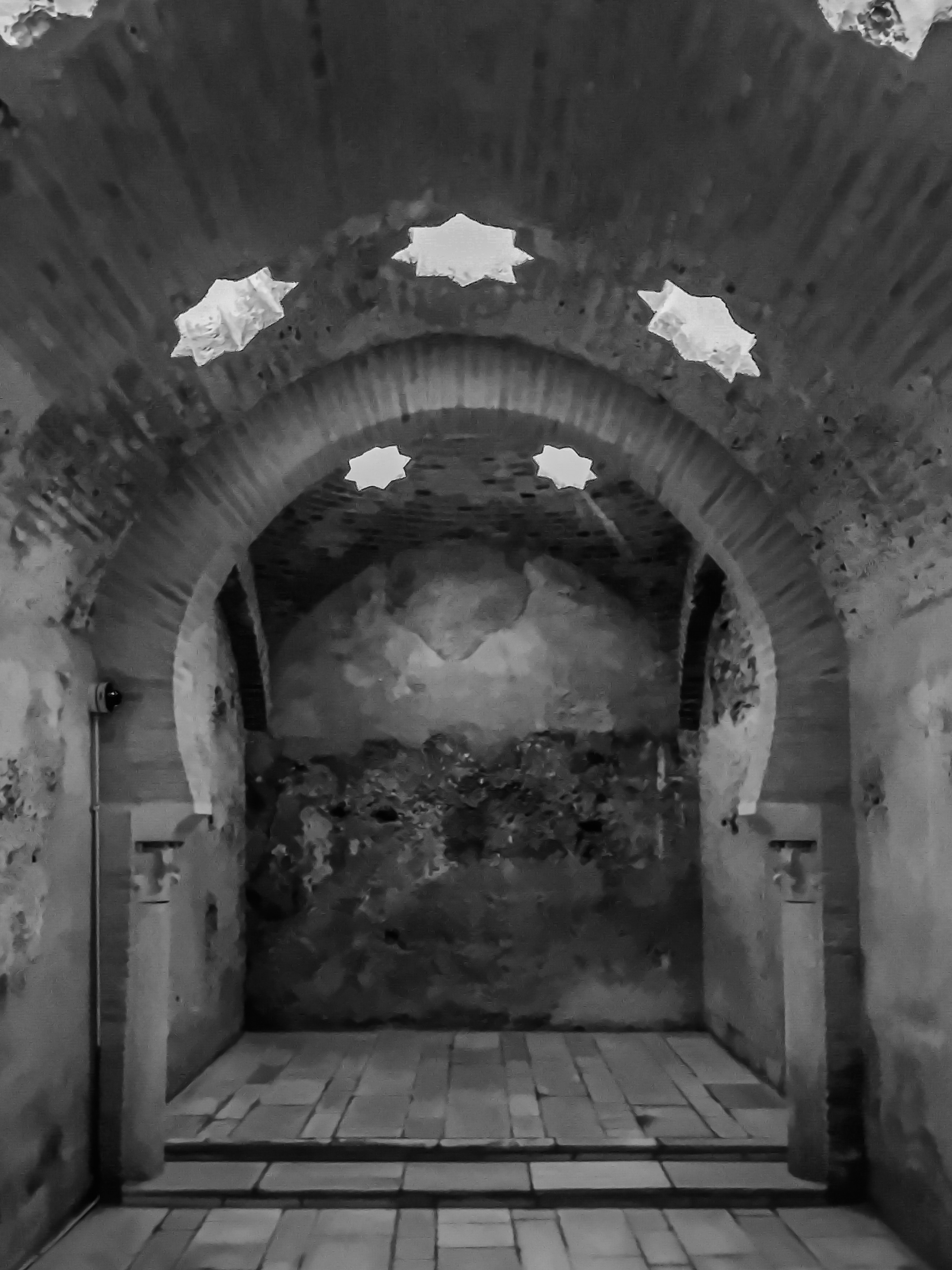
Baños arabes, or Palacio de Villardompardo – public bath built in XI century, possibly on the ruins of former roman spa, served as an establishment of public hygiene until the city was taken over by the Christians in 1246, when it started being used as a tannery. The area extends over 450 sqm, which makes it the largest Arab bath in Spain. The entrance is unexplainably free.



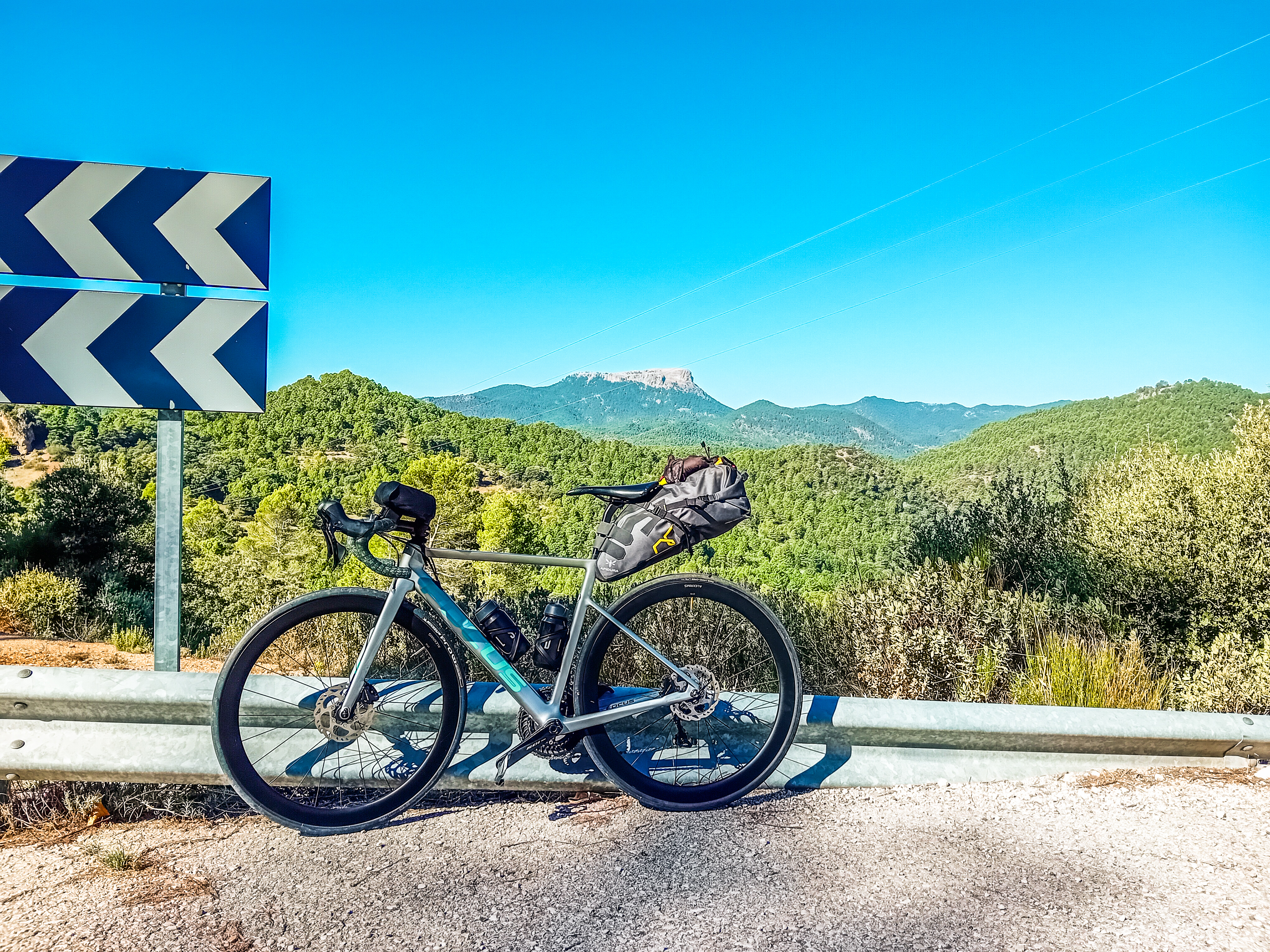
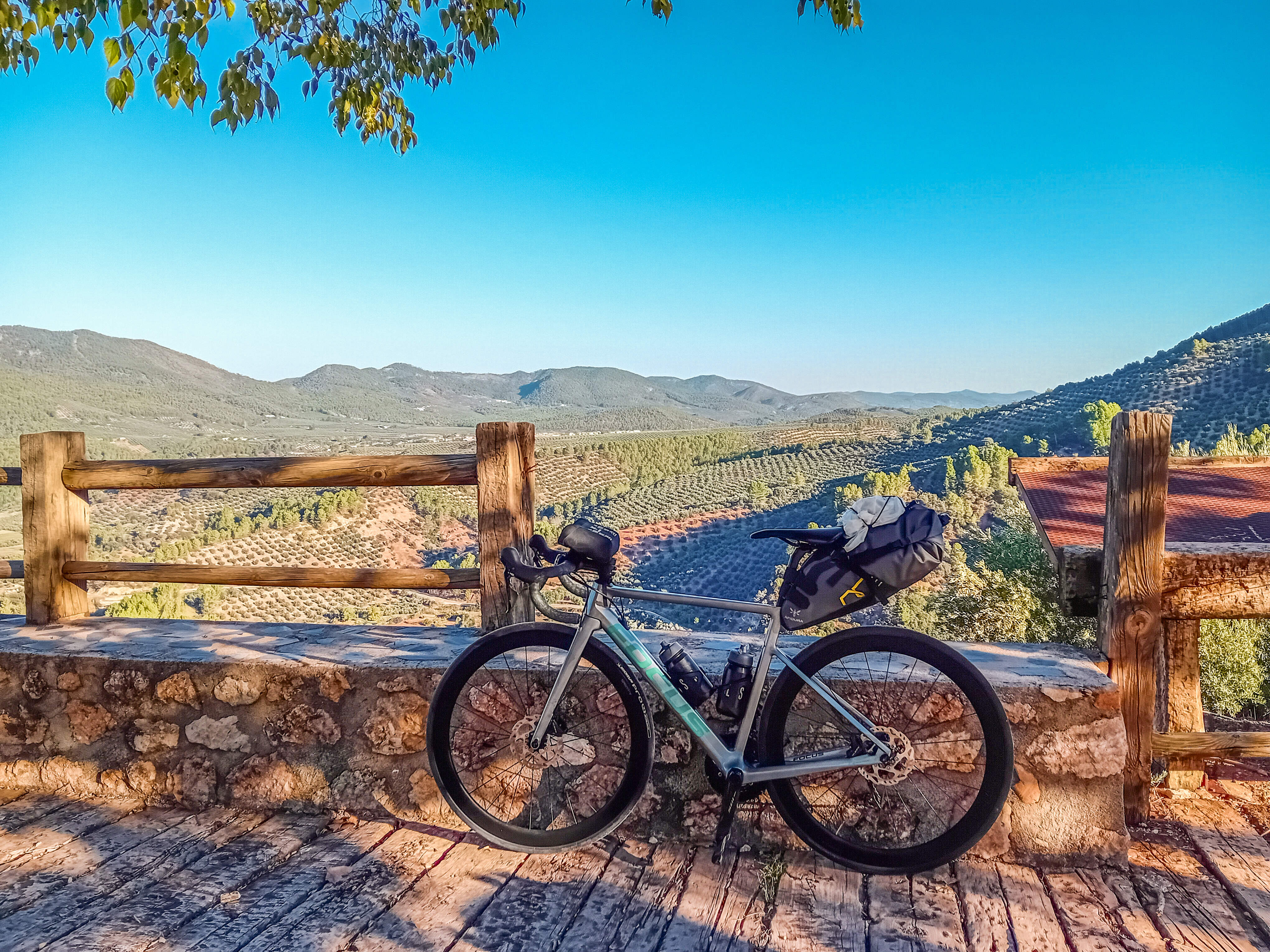
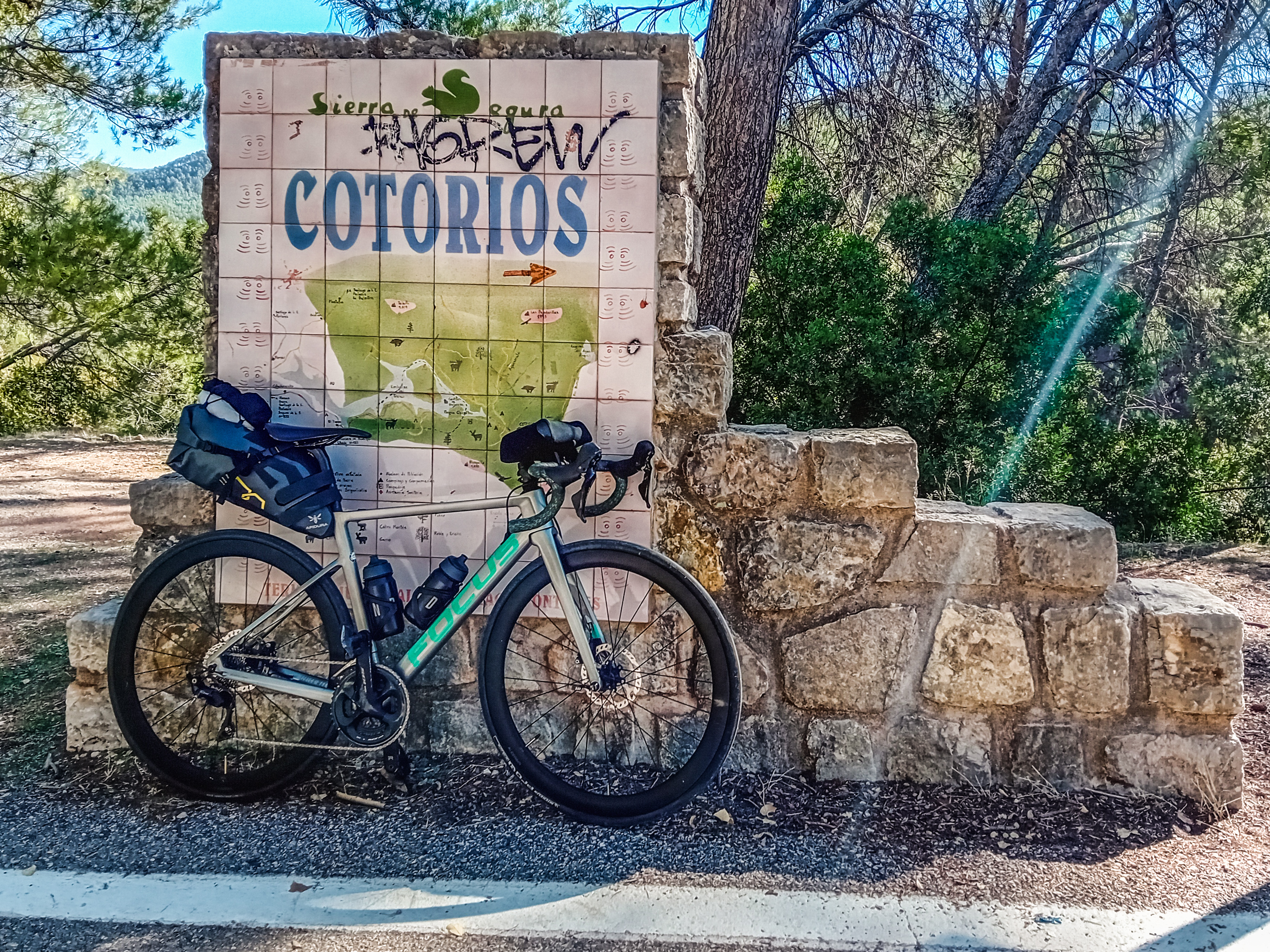
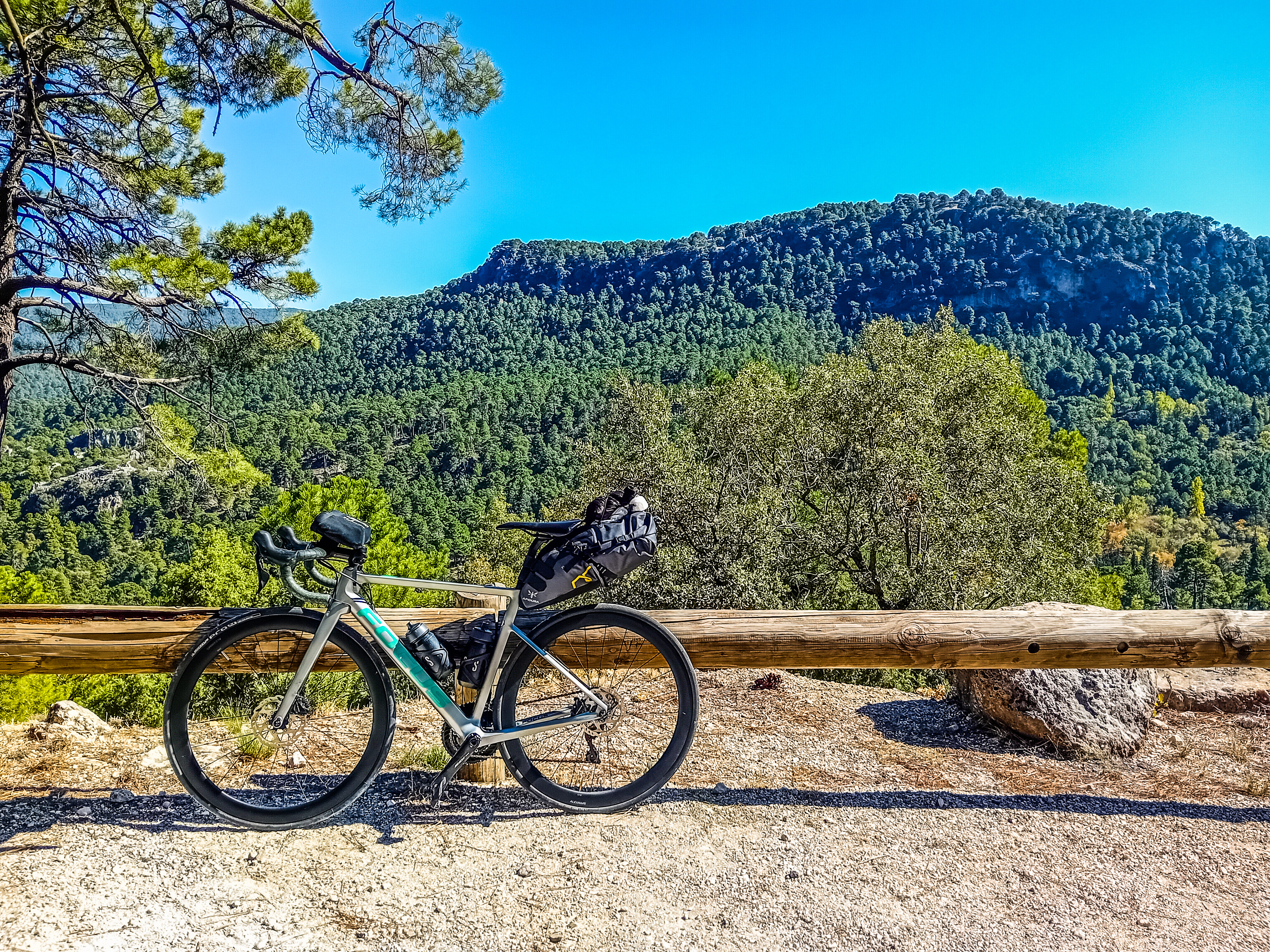
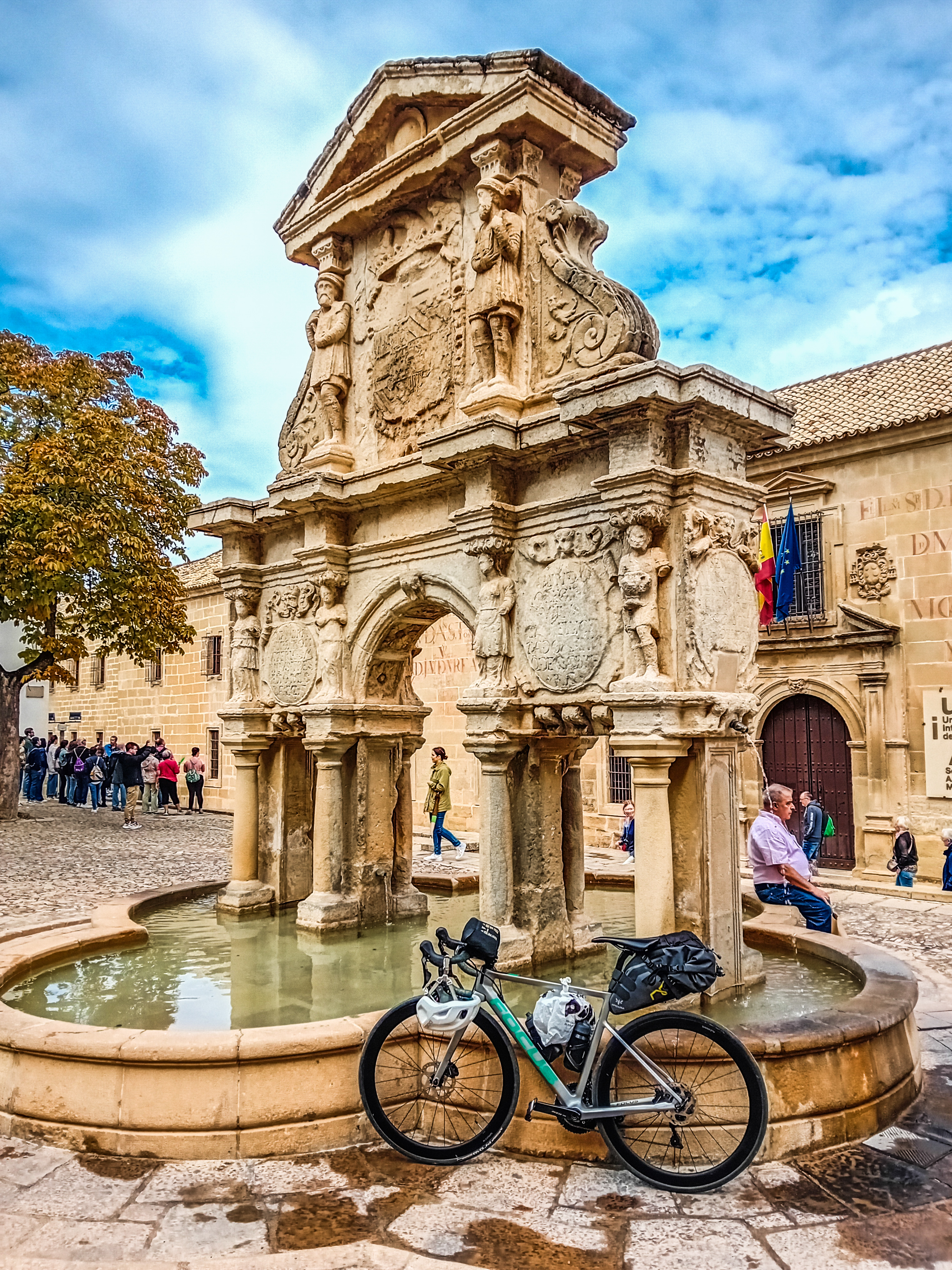
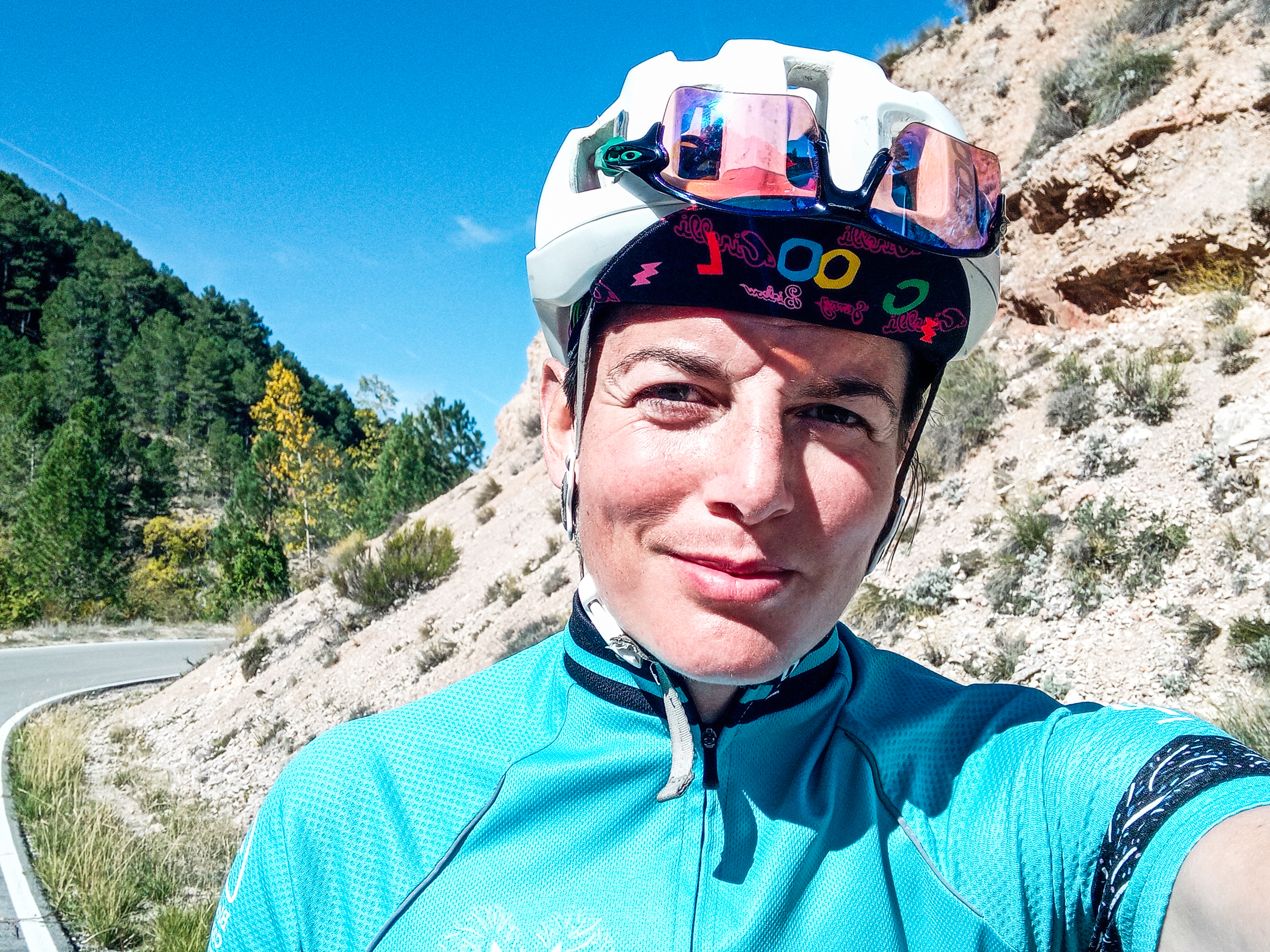
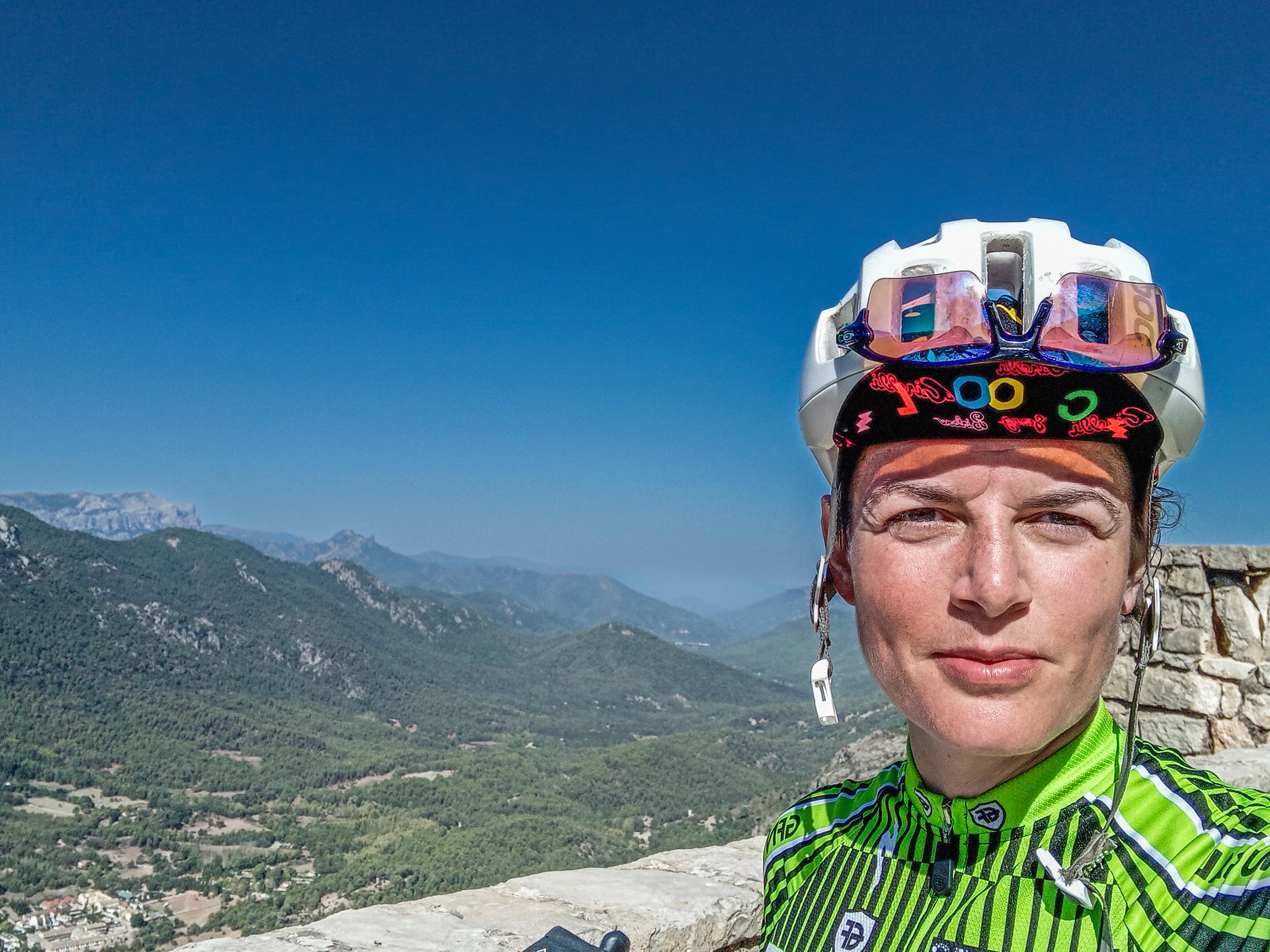
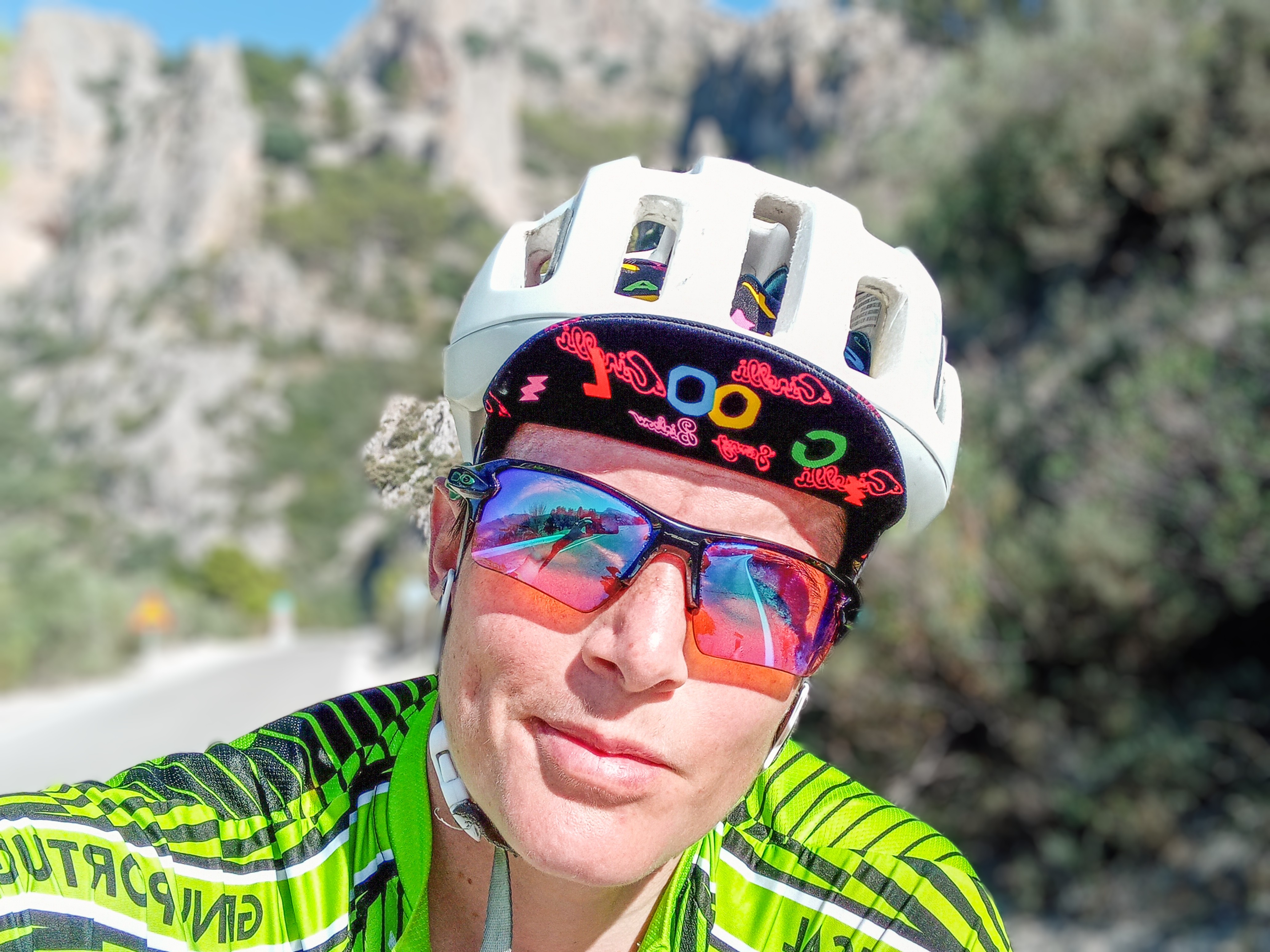
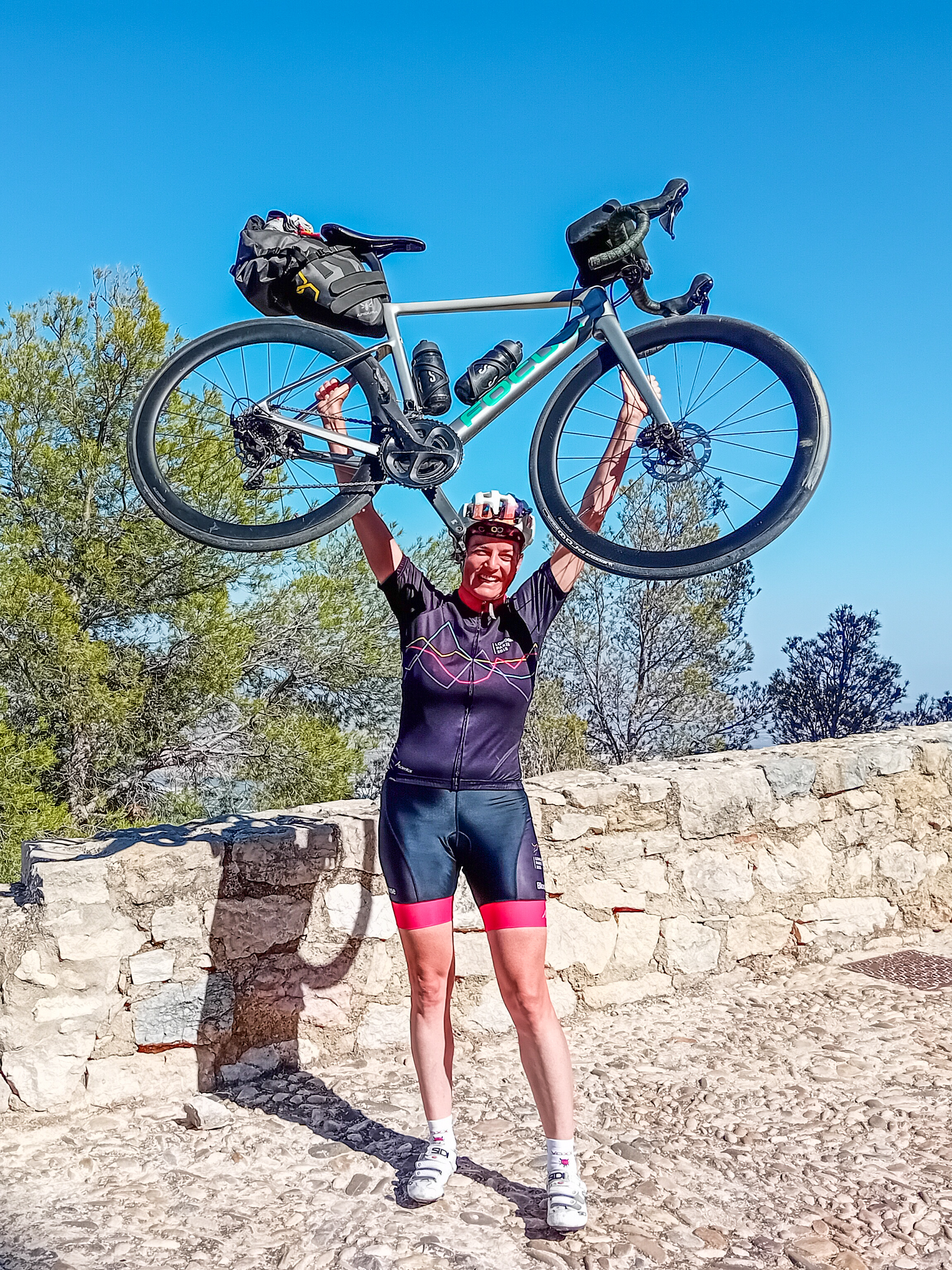
Kacenka on the road. To wrap it up: zero incidents and zero punctures. Perfect weather, quiet roads, quite possibly one of the most stunning sceneries I have yet ridden on. Really lovely people (who probably though I was batshit crazy, riding on my own, but I am used to that). I don’t know whos idea it was that people come back from holiday refreshed (yes), relaxed (ok), rested (kind of, if you ignore the fact that my idea of holiday brings me to the verge of physical exhaustion) and reinvigorated to get back to work (definitely not). I come back with a reaffirmed hatred for having to be economically active and with a strong suspicion that I am not meant to spend my life staring into a computer screen.



 Kacenka on the road